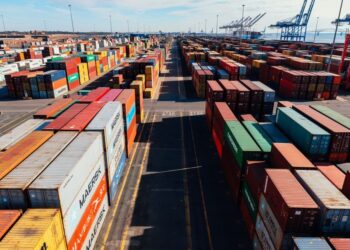
According to dahnay.com, Latin America’s trade landscape in 2026 is being reshaped by manufacturing growth, nearshoring investments, and rising intra-regional trade — moving beyond traditional commodity exports.
Pacific Gateways Anchor Asia–Latin America Trade
For cargo originating in Asia, Pacific ports serve as critical entry points. The source states that Manzanillo, Callao, and Valparaíso anchor Pacific trade into Latin America, handling electronics, machinery, consumer goods, and automotive components at scale. However, port arrival is only the first milestone: inland movement efficiency depends on rail capacity alignment with vessel schedules and trucking network reliability during peak seasons. As the report emphasizes:
“Route performance depends as much on inland infrastructure as maritime transit time.”
Panama Canal: A Strategic Variable, Not a Fixed Constant
The Panama Canal remains central to transoceanic routing between Asia, the Atlantic coast, and Europe. According to the report, canal transit windows must be integrated into planning models — not treated as static variables — because capacity constraints or water level issues can affect transit reliability, freight pricing, vessel deployment, and scheduling.
Atlantic Gateways: Brazil’s Dual-Role Ports
On the Atlantic side, Brazil plays a central role through ports such as Santos and Rio de Janeiro. These support exports of agricultural commodities and minerals while also handling growing volumes of containerized goods. Crucially, the source states that inland road and rail performance often determines final delivery timelines more than port handling speed.
Mexico–US Cross-Border Corridors Under Nearshoring Pressure
Mexico presents a distinct strategic question: Is cross-border integration with the United States fully leveraged? Nearshoring continues to strengthen corridors through Texas, Arizona, and California, where automotive components, electronics, and finished goods move daily. Border efficiency, customs coordination, and reliable trucking capacity are cited as critical to production continuity.
Intra-Regional and Multimodal Alternatives
Intra-regional trade is expanding via alternatives to traditional maritime paths. The source highlights multimodal corridors linking Argentina and Brazil to Chilean Pacific ports, creating east-to-west flexibility. Road networks between Mexico and Central America also support growing regional exchange. Diversified routing reduces dependence on a single gateway and strengthens resilience.
Air Cargo Hubs for Time-Sensitive Needs
Air freight adds flexibility for high-value or time-sensitive shipments. According to the report, hubs in Mexico City, Bogotá, and São Paulo provide capacity to protect service levels during retail launches or production schedule shifts — with route selection depending on whether speed justifies cost.
Digital & Sustainability Drivers
Infrastructure investment across Latin America continues to improve route reliability. Digital customs systems, electronic documentation, and standardized procedures reduce clearance friction. Sustainability is also shaping decisions: rail intermodal solutions and optimized maritime paths can lower emissions while maintaining service levels, and environmental performance increasingly forms part of total logistics cost analysis.
The defining feature of Latin American trade in 2026 is optionality — more corridors and combinations create both opportunity and complexity. A structured approach to corridor analysis combined with regional expertise allows businesses to convert complexity into advantage. As the source concludes:
“With the right logistics partner, route planning becomes proactive rather than reactive and Latin America’s evolving trade landscape becomes a platform for growth rather than uncertainty.”
Source: dahnay.com
Compiled from international media by the SCI.AI editorial team.