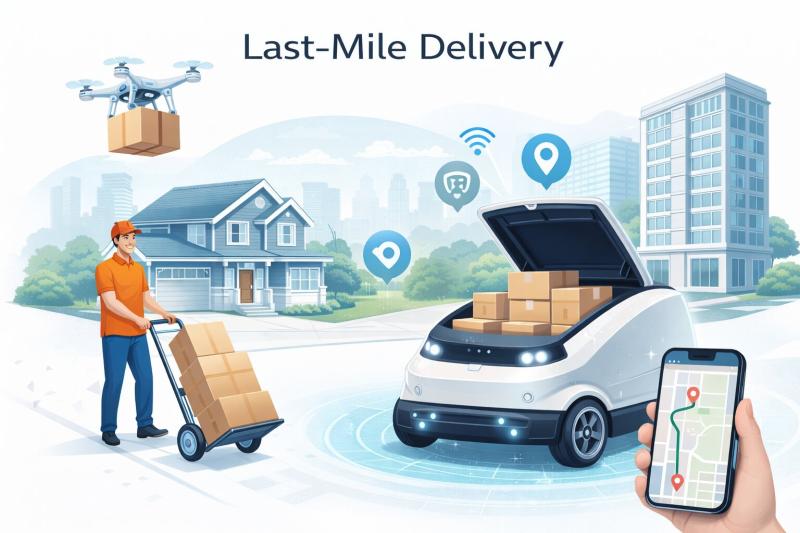
According to www.openpr.com, the global last-mile delivery market reached USD 182.44 billion in 2025 and is projected to reach USD 374.11 billion by 2033, growing at a CAGR of 9.62% from 2026 to 2033.
Market Drivers and Structural Shifts
The expansion is fueled primarily by the rapid growth of e-commerce and rising consumer expectations for same-day and next-day deliveries. Urbanization, traffic congestion, and demand for real-time tracking and flexible delivery options are intensifying pressure on logistics networks. On-demand services—including food delivery, quick commerce, and grocery delivery—are accelerating adoption of hyperlocal delivery infrastructure.
Sustainability imperatives are also reshaping operations: investments in electric delivery vehicles, micro-fulfillment centers, and eco-friendly practices are increasing to meet environmental regulations and reduce emissions. The integration of AI and data analytics—particularly for route optimization, demand forecasting, and delivery management—is enhancing visibility, efficiency, and customer satisfaction.
Technology Adoption Timeline
- February 2026: E-commerce growth across North America, Europe, and Asia Pacific drove demand for scalable last-mile solutions.
- January 2026: AI-driven route optimization and real-time tracking systems improved delivery efficiency and transparency.
- December 2025: Major providers expanded integrated delivery networks via partnerships with local carriers and gig economy platforms.
- November 2025: Autonomous delivery technologies—including drones, robots, and self-driving vehicles—advanced contactless, labor-light models.
- October 2025: Electrification accelerated, with companies deploying EV fleets and sustainable logistics infrastructure.
- September 2025: Smart logistics infrastructure investments rose in the U.S., Germany, China, India, and Japan.
Regional Distribution and Key Players
North America holds the largest share at 35%, attributed to its mature e-commerce ecosystem, advanced logistics infrastructure, and high technology adoption. Europe accounts for 25%, supported by sustainability initiatives and smart urban mobility systems. The Asia Pacific region commands 30% and is the fastest-growing, driven by rapid urbanization and e-commerce expansion in China, India, and Japan. Latin America and Middle East & Africa each hold 5% shares, reflecting emerging but accelerating market development.
Key players include Amazon.com, Inc., United Parcel Service of America, Inc., FedEx, DHL International GmbH, Starship Technologies, Zipline International Inc., DPDgroup, Hermes Europe GmbH, and Continental AG.
Service Type and Destination Segments
By service type, Business-To-Business (B2B) is the dominant segment, driven by demand for bulk transport and supply chain optimization between enterprises. Business-To-Consumer (B2C) remains highly significant due to e-commerce growth, while Customer-To-Customer (C2C) is an emerging segment enabled by peer-to-peer digital platforms.
Domestically focused deliveries represent the dominant destination segment, underpinned by high intra-country parcel volumes and expanding urban logistics networks.
Source: www.openpr.com
Compiled from international media by the SCI.AI editorial team.