Explore

  • Trending
  • Latest
  • Tools
  • Browse
  • Subscription Feed

Logistics

  • Ocean
  • Air Cargo
  • Road & Rail
  • Warehousing
  • Last Mile

Regions

  • Southeast Asia
  • South Asia
  • Central Asia
  • Japan & Korea
  • Middle East
  • Europe
  • Russia
  • Africa
  • North America
  • Latin America
  • Australia
SCI.AI
  • Supply Chain
    • Strategy & Planning
    • Logistics & Transport
    • Manufacturing
    • Inventory & Fulfillment
  • Procurement
    • Strategic Sourcing
    • Supplier Management
    • Supply Chain Finance
  • Technology
    • AI & Automation
    • Robotics
    • Digital Platforms
  • Risk & Resilience
  • Sustainability
  • Research
  • Expert Columns
  • English
    • Chinese
    • English
No Result
View All Result
  • Login
  • Register
SCI.AI
No Result
View All Result
Home Risk & Resilience Disruptions

Iran War Costs Hapag-Lloyd $40–50M/Week: 6 Ships Stuck

2026/03/28
in Disruptions, Risk & Resilience
0 0
Iran War Costs Hapag-Lloyd $40–50M/Week: 6 Ships Stuck

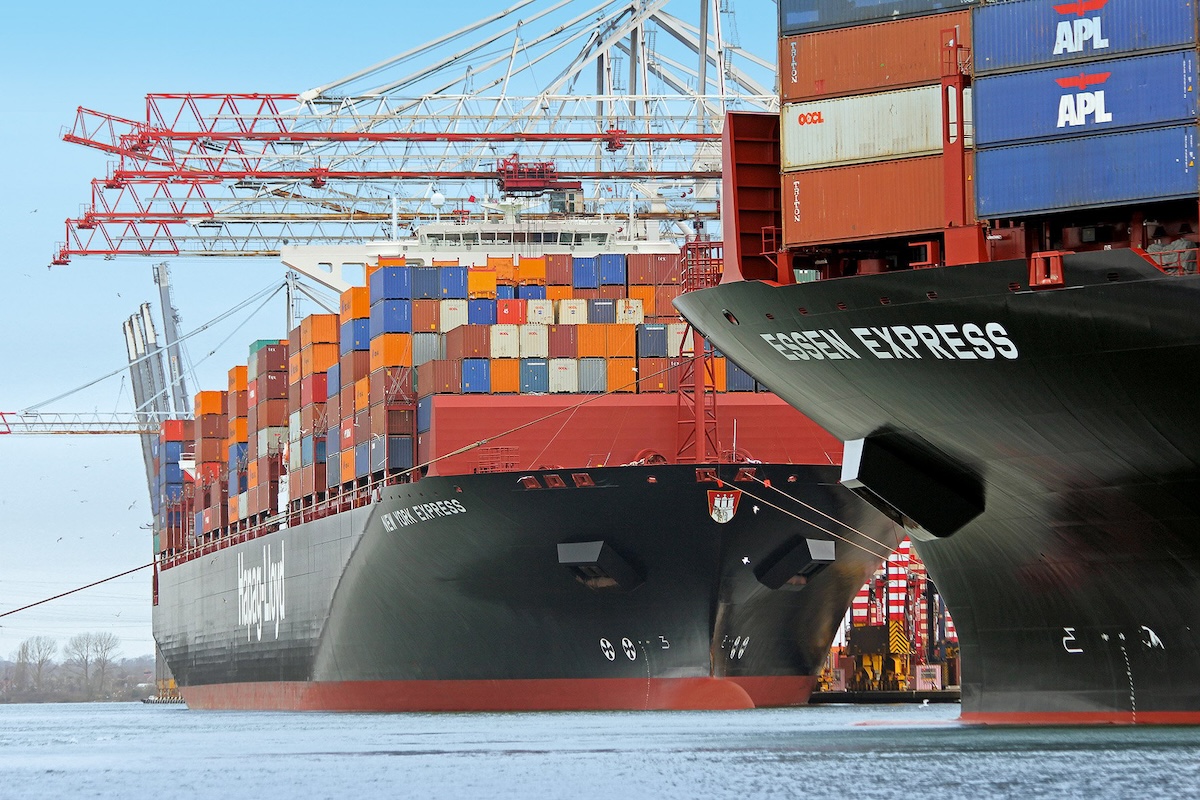
According to www.freightwaves.com, the U.S.-led war in Iran is costing Hapag-Lloyd $40 million to $50 million per week, driven primarily by surging bunker fuel and insurance expenses, as well as elevated storage and inland transportation costs.

Operational Disruptions and Vessel Constraints

Hapag-Lloyd CEO Rolf Habben Jansen confirmed on an earnings call that the carrier currently has six container ships trapped in the Persian Gulf, with a combined capacity of 25,000 TEUs. These are feeder-sized vessels typically used for short-haul port-to-port shuttling. Due to Iranian restrictions on maritime transit, the company cannot call ports inside the Gulf — though it continues limited service to Salalah in Oman and Jeddah in Saudi Arabia.

The conflict has also forced Hapag-Lloyd to suspend services through both the Strait of Hormuz and the Red Sea–Suez Canal route. The latter remains closed due to renewed threats from Houthi militia in Yemen, who have pledged support for Iran. Habben Jansen stated:

“I think right now it would not have been right to assume that the Red Sea opens up soon. The scenario where that remains largely closed for 2026, I think is right now the most realistic.”

Financial and Contractual Impact

The German liner reported a decline in operating profit to $3.5 billion in 2025, down from $4.9 billion in 2024, citing higher conflict-related costs and persistent global overcapacity. While cargo volumes increased, margins were eroded by extraordinary expenditures.

Habben Jansen noted that approximately 50% of Hapag-Lloyd’s contract freight to the region is exposed to disruption. To offset rising outlays, the company introduced contingency and emergency charges — though revenue recovery is delayed due to contractual terms and billing cycles.

Strategic Monitoring and Bunker Risk

The carrier is actively monitoring potential fuel supply constraints, especially given volatility in Middle Eastern oil production and refining. As Habben Jansen explained:

“We are definitely looking into that, because we also see that there is potentially a risk of shortage. Asia is not one of our biggest bunkering locations, but it is certainly something to keep an eye on.”

This situation reflects broader industry strain: Maersk and MSC have similarly rerouted vessels around the Cape of Good Hope since late 2023, adding 10–14 days to Asia–Europe transits and inflating costs across the board. According to Drewry’s 2025 Global Container Line Performance Report, average repositioning surcharges rose 220% year-on-year among top-10 carriers, with Persian Gulf and Red Sea exposure contributing disproportionately to cost inflation. For supply chain professionals, this means extended lead times, volatile spot rates, heightened insurance premiums (up 300–500% for Gulf transits per Allianz Marine’s 2026 Risk Barometer), and urgent pressure to audit single-point dependencies in sourcing and routing — particularly for electronics, pharmaceuticals, and automotive components reliant on just-in-time flows through these corridors.

Source: FreightWaves

Compiled from international media by the SCI.AI editorial team.

More on This Topic

  • Dollar Tree Opens 1M-Sq-Ft DC to Boost Supply Chain Resilience — Supply Chain Dive (May 15, 2026)
  • GM Powers 100% US Operations with Renewable Energy — Supply Chain Dive (May 15, 2026)
  • 4 Re-shoring Freight Lanes for Small Carriers — FreightWaves (May 15, 2026)
  • AI-Driven Warehouse Automation Breakthrough — Logistics Business (May 15, 2026)
  • DOJ Recognizes Modern Cargo Theft — FreightWaves (May 15, 2026)
ShareTweet

Related Posts

Dollar Tree Opens 1M-Sq-Ft DC to Boost Supply Chain Resilience — Supply Chain Dive
AI & Automation

Dollar Tree Opens 1M-Sq-Ft DC to Boost Supply Chain Resilience — Supply Chain Dive

May 15, 2026
1
GM Powers 100% US Operations with Renewable Energy — Supply Chain Dive
AI & Automation

GM Powers 100% US Operations with Renewable Energy — Supply Chain Dive

May 15, 2026
1
4 Re-shoring Freight Lanes for Small Carriers — FreightWaves
AI & Automation

4 Re-shoring Freight Lanes for Small Carriers — FreightWaves

May 15, 2026
0
AI-Driven Warehouse Automation Breakthrough — Logistics Business
AI & Automation

AI-Driven Warehouse Automation Breakthrough — Logistics Business

May 15, 2026
0
DOJ Recognizes Modern Cargo Theft — FreightWaves
AI & Automation

DOJ Recognizes Modern Cargo Theft — FreightWaves

May 15, 2026
0
61% of Logistics Teams Still Use Spreadsheets — Logistics Business
AI & Automation

61% of Logistics Teams Still Use Spreadsheets — Logistics Business

May 14, 2026
5

Leave a Reply Cancel reply

Your email address will not be published. Required fields are marked *

Recommended

Heavy-Industry Robotics Company Kewazo Raises $35 Million with Backing from Chevron and Asahi Kasei

Heavy-Industry Robotics Company Kewazo Raises $35 Million with Backing from Chevron and Asahi Kasei

10 Views
March 23, 2026
ATA的《2024年美国卡车运输趋势》提供了行业关键指标的详细概述

ATA’s “2024 U.S. Trucking Trends” Provides a Detailed Overview of Key Industry Metrics

16 Views
February 16, 2026
Drones in Urban Logistics: 5 Integration Challenges

Drones in Urban Logistics: 5 Integration Challenges

9 Views
April 2, 2026
EU’s 20th Sanctions Package Targets 120 Entities, First Anti-Circumvention Move Against Kyrgyzstan — eutoday.net

EU’s 20th Sanctions Package Targets 120 Entities, First Anti-Circumvention Move Against Kyrgyzstan — eutoday.net

29 Views
May 4, 2026
Show More

SCI.AI

Global Supply Chain Intelligence. Delivering real-time news, analysis, and insights for supply chain professionals worldwide.

Categories

  • Supply Chain Management
  • Procurement
  • Technology


  • Risk & Resilience
  • Sustainability
  • Research

© 2026 SCI.AI. All rights reserved.

Powered by SCI.AI Intelligence Platform

Welcome Back!

Sign In with Facebook
Sign In with Google
Sign In with Linked In
OR

Login to your account below

Forgotten Password? Sign Up

Create New Account!

Sign Up with Facebook
Sign Up with Google
Sign Up with Linked In
OR

Fill the forms below to register

All fields are required. Log In

Retrieve your password

Please enter your username or email address to reset your password.

Log In

Scan to share via WeChat

Open WeChat and scan the QR code to share

QR Code

Add New Playlist

No Result
View All Result
  • Supply Chain
    • Strategy & Planning
    • Logistics & Transport
    • Manufacturing
    • Inventory & Fulfillment
  • Procurement
    • Strategic Sourcing
    • Supplier Management
    • Supply Chain Finance
  • Technology
    • AI & Automation
    • Robotics
    • Digital Platforms
  • Risk & Resilience
  • Sustainability
  • Research
  • Expert Columns
  • English
    • Chinese
    • English
  • Login
  • Sign Up

© 2026 SCI.AI