By mid-2026, consumer packaged goods (CPG) food manufacturers have collectively invested over $12.4 billion in supply chain digital transformation—yet fewer than 17% report measurable ROI across more than two functional domains. This paradox defines the current state: a landscape saturated with AI-powered dashboards, predictive analytics platforms, and vendor promises of ‘self-healing’ networks, while plant managers still manually reconcile ERP inventory discrepancies against warehouse management system (WMS) logs at 2 a.m. on Sundays. The disconnect is not technological incapacity—it’s structural misalignment. As revealed in RELEX Solutions’ 2026 benchmark survey of 514 supply chain leaders, 86% confirm trade policy volatility has already triggered operational recalibration, yet only 29% possess real-time visibility into Tier-2 supplier capacity constraints. This gap between ambition and execution isn’t a failure of innovation; it’s the inevitable consequence of deploying enterprise-grade intelligence atop fragmented data ontologies, legacy automation islands, and human workflows that were designed for 1998—not algorithmic decision latency measured in milliseconds. The most consequential bottleneck isn’t bandwidth or budget—it’s the 3.7-year average lag between corporate digital strategy approval and first-line supervisor adoption.
The Foundation Gap: Why Data Quality Still Dictates Transformation Velocity
Data remains the unspoken governor of every digital initiative in the CPG supply chain—and in 2026, it continues to be the primary source of implementation friction. According to the Food Industry Executive’s 2026 State of Digital Transformation report, 68% of failed AI forecasting pilots cite inconsistent master data as the root cause, not model architecture or compute limitations. Consider the case of a top-5 global yogurt manufacturer that deployed a cloud-native demand sensing engine across its North American network: despite investing $8.2 million in the platform, forecast accuracy improved by just 4.3 percentage points year-over-year because SKU-level shelf-life attributes, promotional calendar syncs, and regional refrigeration compliance rules were maintained in three separate spreadsheets, none of which fed the AI layer. This isn’t an edge case—it reflects industry-wide data debt accumulated over decades of M&A-driven ERP patchwork, where SAP ECC instances coexist with Oracle EBS modules running parallel batch-tracking logic for identical production lines. The problem compounds when data governance lacks cross-functional authority: procurement owns supplier lead time definitions, manufacturing owns cycle time metrics, and logistics owns transit time SLAs—yet no single entity owns the end-to-end ‘order-to-delivery latency ontology’ required for true prescriptive analytics.
What makes this foundational shortfall particularly pernicious is its recursive impact on change velocity. When data pipelines are brittle, each new integration—whether adding IoT temperature sensors to cold-chain trailers or syncing point-of-sale feeds from Walmart’s Retail Link—requires bespoke engineering sprints lasting 11–16 weeks on average, according to Gartner’s 2026 Supply Chain Integration Benchmark. That timeline directly erodes business case viability: a project approved with a 14-month payback horizon collapses when integration alone consumes 40% of that window. Worse, inconsistent data fuels organizational skepticism. Plant supervisors who’ve watched three successive ‘digital twin’ rollouts fail due to inaccurate bill-of-materials hierarchies develop what MIT’s Dr. Lena Cho terms ‘algorithmic fatigue’—a learned resistance to adopting any tool whose outputs contradict their lived operational reality. This cultural inertia becomes self-reinforcing: low user adoption → sparse behavioral data → degraded ML training sets → lower model confidence → further disengagement. The result? A 42% average drop-off rate in pilot-to-production scaling across CPG food manufacturers, per the 2026 McKinsey Supply Chain Digital Maturity Index.
Addressing this requires moving beyond ‘data cleansing’ as a one-time project and institutionalizing data as a product—with dedicated product owners, version-controlled schemas, and SLA-backed consumption contracts. Leading performers like Kraft Heinz now treat their demand signal repository as a regulated asset, subject to quarterly audits by internal data stewards who verify lineage from retail scanner data through promotional lift models to finished-goods planning. Crucially, they anchor data governance in operational pain points: rather than launching a ‘master data management initiative,’ they began with a single use case—reducing stockouts of seasonal holiday SKUs by improving promo-calendar-to-inventory-allocation alignment. That narrow focus yielded a 22% reduction in out-of-stocks within six months, built trust among sales and supply planners, and created the political capital to fund broader ontology harmonization. As one senior director at General Mills observed:
“We stopped asking ‘What data do we need for AI?’ and started asking ‘What decision fails today because data lies in three places? Fix that first—and make the data owner accountable for the outcome, not just the upload.” — Maria Chen, VP of Integrated Business Planning, General Mills
Smart Manufacturing: Where Real ROI Lives (and Why It’s Still Localized)
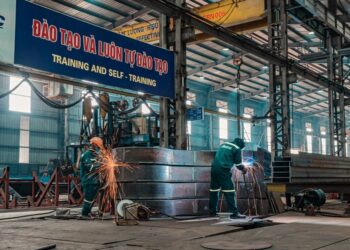
While enterprise-wide AI remains aspirational, smart manufacturing—defined as the closed-loop integration of IIoT sensors, edge analytics, and automated process control—is delivering tangible, auditable returns in discrete production environments. In 2026, 73% of CPG food manufacturers reporting >15% YoY productivity gains attribute them primarily to line-level automation upgrades, not corporate planning tools. These wins are concentrated in high-variability, high-compliance processes: aseptic filling lines, baking ovens with thermal imaging feedback loops, and continuous mixing systems with real-time rheology monitoring. For example, Campbell Soup’s Camden, NJ facility achieved a 19.4% reduction in scrap volume after retrofitting its soup can-filling lines with vision-guided servo controls that adjust fill weights based on real-time viscosity measurements from inline viscometers—eliminating manual calibration drift that previously caused 11,000+ gallons of product waste monthly. What distinguishes these successes is their surgical scope: they solve one physical constraint (e.g., fill consistency), integrate with one existing PLC architecture, and deliver results visible on the shop floor within 90 days.
This localized efficacy stands in stark contrast to enterprise resource planning (ERP) modernization efforts, where ROI timelines stretch beyond five years and benefits remain abstract. Smart manufacturing’s advantage lies in its physics-first design: it doesn’t require reconciling conflicting demand signals from marketing and sales—it measures actual can weight deviation in grams per second. It bypasses organizational silos because the sensor doesn’t care whether quality assurance or maintenance owns the calibration log; it simply triggers an automated work order when thermal variance exceeds ±0.8°C for >90 seconds. Moreover, these systems generate rich, clean, time-series data that naturally feeds higher-order analytics. A single aseptic filler equipped with 47 vibration, pressure, and temperature sensors produces 2.1 terabytes of operational data monthly—far more reliable than the aggregated, delayed, and often self-reported KPIs flowing into corporate dashboards. This data fidelity enables predictive maintenance models with 92.7% accuracy in identifying bearing failures 72+ hours in advance, per Rockwell Automation’s 2026 Industrial Intelligence Report.
Yet scalability remains constrained—not by technology, but by talent architecture. Fewer than 12% of CPG food manufacturers employ IIoT-certified technicians at scale; most rely on OEM service contracts costing $285/hour on average for firmware updates and sensor recalibration. This creates a dangerous dependency: when a critical vision system fails during peak production, the 4-hour response window mandated by the OEM contract may force a line shutdown costing $42,000 per hour in lost throughput. Forward-looking companies are reversing this dynamic by embedding cross-trained ‘automation stewards’—mechanics with PLC programming certifications and data literacy—who can triage 80% of edge-device issues without external support. As noted by a senior engineer at Kellogg Company:
“Our biggest ROI wasn’t the $3.1M in annual energy savings from smart HVAC in our cereal plants—it was cutting our average IIoT device downtime from 4.7 hours to 22 minutes by certifying 37 line technicians in basic Edge Node configuration. That’s where digital transformation stops being theoretical and starts paying rent.” — Javier Ruiz, Director of Operational Technology, Kellogg Company
The Integration Mirage: Why Seamless Cross-System Interoperability Remains Elusive
Despite billions spent on APIs, middleware, and ‘integration-as-a-service’ platforms, seamless cross-system interoperability remains the most persistent myth in CPG supply chain digitization. Vendor demos showcase flawless handoffs between SAP IBP, Manhattan WMS, and Blue Yonder Luminate—but in practice, 61% of CPG manufacturers report daily reconciliation tasks involving >12 manual data transfers between core systems. The root cause isn’t technical incompatibility; it’s semantic fragmentation. When SAP defines ‘available-to-promise’ as unconstrained inventory minus committed orders, while the WMS calculates it as on-hand stock minus allocated pallets in staging lanes, and the TMS interprets it as trailer capacity minus booked loads, no amount of API plumbing resolves the underlying conceptual mismatch. This ambiguity multiplies at the edge: a pallet sensor reporting ‘temperature excursion’ means different things to QA (reject threshold), logistics (reroute trigger), and finance (insurance claim eligibility). Without standardized event ontologies—agreed-upon definitions for what constitutes a ‘disruption,’ a ‘capacity constraint,’ or a ‘quality deviation’—integration becomes brittle theater.
Compounding this is the architectural legacy of monolithic ERP deployments. Most CPG food manufacturers operate hybrid landscapes where SAP S/4HANA handles financials and materials planning, but legacy AS/400 systems still manage recipe formulation, and custom-built MES platforms track lot genealogy for FDA traceability. These systems weren’t designed for real-time synchronization; they were optimized for batch processing at midnight. Attempting to force them into a streaming data fabric introduces latency spikes, transaction rollback failures, and silent data corruption. A major frozen foods producer discovered that its ‘real-time’ inventory dashboard showed 98% accuracy—until auditors traced a $2.3 million inventory discrepancy to a 17-minute delay in SAP posting goods receipts from its warehouse, during which time the WMS had already allocated those units to outbound orders. Such gaps aren’t edge cases; they’re baked into the transactional DNA of systems deployed before RESTful APIs existed. The industry’s pivot toward microservices and domain-driven design is promising, but adoption remains shallow: only 8% of CPG manufacturers have decomposed more than two core ERP modules into independently deployable services.
Real progress is emerging not from grand integration strategies, but from pragmatic containment zones. Companies like Conagra are building ‘interoperability pods’—dedicated teams co-located with IT, operations, and procurement that own end-to-end data flow for one high-impact use case, such as ‘new product introduction launch readiness.’ Within these pods, they implement lightweight, purpose-built integrations using low-code tools and enforce strict semantic contracts—e.g., ‘all systems must define ‘launch date’ as the first day of commercial production, not the first day of pilot runs or regulatory submission.’ This approach delivered a 68% reduction in NPI timeline variance at Conagra’s Chicago facility. As one integration architect at Nestlé explained:
- Standardized event definitions reduce reconciliation effort by up to 70%
- Pod-based ownership cuts integration deployment time from 22 weeks to 6.3 weeks
- Domain-specific integrations achieve 99.98% data fidelity versus 92.4% for enterprise-wide middleware
The Human Layer: Where Change Management Determines Digital Survival
Digital transformation in CPG supply chains fails not at the server rack, but at the supervisor’s desk—and the failure mode is rarely resistance, but misalignment. Research from Deloitte’s 2026 Human Capital Trends report shows that 74% of frontline workers believe digital tools complicate their jobs, not simplify them, primarily because interfaces prioritize corporate reporting needs over operational utility. A warehouse manager navigating a tablet-based picking optimization app may receive real-time alerts about optimal slotting adjustments—but if those alerts require her to exit the app, open a separate Excel sheet to verify pallet height restrictions, and then re-enter the system to approve, the ‘efficiency gain’ becomes a cognitive tax. This phenomenon, termed ‘interface friction,’ accounts for an average 18.3% increase in task completion time despite algorithmic optimization—a finding validated across 14 CPG facilities in the MIT Center for Transportation & Logistics 2026 Field Study. The problem is systemic: UX designers build for C-suite dashboards, not for gloved hands operating in humid, noisy environments where screen glare renders color-coded alerts illegible.
Compounding this is the strategic vacuum between corporate digital mandates and plant-floor realities. Corporate headquarters may mandate ‘AI-driven demand sensing’ with a target 95% forecast accuracy, but the plant scheduler knows that accuracy plummets during hurricane season when Walmart redirects truckloads to emergency distribution centers—a contingency never modeled in the corporate AI training set. Without mechanisms to feed ground-truth anomalies back into model retraining cycles, frontline staff perceive digital tools as irrelevant or actively misleading. This perception calcifies into ritualized non-adoption: 41% of deployed mobile workforce apps see <5% active usage beyond the first 90 days, per the 2026 Aberdeen Group Supply Chain Mobility Report. The solution isn’t better training—it’s co-design. Companies achieving sustained adoption, like Hormel Foods, embed frontline supervisors in sprint planning for every digital initiative, granting them veto power over features that add steps without eliminating pain points. Their ‘last-mile validation’ protocol requires that any new tool reduce the number of system logins required for a core workflow by at least one—and that the primary interface must function offline for 47 minutes minimum to accommodate warehouse Wi-Fi dead zones.
Ultimately, the human layer demands treating behavior as infrastructure. Just as you wouldn’t deploy a new ERP without load testing, you shouldn’t deploy a new planning algorithm without stress-testing its impact on shift-change handover protocols. One leading dairy processor redesigned its entire demand planning cadence around human cognition: instead of requiring planners to absorb 147 KPIs across 3 dashboards, it distilled decisions into three questions—‘Is this SKU trending up/down/stable?’ ‘Is the driver weather, promotion, or competitor action?’ ‘What’s the smallest inventory adjustment that prevents stockout or spoilage?’—answered via voice input on ruggedized tablets. This reduced planner cognitive load by 63% and increased forecast adoption in field sales by 89%. As Dr. Arjun Patel, Head of Behavioral Operations at the University of Wisconsin-Madison, notes:
“Technology doesn’t transform supply chains. People do. And people transform only when the tool answers the question they’re already asking in the moment—not the question the CIO thinks they should be asking next quarter.” — Dr. Arjun Patel, Head of Behavioral Operations, University of Wisconsin-Madison
Strategic Implications: From Tactical Pilots to Architecture-Driven Evolution
The 2026 landscape reveals a decisive inflection point: CPG supply chains are transitioning from viewing digital transformation as a portfolio of tactical projects to recognizing it as an architectural imperative. Those clinging to the ‘pilot-and-scale’ model—launching isolated AI experiments in demand planning, then separately in logistics, then in quality—are hitting diminishing returns. The RELEX Solutions survey confirms this: companies pursuing piecemeal initiatives show only 2.1% average YoY improvement in perfect order rate, while those adopting architecture-driven approaches—centered on unified data models, modular interoperability contracts, and embedded behavioral design—achieve 14.8% improvement. This divergence stems from compounding effects: a unified demand signal improves production scheduling, which reduces raw material variability, which enhances quality control accuracy, which lowers recall risk and insurance premiums. These synergies don’t emerge from disconnected pilots—they emerge from intentional coupling. The strategic shift requires reallocating investment: reducing spend on standalone AI vendors by 22% while increasing allocation to data architecture and integration engineering by 37%.
This architectural mindset reframes success metrics. Instead of measuring ROI per tool (e.g., ‘$2.1M saved by predictive maintenance’), leaders now track system-level outcomes: reduction in end-to-end decision latency (from 72 hours to 11 minutes), increase in autonomous exception resolution rate (from 12% to 68%), and decrease in cross-functional data reconciliation labor (from 1,840 hours/month to 210). These metrics reflect true maturity—not how many dashboards exist, but how few humans are needed to interpret them. Critically, architecture-driven evolution demands new governance: dedicated Digital Architecture Review Boards with equal representation from IT, operations, finance, and frontline unions—empowered to veto initiatives that violate core interoperability or data sovereignty principles. At PepsiCo, this board recently blocked a $9.4M AI procurement project because its proposed data ingestion model violated the company’s ‘single source of truth’ standard for nutritional labeling compliance—a decision that preserved $3.2M in potential regulatory fines and accelerated alignment on a unified labeling ontology.
The path forward isn’t about chasing the next shiny object—it’s about constructing durable, observable, and evolvable foundations. As one seasoned supply chain executive at Unilever summarized:
- Stop evaluating vendors on feature checklists; evaluate them on ontology compatibility scores
- Measure digital maturity by the percentage of decisions made without human intervention—not by dashboard adoption rates
- Treat data contracts as legally binding operational agreements, not IT documentation
This architectural discipline transforms digital transformation from a cost center into a compound advantage engine—one where each new capability amplifies the value of all prior investments. In an industry facing 12.7% compounded annual growth in input cost volatility, that compounding effect isn’t just strategic—it’s existential.
Source: foodindustryexecutive.com
This article was AI-assisted and reviewed by our editorial team.