The Definitive Phase Begins: Operational Realities of CBAM Implementation
January 1, 2026, was not merely a regulatory milestone—it marked the irreversible activation of the European Union’s Carbon Border Adjustment Mechanism as a binding fiscal instrument with immediate balance-sheet consequences. Unlike the transitional reporting phase (2023–2025), which required only quarterly emissions declarations without financial settlement, the definitive phase obligates EU importers to purchase verifiable CBAM certificates corresponding to the embedded carbon emissions of covered goods. Crucially, these certificates must be acquired in arrears: the first batch—covering all imports entering the EU between January 1 and December 31, 2026—must be purchased on February 1, 2027. This creates a critical 13-month working capital lag that forces importers to forecast, model, and provision for carbon liabilities well before final settlement. The mechanism is deliberately designed to shift financial risk upstream: while the importer bears legal responsibility for certificate acquisition, contractual terms are rapidly evolving to require exporters—especially large Chinese manufacturers—to bear the cost through price renegotiation or direct reimbursement clauses. This de facto cost pass-through has already triggered internal treasury realignments at over 42 percent of Tier-1 Chinese steel exporters surveyed by the China Iron and Steel Association in Q3 2025, with dedicated carbon finance units now reporting directly to CFOs.
The operational architecture of CBAM reflects a sophisticated convergence of environmental accounting and financial infrastructure. Certificate pricing is tethered exclusively to the quarterly average auction price of European Union Allowances (EUAs) under the EU Emissions Trading System. In 2025, EUA prices averaged EUR 60–80 per tonne of CO₂-equivalent, but this baseline masks structural volatility: the EU’s Market Stability Reserve has removed over 1.2 billion allowances since 2019, tightening supply, while the 2024 revision of the ETS Directive accelerated the annual linear reduction factor from 2.2 percent to 4.3 percent through 2030. Starting in 2027, CBAM will adopt weekly price linkages—a radical departure from quarterly averaging—that will expose importers to intra-month swings driven by macroeconomic sentiment, energy market shocks, and climate policy announcements. This introduces a new layer of financial engineering into procurement: forward carbon hedging, structured certificate swaps, and cross-border emission liability insurance are no longer theoretical instruments but emerging necessities for supply chain continuity.
From a compliance standpoint, the burden falls disproportionately on sectors where data transparency remains weak. While steel and aluminum producers in China increasingly deploy digital twins and IoT-enabled furnace monitoring, verified Scope 1 and Scope 2 emissions data remain fragmented across thousands of mid-tier smelters and rolling mills operating under provincial environmental bureaus with divergent audit protocols. The EU’s requirement for third-party verification against ISO 14064-1 standards has catalyzed a surge in demand for accredited Chinese verification bodies—yet fewer than 17 firms currently hold both CNAS accreditation and EU-recognized competence for CBAM-specific methodologies. This gap means many exporters face either costly delays in certification or default to the EU’s ‘default values’—which inflate calculated emissions by 20–35 percent relative to actual plant-level performance. That penalty isn’t just punitive; it distorts competitive positioning, rewarding early-mover transparency over genuine decarbonization pace.
Steel: The Core Battleground of Carbon Intensity and Structural Inertia
Steel accounts for over 70 percent of CBAM-exposed trade value between China and the EU, making it the undisputed epicenter of the carbon cost shockwave. Yet this dominance is not a function of export volume alone—it reflects the deep structural misalignment between China’s dominant production paradigm and the EU’s carbon accountability framework. Over 85 percent of China’s crude steel output originates from Blast Furnace–Basic Oxygen Furnace (BF-BOF) facilities, a process inherently reliant on metallurgical coal as both fuel and chemical reductant. Each tonne of BF-BOF steel emits an average of 2.1–2.3 tonnes of CO₂, compared to 0.4–0.6 tonnes for electric arc furnace (EAF) steel using scrap feedstock and renewable electricity. Despite China’s rapid expansion of EAF capacity—now exceeding 150 million tonnes annually—the national scrap availability constraint (just 22 percent of total ferrous input versus 70+ percent in the EU and U.S.) ensures BF-BOF will remain the backbone of domestic production through at least 2040. This technological lock-in transforms CBAM from a border measure into a systemic pressure valve on China’s entire industrial policy trajectory.
The financial calculus is stark and escalating. Under a medium carbon price scenario—EUR 70/tonne in 2026 rising to EUR 120–140/tonne by 2030—the projected CBAM charge on Chinese BF-BOF steel ranges from US$72 to US$83 per tonne. At current average EU import prices of US$750–820/tonne, this represents an immediate 9–11 percent cost premium. By 2034, when the EU plans full ETS phaseout for covered sectors and CBAM coverage expands to downstream products like pipes and structural sections, carbon compliance costs could absorb 20 to 30 percent of the underlying product price. This isn’t marginal—it’s existential for margin-thin producers. Already, three major Chinese steel conglomerates have announced joint ventures with EU-based green hydrogen developers to pilot direct reduced iron (DRI) production using hydrogen instead of coke, but these projects remain at TRL 5–6 and won’t scale before 2032. Meanwhile, commercial realities are shifting faster: EU steel distributors now require carbon intensity declarations alongside mill test reports, and German automotive OEMs have embedded CBAM-adjusted landed cost modeling into their Tier-2 supplier qualification frameworks.
What makes steel uniquely vulnerable is its role as a foundational input across value chains. A CBAM levy on hot-rolled coil doesn’t just affect the steelmaker—it cascades into automotive stampings, construction rebar specifications, and wind turbine tower fabrication. EU-based fabricators are increasingly invoking force majeure clauses tied to carbon cost volatility, demanding price reopener provisions every six months. This contractual fragmentation undermines long-term planning for Chinese exporters, who historically relied on multi-year framework agreements. Moreover, the EU’s upcoming Product Environmental Footprint (PEF) methodology—set for mandatory application to construction products in 2027—will integrate CBAM costs into lifecycle assessments, effectively penalizing Chinese steel twice: once at the border and again within EU procurement scoring systems. The result is not merely higher tariffs but a fundamental recalibration of what constitutes ‘competitive’ in European markets—where carbon efficiency is now a non-negotiable technical specification, not a sustainability add-on.
Aluminum: Electricity Grid Exposure as the Hidden Multiplier
While steel dominates CBAM headlines, aluminum presents a more insidious threat due to its extreme sensitivity to electricity carbon intensity. Aluminum production is inherently energy-intensive—consuming approximately 13–15 MWh per tonne of primary metal—and China’s grid remains overwhelmingly coal-dependent, with coal accounting for 58.4 percent of total generation in 2024 (National Energy Administration). This creates a structural vulnerability far deeper than process emissions alone: even if a Chinese smelter achieves world-class energy efficiency, its carbon footprint remains anchored to the grid’s average emissions factor of 0.572 kg CO₂/kWh—nearly triple Germany’s 0.198 kg CO₂/kWh. The base CBAM liability for Chinese aluminum exports in 2026 is estimated at EUR 500 million, but this figure assumes only direct emissions from the smelting process (Scope 1). Should the EU amend CBAM regulations—as widely anticipated in the 2026 review cycle—to include indirect emissions from purchased electricity (Scope 2), the liability could surge by 500–800 percent, pushing the total toward EUR 3–4.5 billion annually. This isn’t speculative risk; it’s a deliberate policy lever to accelerate grid decarbonization globally.
The implications extend beyond cost. Aluminum’s position in high-value supply chains—particularly aerospace, EV battery enclosures, and solar mounting structures—means carbon exposure directly affects strategic partnerships. Airbus, for instance, now requires Tier-1 suppliers to disclose aluminum sourcing carbon intensity under its Sustainable Aviation Fuel Roadmap, and its 2025 Supplier Sustainability Scorecard assigns 35 percent weight to Scope 1+2 emissions. Chinese smelters supplying EU-based extruders report receiving requests for hourly grid-mix data—a technically impossible ask given China’s provincial dispatch system and lack of real-time emissions tracking infrastructure. This informational asymmetry forces reliance on national or regional default factors, which the EU explicitly warns may be updated biannually based on IEA grid decarbonization benchmarks. Compounding the challenge, China’s ‘dual control’ energy policy prioritizes absolute consumption caps over carbon intensity, incentivizing smelters to shift operations to hydropower-rich provinces like Yunnan—only to face severe drought-driven curtailments, as occurred in 2022 and 2024, disrupting supply reliability and undermining long-term carbon planning.
Financially, the electricity multiplier reshapes investment logic. Greenfield smelter projects in Inner Mongolia now undergo mandatory ‘carbon stress testing’ that models CBAM liability under multiple grid decarbonization scenarios (e.g., 30% vs. 50% non-fossil share by 2030). Lenders—including China Development Bank and the Asian Infrastructure Investment Bank—are incorporating CBAM-adjusted EBITDA forecasts into credit appraisals, with debt service coverage ratios (DSCR) required to remain above 1.4x even under worst-case carbon price assumptions. This has stalled at least seven proposed smelter expansions since Q2 2025. More profoundly, it accelerates vertical integration: leading Chinese aluminum groups are acquiring equity stakes in wind and solar developers—not for energy trading, but to secure auditable, time-stamped renewable power purchase agreements (PPAs) that can be submitted to EU verifiers. These PPAs must meet strict criteria: they must be physically delivered (not virtual), cover >90 percent of annual consumption, and originate from assets commissioned after 2020. Such requirements create a new class of ‘carbon infrastructure’—where power generation assets are valued less for kWh output than for their certifiable carbon displacement value in EU markets.
Cement, Fertilizers, and Hydrogen: The Emerging Frontiers of Embedded Carbon Liability
Though steel and aluminum dominate current CBAM exposure, cement, fertilizers, and hydrogen represent the vanguard of secondary impact—where regulatory scope expansion will redefine competitiveness across entire industrial ecosystems. Cement accounts for roughly 12 percent of CBAM-exposed Chinese exports to the EU, but its significance lies in its role as a foundational material for construction and infrastructure. Chinese clinker production relies heavily on coal-fired kilns with average emissions of 0.88–0.92 tonnes CO₂/tonne—well above the EU’s best-available-technology benchmark of 0.72 tonnes. With CBAM default values set at 0.95 tonnes/tonne, even efficient Chinese plants face penalties unless they achieve third-party verification of lower intensity. More critically, the EU’s Construction Products Regulation (CPR) revision—effective July 2027—will mandate Environmental Product Declarations (EPDs) for all structural concrete sold in the bloc. Since EPDs must include CBAM-adjusted embodied carbon, Chinese precast concrete exporters will need to trace emissions not just from clinker, but from quarrying, grinding, transportation, and admixture manufacturing—a level of granular supply chain mapping few possess.
Fertilizers present a distinct challenge rooted in process chemistry rather than energy. Ammonia synthesis via the Haber-Bosch process consumes vast amounts of natural gas both as feedstock and fuel, generating 1.8–2.4 tonnes CO₂ per tonne of NH₃. China produces over 30 percent of global ammonia, yet domestic natural gas prices remain administratively controlled and disconnected from carbon cost signals. This disconnect creates a dangerous illusion of competitiveness: Chinese urea exports to EU agricultural distributors appear cheaper until CBAM applies a uniform carbon charge calibrated to EU production benchmarks—which assume gas reforming with 90 percent carbon capture. Without equivalent CCUS deployment, Chinese producers face an effective tariff of EUR 120–160/tonne by 2030. The ripple effect extends to downstream food security: EU organic farming cooperatives are already negotiating ‘low-carbon fertilizer’ premiums with Brazilian and Norwegian suppliers, signaling a market segmentation that could permanently reconfigure global nitrogen trade flows.
Hydrogen, though currently minimal in trade volume, is the most strategically volatile category. CBAM’s inclusion of hydrogen reflects the EU’s intent to govern the entire clean energy value chain—not just emissions sources but enablers of decarbonization. Under current rules, only ‘imported hydrogen’ is covered, but the 2026 review is expected to expand coverage to hydrogen used in the production of covered goods (e.g., green hydrogen in DRI steelmaking). This creates a recursive compliance loop: Chinese steelmakers using imported green hydrogen must verify its origin, production method, and grid carbon intensity—not just for the hydrogen itself, but for the electricity used to produce it. The EU’s delegated act on hydrogen certification mandates temporal correlation (hourly matching of electrolyzer load with renewable generation), geographic additionality (new renewables built specifically for the project), and stringent methane leakage controls. Few Chinese green hydrogen projects meet all three criteria today, meaning most would default to high-emission values, negating their ‘green’ branding in EU markets. This transforms hydrogen from a decarbonization tool into a new vector of carbon accountability—one that demands unprecedented coordination across energy, industry, and environmental regulators.
Aggregate Financial Impact: From Bilateral Trade Friction to Systemic Capital Reallocation
The aggregate CBAM liability landscape reveals a profound truth: this is not a customs duty but a structural capital reallocation mechanism. Global CBAM liabilities are projected to reach EUR 9 billion in 2026 and escalate to EUR 22 billion by 2035, with China bearing an estimated 65–70 percent of that burden. But these figures obscure the true economic gravity: CBAM revenues flow directly into the EU Innovation Fund and Modernisation Fund—vehicles designed to finance clean tech deployment *within* the EU. In essence, carbon compliance payments from Chinese exporters are being recycled to subsidize EU competitors’ R&D in hydrogen electrolyzers, CCUS retrofits, and low-carbon cement alternatives. This creates a self-reinforcing innovation advantage: EU firms gain access to cheaper capital for decarbonization technologies, while Chinese firms face higher cost of capital for identical projects. The result is a widening technology gap masked as environmental policy. Between 2023 and 2025, EU-based cleantech startups raised EUR 18.4 billion in venture funding, while Chinese climate tech startups secured just USD 4.7 billion—despite China’s larger emissions profile and manufacturing scale.
This fiscal feedback loop is accelerating corporate strategy divergence. Leading Chinese industrial groups are shifting from ‘export-led growth’ to ‘carbon-resilient localization’. Baowu Steel Group’s acquisition of German steel recycler KHS Metallurgical Services isn’t about market access—it’s about securing auditable scrap supply chains and EU-based carbon verification infrastructure. Similarly, China National Chemical Corporation’s (ChemChina) joint venture with Norwegian fertilizer giant Yara focuses on co-developing ammonia cracking technology for hydrogen export, positioning Chinese ammonia not as a commodity but as a certified energy carrier meeting EU’s strict hydrogen certification criteria. These moves reflect a hard-won realization: CBAM cannot be gamed through accounting adjustments or minor efficiency tweaks. It demands physical, verifiable, and jurisdictionally compliant infrastructure—infrastructure that often requires EU-based partners to satisfy regulatory gatekeepers. Consequently, foreign direct investment (FDI) flows are reversing: Chinese firms invested USD 12.3 billion in EU green industry assets in 2025, up 217 percent year-on-year, while EU FDI into Chinese heavy industry declined by 34 percent over the same period.
At the macro level, CBAM is triggering a reevaluation of China’s ‘dual circulation’ strategy. The domestic market, long seen as a buffer against external shocks, offers limited refuge: CBAM-compliant products command price premiums in China’s own green public procurement policies, and state-owned enterprises are mandated to prioritize suppliers with verified carbon footprints. This means Chinese exporters must decarbonize whether selling to Berlin or Beijing. The consequence is a massive, state-directed capital mobilization: China’s 14th Five-Year Plan allocates CNY 2.1 trillion (USD 300 billion) specifically for industrial decarbonization, with 40 percent earmarked for grid modernization and renewable integration. Yet this spending faces diminishing returns without parallel reforms in carbon accounting governance. Until China establishes a nationally harmonized, blockchain-verified emissions registry with real-time grid-mix data and third-party audit trails, its exporters will remain at a permanent verification disadvantage—paying more for carbon, investing more in compliance, and capturing less value from the green transition.
Strategic Imperatives: Beyond Compliance Toward Carbon Sovereignty
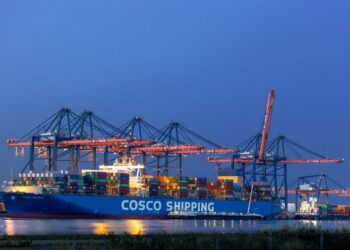
For Chinese manufacturers, surviving CBAM requires transcending reactive compliance and pursuing what we term ‘carbon sovereignty’—the ability to independently verify, manage, monetize, and strategically deploy carbon data as a core asset. This begins with infrastructural sovereignty: deploying edge-computing IoT sensors at furnace exhaust stacks, integrating them with blockchain-based ledger systems for immutable emissions logging, and linking them to real-time grid carbon intensity APIs. Several Shandong-based steel mills have piloted such systems with Huawei Cloud and State Grid Corporation, achieving 99.2 percent data uptime and reducing third-party verification costs by 65 percent. But technology alone is insufficient. Carbon sovereignty demands institutional sovereignty: establishing internal carbon pricing units that operate with P&L accountability, training procurement teams in carbon-adjusted total cost of ownership (TCO) modeling, and embedding carbon risk into board-level enterprise risk management (ERM) frameworks. COSCO Shipping, for example, now includes CBAM-adjusted freight cost scenarios in its quarterly earnings guidance—treating carbon as a line-item variable cost, not a footnote disclosure.
Equally vital is market sovereignty—the capacity to shape carbon valuation norms rather than accept them. Chinese industry associations are actively engaging with the UNFCCC’s Carbon Border Measures Working Group to advocate for recognition of China’s grid decarbonization progress, arguing that static default values ignore the country’s rapid renewable build-out (280 GW of solar added in 2024 alone). More concretely, China’s Ministry of Ecology and Environment is developing its own national carbon labeling standard (GB/T 32150-202X), designed to be interoperable with EU PEF but grounded in Chinese grid and industrial reality. Early adopters like Ansteel Group are using this label to negotiate ‘carbon parity’ clauses with EU buyers—whereby CBAM payments are offset by verified reductions in Chinese grid emissions over time. This reframes the relationship from transactional taxation to collaborative decarbonization, transforming CBAM from a barrier into a bridge.
Ultimately, CBAM’s deepest impact lies in its revelation that industrial competitiveness in the 21st century is inseparable from carbon intelligence. The firms that thrive will not be those with the lowest headline emissions, but those with the highest fidelity, velocity, and strategic utility of carbon data. They will use it to optimize energy procurement, negotiate premium contracts, secure preferential financing, and influence regulatory outcomes. As one Shanghai-based industrial economist observed: ‘CBAM didn’t create carbon risk—it exposed the pre-existing carbon illiteracy embedded in decades of cost-driven manufacturing.’ The supply chain reboot underway is therefore not just logistical or financial; it is epistemological. It demands a new industrial literacy—one where kilowatt-hours and kilotonnes of CO₂ are tracked with equal rigor, where carbon data engineers sit alongside metallurgists in R&D labs, and where the balance sheet reflects not just profit and loss, but carbon inflow and outflow. That is the threshold China’s heavy industry now confronts—not as a regulatory hurdle, but as the defining competency of the next industrial age.
Source: china-briefing.com
This article was AI-assisted and reviewed by our editorial team.