In an unprecedented legal and policy earthquake reverberating across global trade corridors, the U.S. Court of International Trade (CIT) has ordered the U.S. Customs and Border Protection (CBP) to refund $130 billion in tariffs unlawfully collected under the International Emergency Economic Powers Act (IEEPA). Issued on March 5, 2026, Judge Richard Eaton’s ruling—stemming from Atmus Filtration Technologies v. United States—does not merely reverse a single tariff action; it triggers a systemic recalibration of how multinational enterprises, logistics providers, customs brokers, and Tier-2/3 suppliers assess risk, price contracts, and structure inventory buffers. This is not a technical correction—it is the first major judicial repudiation of emergency-based trade policy since the 1977 IEEPA was enacted, and its implications extend far beyond balance sheet adjustments into the operational DNA of modern supply chains.
The Legal Fracture: When Emergency Authority Collides with Constitutional Guardrails
The CIT decision rests on a foundational constitutional principle: Congress alone holds the power to impose tariffs under Article I, Section 8 of the U.S. Constitution. By invoking IEEPA—a statute designed for national security crises like hostage negotiations or terrorist financing—to levy broad-based import duties on over 97% of all U.S. imports, the Trump administration overstepped statutory boundaries. The Supreme Court’s February 2026 ruling confirmed this, declaring that IEEPA does not authorize ‘fiscal policy by executive fiat.’ What makes Judge Eaton’s order extraordinary is its scope: it applies retroactively to all formal importers who paid IEEPA-based duties between October 2025 and February 2026—including those assessed under the so-called ‘Liberation Day’ tariffs targeting 42 countries at rates ranging from 10% to 50%.
This creates immediate legal exposure for CBP and Treasury. Unlike traditional tariff refunds—which require individual petitions and are subject to strict statutes of limitations—the CIT has established a class-wide administrative remedy. As Judge Eaton stated: ‘All formal importers have standing to claim restitution without relitigating liability.’ That transforms what would normally be a fragmented, resource-intensive claims process into a coordinated, high-volume financial reconciliation event. For supply chain finance teams, this means reconciling up to 18 months of duty payments across hundreds of HS codes, ports of entry, and bonded warehouse transactions—many of which were capitalized into landed cost models and absorbed into product pricing.
The Policy Vacuum: From $130B Windfall to $15% Global Tariff Gambit
Even as CBP scrambles to design a refund mechanism, the White House has already pivoted to Plan B—announcing on March 4, 2026, that a new 15% universal tariff will take effect ‘within days,’ replacing the invalidated IEEPA duties. Treasury Secretary Scott Bessent confirmed the move is intended to ‘preserve fiscal neutrality and maintain leverage in ongoing bilateral talks.’ But this rapid policy whiplash introduces profound strategic uncertainty:
- Contractual Ambiguity: Thousands of Incoterms® 2020–governed contracts (especially DAP and DDP) executed between November 2025 and February 2026 now contain unenforceable duty clauses—since the underlying tariff basis was void ab initio.
- Inventory Valuation Risk: GAAP ASC 740 and IFRS 12 require companies to reassess deferred tax assets/liabilities tied to import duties. With refunds imminent but timing unknown, multinationals face material restatements in Q1 2026 earnings.
- Logistics Cost Modeling Collapse: Third-party logistics (3PL) providers such as DHL Supply Chain and Kuehne + Nagel had embedded IEEPA duties into their U.S. cross-border rate cards. Their 2026 pricing frameworks must now be rebuilt mid-contract cycle—without clarity on whether refunds will be netted against future obligations.
The irony is structural: while the administration seeks continuity through higher nominal rates, the legal invalidation undermines the very predictability that global supply chains require. A 15% flat tariff may simplify calculation—but it erodes the granular, country- and product-specific risk assessments that drive nearshoring decisions, dual-sourcing strategies, and regional distribution center investments.
The Operational Cascade: Ports, Carriers, and the Hidden $2.4B Refund Tax
Refunding $130 billion is not a ledger entry—it is a physical, logistical, and technological undertaking. CBP processes over 35 million import entries annually, with an average duty payment size of $3,700. That implies roughly 35 million discrete refund transactions must be processed, verified, and disbursed—many requiring manual intervention due to legacy ACE (Automated Commercial Environment) system limitations. Industry estimates suggest administrative costs alone could exceed $2.4 billion, borne either by taxpayers or passed on via increased user fees.
For ocean carriers and port operators, the ripple effects are tangible:
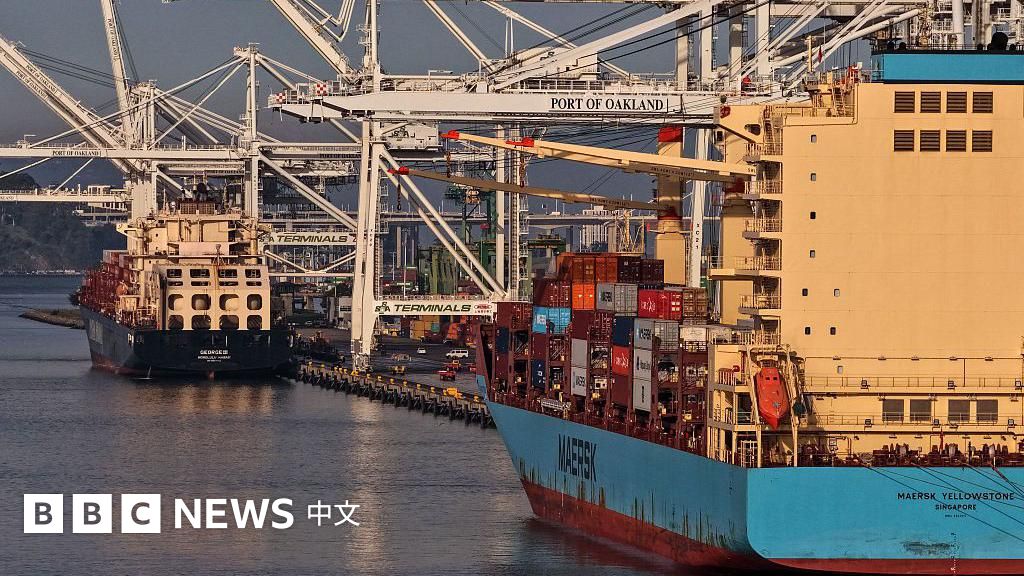
- Port Congestion Risk: Importers anticipating refunds may delay cargo release to preserve duty-paid liquidity—potentially extending container dwell times at ports like Los Angeles/Long Beach and Savannah by 2–4 days on average.
- Carrier Revenue Volatility: Maersk, MSC, and CMA CGM reported in Q4 2025 that 12–18% of U.S.-bound container revenue included IEEPA-related surcharges. These are now legally uncollectible, forcing immediate re-pricing of contractual fuel and regulatory adjustment clauses.
- Bonded Warehouse Liability: Over 2,100 licensed U.S. bonded warehouses held goods subject to IEEPA duties. Many issued duty-deferred invoices to clients; now they face clawback demands or write-offs—threatening working capital lines backed by inventory collateral.
Worse, the refund timeline remains opaque. CBP has no statutory deadline to issue payments, and historical precedent shows average processing lags of 14–22 months for complex duty drawback claims. In contrast, the ‘We Pay the Tariffs’ coalition of 4,200 small businesses demands ‘full, automatic, and expedited refunds’—a standard incompatible with current infrastructure.
Global Supply Chain Realignment: Asia, Mexico, and the Erosion of ‘Tariff Certainty’
The $130 billion reversal arrives amid accelerating shifts in global manufacturing footprints. According to the Reshoring Initiative’s 2026 Benchmark Report, U.S. reshoring activity surged 37% YoY in 2025, driven largely by anticipation of sustained tariff pressure. Now, with the legal foundation of that pressure dismantled, companies face a stark choice: double down on costly nearshoring investments—or pivot back toward Asia with renewed hedging sophistication.
Key regional impacts include:
- China: Despite Beijing’s ‘tariff-proofing’ strategy—including accelerated automation in Guangdong electronics clusters and dual-currency invoicing in RMB/USD—Chinese exporters saw $41 billion in lost U.S. market share during the IEEPA period. Refunds may ease short-term cash flow, but won’t reverse the 2025–26 surge in Vietnam-based final assembly for Apple, HP, and Dell.
- Mexico: Mexican maquiladora output for U.S. auto and medical device firms grew 29% in 2025, partly fueled by IEEPA-driven sourcing urgency. With tariff certainty evaporating, U.S. OEMs are now renegotiating long-term capacity commitments—introducing 6–12 month lead-time volatility into Tier-1 supplier planning.
- ASEAN & India: Countries like Vietnam, Thailand, and India leveraged the IEEPA window to secure $18.3 billion in new FDI commitments (UNCTAD 2025). Yet many projects included ‘tariff sunset’ clauses—triggering force majeure reviews if U.S. duties fell below 10%. The 15% replacement tariff may sustain momentum—but only if enforced uniformly, not selectively.
Most critically, the episode exposes a deep flaw in trade policy design: modern supply chains operate on predictable rules, not negotiated exceptions. When tariffs shift from calibrated tools (e.g., Section 301 exclusions) to blunt emergency instruments, the result isn’t protection—it’s paralysis. Procurement leaders at Fortune 500 firms report spending 23% more time on tariff scenario modeling in Q1 2026 than in all of 2024 combined.
Strategic Imperatives for Supply Chain Leaders
For supply chain executives, the CIT ruling is both a crisis and a catalyst. It demands urgent action across four domains:
- Audit & Recovery: Conduct forensic reconciliation of all IEEPA-duty payments from October 2025 onward—cross-referencing CBP Form 7501 data with ERP duty accruals. Prioritize entries with >$50,000 duty value and those involving bonded warehouses or foreign-trade zones.
- Contract Remediation: Review all active procurement, logistics, and distribution agreements for tariff pass-through, force majeure, and governing law clauses. Amend where possible to reference ‘statutorily valid duties’ rather than ‘executive-imposed levies.’
- Financial Hedging: Deploy FX and commodity-linked derivatives not just for raw materials—but for duty exposure risk. J.P. Morgan’s new ‘Tariff Volatility Index’ futures contract (launched March 2026) offers one hedge vehicle.
- Geopolitical Scenario Planning: Model three distinct U.S. tariff regimes: (1) 15% flat rate, (2) WTO-compliant product-specific duties, and (3) no new tariffs. Stress-test inventory turns, landed cost curves, and regional profit pools under each.
Ultimately, the $130 billion refund order is less about money returned than about trust redefined. Supply chains thrive on transparency, consistency, and enforceable expectations. When trade policy becomes litigation-prone and retroactively voidable, the true cost isn’t measured in dollars—it’s counted in delayed investments, abandoned expansions, and eroded confidence in the foundational architecture of global commerce. As one senior logistics officer at a Fortune 100 industrial firm told SCI.AI: ‘We didn’t lose $130 billion. We lost the ability to plan past next Tuesday.’
Source: BBC News Chinese, “Trump administration suffers setback as US trade court orders tariff refunds,” March 5, 2026.