Institutional Momentum Masks Structural Fragility
The ASEAN Power Grid (APG) has gained measurable institutional traction — yet BMI’s March 2026 research note cautions that formal progress does not equate to operational readiness. In October 2025, ASEAN energy ministers formally endorsed the Terms of Reference (ToR) for the ASEAN Submarine Power Cable Development Framework, a foundational document intended to standardize technical, regulatory, and contractual norms for subsea interconnections. This milestone designated the ASEAN Center for Energy (ACE) as the regional coordinator — a role critical for harmonizing cross-border grid planning. However, BMI stresses that ACE operates without binding enforcement authority; its influence rests entirely on voluntary cooperation among ten sovereign members with divergent energy priorities, fiscal capacities, and regulatory maturity. The framework is slated for completion during the 2026 Philippines Chairmanship of ASEAN — a timeline BMI explicitly labels “fairly ambitious.”
This structural limitation permeates every layer of APG development. Unlike the European Network of Transmission System Operators for Electricity (ENTSO-E), which possesses statutory powers to coordinate investment and resolve disputes, ACE cannot mandate grid codes, allocate transmission rights, or enforce tariff reciprocity. Its mandate remains consultative and facilitative — useful for dialogue, insufficient for execution. Project advancement hinges not on multilateral frameworks but on bilateral or trilateral arrangements, such as the Indonesia-Singapore HVDC link or the LTMS-PIP corridor. BMI observes that this fragmentation increases transaction costs, delays dispute resolution, and amplifies sovereign risk exposure for private investors — compounding financing and supply chain vulnerabilities rather than mitigating them.
Financing Bottleneck: $10B ADB Commitment vs. $100B Transmission Need
The financing gap represents the most acute constraint on APG realization. While the Asian Development Bank (ADB) has committed up to $10 billion for the ASEAN Power Grid over the next ten years, BMI estimates that at least $100 billion is required for transmission infrastructure alone by 2045. This leaves a shortfall of approximately $90 billion — a figure that reflects not only capital intensity but also the unique risk profile of cross-border power assets. Cross-border projects face layered uncertainties: ownership models remain unresolved across jurisdictions; wheeling tariff structures lack harmonization; utilization and curtailment risk allocation lacks precedent; foreign exchange exposure is unmitigated; and sovereign or utility credit risk is neither pooled nor insured. Commercial banks routinely price in country risk premiums exceeding 300 basis points for ASEAN frontier utilities, while multilateral lenders require extensive political risk insurance and government guarantees before committing long-term capital.
The Indonesia-Singapore HVDC import project exemplifies the emerging financing paradigm. Conditionally licensed and backed by consortia including Temasek-controlled companies and Chinese state-owned utilities, it relies on a “sovereign-backed structure” — meaning national balance sheets absorb key risks. BMI underscores that such arrangements are not scalable across the entire APG. With ten member states, each possessing distinct fiscal health and policy continuity, replicating this model universally is implausible. Sovereign backing also introduces new complexities: intergovernmental negotiations over revenue sharing, dispute settlement mechanisms, and exit clauses can stall projects for years. As BMI concludes, “government credit backing is essential” — but essentiality does not imply availability across the region.
“Cross-border grid infrastructure involves capital-intensive assets with uncertain revenue streams and complex sovereign risk.” — BMI Country Risk And Industry Research, March 2026
Supply Chain Crisis: Copper +55%, Electrical Steel +70%, and 3–5 Year HVDC Lead Times
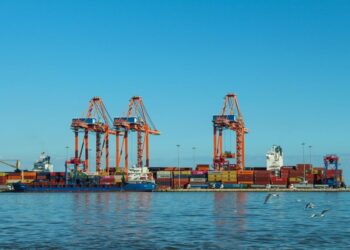
The global grid supply chain is under unprecedented strain — and ASEAN sits at the epicenter of converging pressures. Global grid investment spending hit record levels in 2025, a trend BMI expects to intensify through 2026 and beyond, driven by renewable integration mandates, aging infrastructure replacement, and energy security imperatives. Within this context, HVDC submarine cable systems — the technological backbone of ASEAN’s interconnection ambitions — face delivery timelines that “can exceed 3–5 years.” This bottleneck stems from constrained global manufacturing capacity, particularly in specialized extrusion and armoring facilities, compounded by fierce competition from Europe’s offshore wind buildout. Manufacturers report order books fully booked through 2028 for certain HVDC cable grades, forcing APG developers into multi-year procurement lead times before initiating engineering design.
Material cost inflation further erodes project viability. Since 2020, copper prices have surged 55%, directly impacting conductor costs for both AC and DC transmission lines. Electrical steel — the core laminated material in transformers and reactors — has risen 70%, with some high-efficiency grades increasing 80%–100%. These are not marginal inputs: copper constitutes approximately 30% of HVDC cable system cost, while electrical steel accounts for roughly 45% of transformer bill-of-materials. Price volatility translates directly into bid uncertainty, with contractors increasingly embedding 15–20% contingency premiums. Transformer pricing illustrates regional divergence: Europe faces 20%–30% increases, while APAC markets see 15%–25% hikes — significant, but substantially lower than Western counterparts.
- Copper prices up 55% since 2020
- Electrical steel up 70%, some grades up 80%–100% since 2020
- Europe transformer prices up 20%–30%; APAC up 15%–25%
- HVDC submarine cable delivery timelines: 3–5 years
- ADB commitment: up to $10 billion over 10 years
- Estimated need by 2045: at least $100 billion for transmission alone
Geopolitical Friction: Thailand’s Instability Delays LTMS-PIP by Six Months
Geopolitical risk is not a background factor — it is an active, recurring disruptor of APG timelines. Cross-border power trade requires stable, predictable policy alignment across all wheeling and exporting states, a condition increasingly difficult to sustain amid regional political volatility. BMI cites Thailand’s political instability as a concrete example: it delayed finalization of Phase 2 arrangements for the LTMS-PIP (Lao PDR-Thailand-Malaysia-Singapore Power Integration Project), prolonging the scale-up from 100MW to 200MW by approximately six months. Such delays cascade — postponing revenue generation, extending debt service periods, triggering penalty clauses in power purchase agreements, and undermining investor confidence in the broader APG roadmap. These are symptomatic of deeper structural tensions. BMI’s Asia Country Risk team forecasts that “cross-border clashes between Thailand and Cambodia will occur periodically,” reflecting longstanding border disputes, water resource competition, and nationalist rhetoric — all of which spill over into energy diplomacy.
The implications extend beyond bilateral friction. Geopolitical uncertainty directly affects risk pricing: insurers charge higher premiums for political risk coverage, multilateral lenders impose stricter disbursement conditions, and commercial lenders apply tighter covenants on sovereign-guaranteed loans. More broadly, BMI notes that perceived political risk “directly affects financing and project timelines for long-duration subsea infrastructure,” where construction cycles span five to seven years and require uninterrupted policy continuity. This means that even technically sound, economically viable projects stall when ministerial transitions, election outcomes, or regional standoffs introduce ambiguity about future regulatory treatment or offtake commitments — making geopolitical stability a non-negotiable prerequisite for APG’s success.
Stakeholder Map: ADB’s Limited Firepower Meets APAC Manufacturing Dominance
Understanding APG’s trajectory requires mapping the asymmetric capabilities and incentives of its key stakeholders. The ADB, while institutionally central, brings limited financial firepower relative to need: its $10 billion commitment covers less than 10% of the estimated $100 billion transmission requirement. Its role is therefore catalytic — de-risking first-of-a-kind projects, providing technical assistance, and convening parties — not capital-intensive deployment. Sovereign-backed entities like Temasek-controlled companies and Chinese state-owned utilities operate with different mandates: strategic energy security, industrial policy objectives, and long-term asset ownership horizons. Their participation in the Indonesia-Singapore HVDC project demonstrates how government balance sheets can bridge financing gaps — but also highlights dependency on bilateral trust and diplomatic bandwidth that cannot be replicated across all ten ASEAN member states.
On the equipment side, the market is undergoing rapid reconfiguration. Western manufacturers retain technological leadership in HVDC converters and ultra-high-efficiency transformers but face steep cost disadvantages. Europe’s 20%–30% transformer price increases reflect both raw material costs and rising labor and compliance expenses. Meanwhile, APAC suppliers — in China, South Korea, and increasingly Vietnam — offer competitive pricing and shorter lead times. BMI observes that “Europe is strategically pivoting toward Asian suppliers, prioritizing delivery certainty and price over origin,” signaling a structural shift in global procurement logic. This bifurcation is likely to deepen: premium-priced Western production will serve policy-mandated domestic projects, while competitive Asian manufacturing captures global commercial demand — including ASEAN’s urgent need for cost-effective, deliverable equipment. APG developers gain access to affordable gear, but face heightened exposure to export controls, logistics bottlenecks, and quality assurance variability in the process.
Outlook: Gradual, Uneven Expansion Across Three Scenarios
BMI rejects binary narratives of APG success or failure. Instead, it projects a “gradual and uneven” expansion path shaped by project-specific economics, financing capabilities, and degree of reliance on power imports. Countries with strong fiscal positions, stable policy environments, and acute import dependence — such as Singapore — will advance priority interconnections first. Singapore’s urgency stems from near-total reliance on imported electricity and land constraints limiting domestic renewables; the Indonesia-Singapore HVDC link enjoys top-tier political and financial support as a result. Conversely, countries with abundant domestic generation (e.g., Indonesia’s coal and geothermal resources) or weaker fiscal buffers will prioritize domestic grid upgrades over cross-border commitments, slowing corridor development. This heterogeneity produces three distinct scenarios with materially different timeline implications.
In the optimistic case, accelerated ADB co-financing, rapid ACE framework adoption, and sustained APAC equipment supply enable APG to advance its cross-border power trade targets on schedule. In the baseline — BMI’s preferred scenario — expansion proceeds incrementally, with LTMS-PIP reaching 200MW capacity by late 2026 and the first submarine cable achieving commercial operation in 2028, contingent on resolving sovereign risk allocation and securing procurement contracts for copper and steel before mid-2026. In the pessimistic scenario, recurrent geopolitical friction — renewed Thailand-Cambodia border tensions, or Myanmar’s extended instability — triggers multi-year delays, pushing the $100 billion transmission need further into the 2040s and missing key energy transition milestones. Crucially, BMI emphasizes that none of these scenarios assume technological failure; all hinge on governance, finance, and supply chain execution — domains where ASEAN’s institutional architecture remains fundamentally under-resourced. The 2026 Philippines Chairmanship will serve as an early litmus test for whether the region can translate ambitious framework language into binding, bankable project commitments.
Source: technode.global
This article was AI-assisted and reviewed by our editorial team.