Unprecedented Scale: 8,100+ Professionals and 230+ Global Brands Converge in Mumbai
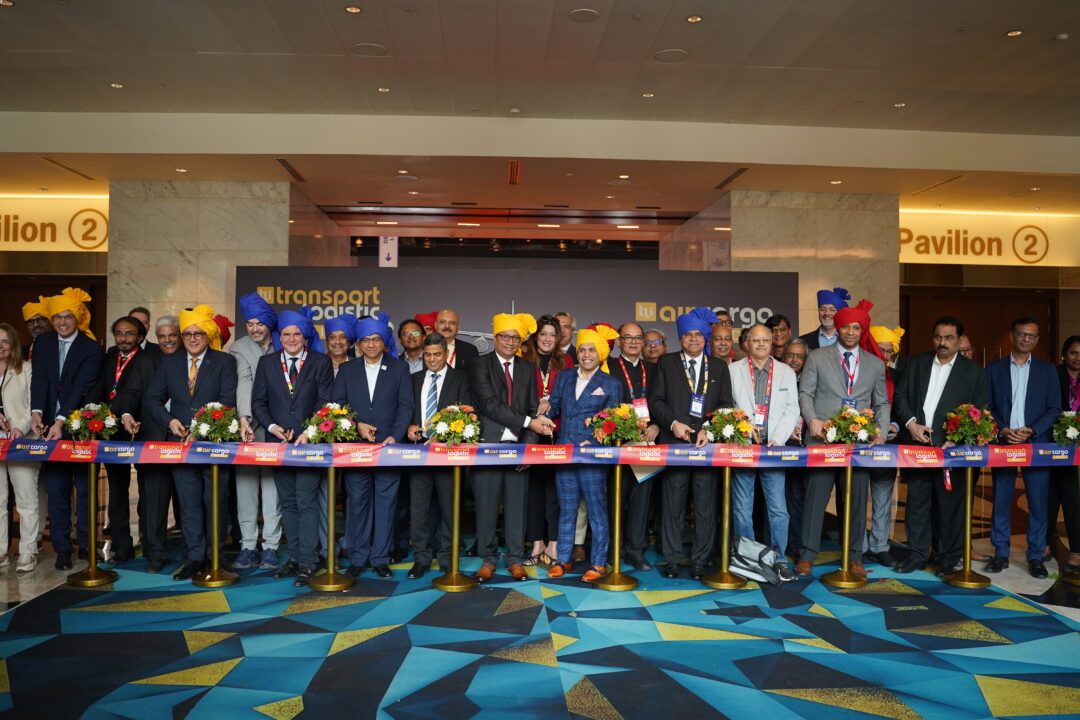
The 2026 edition of Transport Logistic India and Air Cargo India — held simultaneously for the first time at the Jio World Convention Centre in Mumbai — marked a watershed moment for India’s logistics evolution. Over three days, the dual-show platform drew 8,100+ industry professionals, including supply chain executives, port authorities, freight forwarders, technology vendors, policymakers, and academic researchers. This attendance figure reflects not only growing domestic engagement but also deepening international interest in India’s infrastructure transformation. The event was the 11th edition of Air Cargo India, yet its strategic pairing with Transport Logistic India signified a deliberate shift toward multimodal integration — acknowledging air cargo as a critical node within road, rail, sea, and digital networks.
Exhibition participation underscored this global alignment: 230+ exhibiting brands from 38 countries showcased end-to-end solutions — from cold-chain containers certified for pharmaceutical shipments to AI-driven yard management systems deployed at major ports. Notable participants included Air India Cargo, Amazon Air Cargo, DHL Logistics, Emirates SkyCargo, Maersk, Qatar Airways Cargo, CEVA Logistics, Cathay Cargo, and Turkish Cargo. Their collective presence confirmed India’s emergence as both a destination market and an export-enabling hub — especially for high-value, time-sensitive verticals like electronics, biologics, and automotive components.
This scale was not accidental. It followed years of policy scaffolding — the National Logistics Policy (2022), the PM Gati Shakti National Master Plan, and state-level initiatives such as Maharashtra’s Integrated Logistics Policy. Each contributed to measurable improvements in turnaround times, customs clearance velocity, and cross-modal handoff reliability. The convergence of so many stakeholders in one venue also enabled unprecedented benchmarking and knowledge exchange — with insights from airlines, ports, freight forwarders, logistics parks, technology firms and policymakers creating a comprehensive picture of India’s supply chain evolution toward Vision 2030.
From 13–14% to 7.9%: India’s Logistics Cost Transformation Explained
At the heart of India’s logistics narrative lies a single, powerful statistic: national logistics costs have declined from nearly 13–14% of GDP in 2016 to approximately 7.9% today, according to Shri Shyam Jagannathan, IAS, Director General of Shipping, Ministry of Ports, Shipping and Waterways. This reduction reflects over eight years of structural reform: digitization of customs via ICEGATE, consolidation under GST, creation of multimodal logistics parks (MMLPs), and deployment of the Unified Logistics Interface Platform (ULIP), which now integrates data from multiple government agencies and private logistics providers. ULIP has significantly reduced documentation processing time and cut transit delays caused by manual verification.
“India’s logistics costs have reduced from nearly 13–14% of GDP in 2016 to around 7.9% today, reflecting sustained reforms and a strong focus on ease of doing business. Logistics remains the backbone of cost-effective manufacturing and seamless first- and last-mile connectivity.” — Shri Shyam Jagannathan, IAS, Director General of Shipping, Ministry of Ports, Shipping and Waterways
The decline also stems from targeted infrastructure upgrades. The Vadhavan Port project — currently under construction near Dahanu — will add significant annual capacity and serve as a dedicated gateway for automobile exports and containerized agri-exports. Similarly, the Samruddhi Expressway, a 701-kilometer greenfield corridor linking Nagpur to Mumbai, has already cut road freight travel time between Maharashtra’s industrial heartland and its primary seaport substantially. When combined with the Atal Setu — a 21.8-kilometer bridge connecting Mumbai to Navi Mumbai — these projects form a contiguous high-efficiency belt capable of absorbing rising volumes without proportional congestion penalties.
Yet the 7.9% figure must be contextualized. While globally competitive — comparable to regional leaders and significantly better than many emerging economies — it still leaves room for further improvement. Regional disparities persist across Indian states, underscoring that the national average masks uneven implementation. The directionality is unambiguous, however: every percentage point reduction in logistics cost translates into substantial annual GDP uplift. As Jagannathan emphasized, “Without this foundation, ‘Make in India’ would remain aspirational rather than operational.”
Road Transport as Strategic Backbone: AITWA’s Rs 75 Crore Driver Welfare Commitment
Despite rapid growth in air and sea freight, road transport continues to carry over 65% of India’s domestic freight tonnage — a share projected to remain dominant through 2030. Recognizing this reality, the All India Transporters’ Welfare Association (AITWA) used the 2026 event to announce a landmark commitment: an investment of approximately Rs 75 crores over the next three years to develop driver-dedicated facilities across five strategic zones. These centers will cover key freight corridors and house integrated facilities offering medical support, safety training modules, healthy food kiosks, rest areas, and digital grievance redressal portals. The initiative directly addresses chronic pain points in road freight — driver fatigue and lack of accessible healthcare contribute significantly to unplanned vehicle downtime and road incidents.
This investment is not merely humanitarian; it is economically calibrated. Each facility is designed to service thousands of commercial drivers annually, improving fleet utilization through reduced absenteeism and faster turnaround at checkpoints. Standardized rest areas enable predictable scheduling — a prerequisite for integrating road legs into time-definite multimodal contracts. As Ashok Goyal, National President of AITWA, stated: “Road transport remains the backbone of India’s supply chain, connecting ports, airports, industrial clusters and consumption centres. When transporters, freight forwarders, airlines and policymakers sit together, we move closer to reducing transit time, improving reliability and lowering overall logistics costs for Indian industry.”
The timing of this commitment aligns with broader digital initiatives for commercial vehicles, including real-time GPS tracking and electronic toll reconciliation mandates. AITWA’s facilities will serve as physical anchors for this digital ecosystem — places where drivers receive onboarding assistance for compliance systems, access training modules on hazardous material handling, and engage with the formal supply chain infrastructure. This synergy between physical infrastructure and regulatory technology represents a mature phase of logistics governance, where worker welfare and system efficiency are treated as interdependent variables rather than competing priorities.
Technology as Catalyst: AI, Blockchain, and the Future Tech Pavilion
The Future Tech Pavilion — powered by SmartKargo — emerged as a microcosm of India’s digital logistics leap. Unlike generic tech showcases, this curated zone featured working prototypes and production-deployed systems actively reducing friction across the supply chain. Among them were AI-led cargo management systems capable of dynamically rerouting air shipments based on real-time weather forecasts, slot availability at destination hubs, and predictive maintenance signals. Demonstrators showed how machine learning models trained on historical flight data could anticipate capacity shortfalls in advance — enabling proactive rebooking and minimizing costly ad-hoc charters. These tools move logistics beyond reactive problem-solving into anticipatory orchestration — a paradigm essential for Vision 2030’s ambition of positioning India as a global logistics hub.
Equally compelling were blockchain-based tracking solutions addressing long-standing trust deficits in cross-border trade. Live pilots tracked pharmaceutical consignments from Hyderabad plants to international distribution centers using permissioned ledgers. Every touchpoint — customs inspection, temperature excursions, warehouse receipt issuance — was cryptographically signed and time-stamped, eliminating disputes over liability and accelerating claim resolution dramatically. This transparency extended to financing: banks participating in pilots approved letters of credit against immutable blockchain records instead of paper bills of lading, accelerating working capital cycles significantly. Advanced analytics platforms similarly revealed hidden patterns in freight flows, enabling exporters to adjust strategies proactively rather than reactively.
Importantly, these technologies are being adopted not just by multinationals but by mid-sized Indian enterprises. Textile exporters, cold-chain startups, and pharmaceutical manufacturers demonstrated how low-code analytics dashboards built on open APIs reduced customs classification errors, cut duty penalties, and achieved high temperature compliance standards. These use cases confirm that India’s tech adoption curve is no longer top-down but diffusion-driven, with SMEs rapidly scaling proven solutions. The conference theme — “Powering Vision 2030 with Logistics Performance Excellence” — found tangible expression not in abstract strategy but in deployable, ROI-positive tools reshaping daily operations across the value chain.
Regional Momentum: Telangana, Maharashtra, and State-Level Execution
While national frameworks provide coherence, regional execution determines velocity — and multiple Indian states demonstrated leadership at the 2026 event. Shri. Duddilla Sridhar Babu, Minister for IT and Industry, Government of Telangana, articulated a vision where logistics is intelligence, not just infrastructure: “Technology is reshaping logistics for both pharma and manufacturing, where speed, reliability, and product integrity are critical from Telangana to global markets. We invite global partners and startups to collaborate with us in building faster, more intelligent logistics systems anchored in Hyderabad.” Telangana’s logistics policy offers single-window clearances and mandates integration with national platforms, creating a state-level logistics observatory that informs dynamic policy adjustments in real time.
Maharashtra’s Minister Pratap Sarnaik reinforced the infrastructure push: projects like Vadhavan Port, Mumbai’s proposed third airport, and the Samruddhi Expressway form a contiguous high-efficiency logistics belt. Sarnaik highlighted the state’s commitment to building more integrated logistics hubs to simplify transport and operations, attract greater investment, and create employment opportunities. The German Pavilion at the event illustrated international appetite for these opportunities, with logistics and technology firms from Europe actively exploring partnerships with Maharashtra and Telangana corridors.
Other states are following suit across India. Karnataka, Gujarat, and Odisha are each advancing logistics modernization initiatives aligned with national KPIs. This federal dynamism ensures resilience: if one corridor faces disruption, alternatives exist — a feature increasingly vital amid climate volatility and geopolitical uncertainty. Collectively, these efforts reveal a decentralized yet coordinated model where states compete on execution excellence while aligning with national targets. The result is a logistics ecosystem that is both more competitive and more adaptive than what any single centralized approach could achieve.
Strategic Outlook: Vision 2030, 2027 Expansions, and India’s Global Logistics Ambition
The success of Transport Logistic India and Air Cargo India 2026 sets a clear precedent for future editions. The organizers confirmed that Transport Logistic India & Project Cargo 2027 will take place on 25–26 February 2027 in Mumbai, expanding scope to include heavy-lift, oversized, and project cargo critical for energy, defense, and infrastructure sectors. Simultaneously, Transport Logistic Africa & Air Cargo Africa 2027 launches in Nairobi from 2–4 February 2027 — signaling India’s intent to export logistics expertise and foster South-South collaboration across high-growth trade corridors. These events form a growing knowledge network facilitating technology transfer, regulatory harmonization, and joint investment in transcontinental corridors.
Looking further ahead, the 2026 outcomes feed directly into Vision 2030 — India’s comprehensive roadmap for world-class logistics performance. Key milestones include reducing logistics costs below 7% of GDP, achieving high multimodal interoperability across major freight corridors, deploying AI-driven national freight traffic management, and establishing India as a top global destination for logistics foreign direct investment. The 120+ conference speakers at the 2026 event provided granular insights into feasibility, while the Air Cargo India 2026 theme — “Global Air Cargo – Booming but Bumpy” — candidly acknowledged that structural demand from pharmaceuticals and e-commerce must be met with infrastructure that can absorb operational volatility without cascading disruptions.
The numbers tell the definitive story of India’s logistics trajectory: from 13–14% to 7.9% of GDP in logistics costs over eight years; from a standalone air cargo show to an integrated multimodal platform attracting 8,100+ professionals from 38 countries; from individual port upgrades to a coordinated national master plan. The convergence of policymakers, practitioners, technology innovators, and infrastructure investors at Mumbai in 2026 created a feedback loop where every participant both learned and contributed. India’s logistics ambition is no longer aspirational — it is operational, measurable, and expanding. As the 11th edition of Air Cargo India gave way to the first edition of Transport Logistic India, the signal was unmistakable: integration has arrived, and the pace of execution is accelerating.
Related Reading
- Global Supply Chain Realignment: Asia Emerges as the Core Beneficiary of Trade Restructuring
- Bangladesh ART Agreement and South Asia Textile Supply Chain Transformation
Source: aircargoweek.com
This article was AI-assisted and reviewed by our editorial team.