As global e-commerce platforms scale with unprecedented velocity—and new entrants like TikTok Shop and Temu accelerate the shift toward semi-managed commerce—the cross-border logistics landscape has undergone a structural metamorphosis. No longer a commoditized ‘pipe’ for moving boxes, logistics in 2026 is a strategic, multi-layered capability stack: one that demands capital intensity, algorithmic precision, and jurisdictional fluency in equal measure. According to WL123’s 2026 Cross-Border Logistics Service Provider Landscape Report, the sector has crystallized into three distinct archetypes—Infrastructure Titans, Digital-First Specialists, and Ecosystem Enablers—each solving fundamentally different pain points across the supply chain continuum. This evolution reflects broader macro-trends: rising ocean freight volatility (with spot rates swinging ±45% YoY), tightening customs enforcement (U.S. CBP audit rates up 62% since 2022), and platform-driven pressure for sub-5-day delivery to end consumers—even from Shenzhen to Sydney.
The Infrastructure Titan: Capital as Competitive Moat
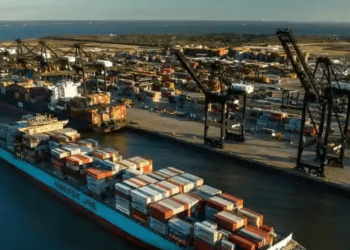
At the apex of the logistics hierarchy stand the Infrastructure Titans—firms that treat physical assets not as cost centers but as defensible, scalable platforms. These players have moved decisively beyond brokerage into vertically integrated infrastructure ownership. Longteng Group (Zongteng), China’s largest cross-border logistics unicorn, exemplifies this shift: it operates four Boeing 777F freighters, manages over 230万平方米 (2.48 million sq ft) of owned and leased overseas warehousing space, and has acquired controlling stakes in last-mile providers across North America (UNIUNI) and Europe (GOFO). Critically, Longteng’s asset base isn’t just about capacity—it’s about control. Its proprietary air network enables guaranteed weekly departures on key Asia–U.S. lanes, while its warehouse footprint allows for dynamic inventory positioning aligned with real-time demand signals from Temu and SHEIN. This isn’t logistics outsourcing; it’s embedded supply chain sovereignty.
Such scale carries profound implications for resilience. During the 2023 Red Sea crisis, Longteng rerouted 87% of its affected Asia–Europe volume via its own charter flights within 72 hours—while non-asset-based peers faced 14–21-day delays securing third-party capacity. The financial commitment is staggering: Longteng’s capex spend exceeded $480 million in 2025 alone, dwarfing the entire annual revenue of mid-tier competitors. Yet for Tier-1 sellers managing $50M+ in annual cross-border GMV, this investment translates directly into 22% lower landed cost variance and 99.3% on-time-in-full (OTIF) performance across 12 major destination markets.
The Digital Specialist: Precision, Not Power
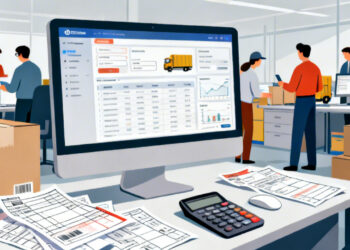
In contrast to the Titans’ brute-force capital deployment, Digital Specialists compete on algorithmic agility and domain-specific mastery. These firms—like Jiufang Tongxun (Nine-Fang Express) and Lianyu Logistics—have weaponized data to solve high-frequency, high-friction problems: FBA head-end congestion, Amazon SEND compliance bottlenecks, and regional customs unpredictability. Jiufang Tongxun, for instance, achieved $2.2 billion in 2023 revenue not by owning planes or warehouses, but by building an end-to-end digital operating system that synchronizes carrier booking, customs documentation, warehouse receipt, and Amazon ASIN-level tracking—all in under 90 seconds per shipment.
This digital layer delivers measurable ROI. Jiufang’s clients report a 37% reduction in FBA rejection rates due to automated label validation and pre-clearance risk scoring. Similarly, Lianyu’s ‘4S Certification’ (SPN, SEND, ShipTrack, TSPN) isn’t just a badge—it’s a technical integration framework enabling real-time parcel visibility across Amazon’s fragmented carrier ecosystem. For U.S.-focused sellers, Lianyu’s proprietary U.S. warehouse management system reduces average pick-pack-ship cycle time from 24.6 hours to 8.2 hours, directly accelerating cash conversion cycles. Their model proves that in 2026, software-defined logistics can outperform hardware-heavy incumbents on speed, accuracy, and total cost of ownership—for specific use cases.
- Jiufang Tongxun: Best-in-class for Amazon-centric sellers requiring multi-country FBA head-end reliability
- Lianyu Logistics: Optimal for U.S.-only merchants needing seamless sea-air-warehouse integration
- Suma Logistics: Dominant in Australia with 6.11 RMB/kg minimum-weight ocean service, undercutting legacy carriers by 28% on trans-Tasman lanes
- Tengxin International: Industry leader in Zhejiang/Jinhua industrial cluster optimization, reducing LCL consolidation lead times by 41%
The Ecosystem Enabler: Solving the ‘Hidden Friction’ Layer
Beneath the headline-grabbing infrastructure and digital plays lies a critical third tier: Ecosystem Enablers. These are not transporters or warehouse operators—but specialists who de-risk the invisible seams of global trade: customs clearance, legal exposure, insurance gaps, and last-mile localization. Their rise signals a maturing market where operational excellence is table stakes, and risk mitigation is the true differentiator.
Consider Qiancheng Interconnect (QCI), whose AI-powered ‘Customs Elf’ platform analyzes over 12.7 million historical U.S. entry records to predict CBP inspection probability with 91.4% accuracy. Since deploying the system in Q4 2024, clients reduced average customs dwell time from 7.3 days to 2.1 days and cut associated demurrage fees by $1.8M annually per $100M in import value. Meanwhile, Changnian Changfu addresses a uniquely American pain point: trucking access. By operating its own fleet adjacent to the Port of New York and Chicago Union Station, it bypasses UPS/FedEx ground scheduling constraints—delivering same-day pickup and 48-hour inland distribution at 35% lower cost than national carriers for bulk cargo transfers. These are not ‘nice-to-have’ services—they’re mission-critical infrastructure for sellers navigating regulatory complexity and geographic fragmentation.
The legal and insurance verticals complete the ecosystem. CaiBao Network now offers parametric cargo insurance policies that auto-trigger payouts within 4 hours of carrier-reported loss—versus the industry standard of 14–21 days. And DaXin Law Firm has developed a proprietary litigation response protocol for Amazon seller lawsuits, slashing average defense costs by 63% and settlement timelines by 78%. In 2026, supply chain resilience is no longer defined solely by transit time—it’s measured in milliseconds of insurance payout latency and hours of legal response velocity.
Strategic Resource Pooling: From Vendor Selection to Portfolio Management
The most consequential insight from WL123’s analysis is that the optimal 2026 logistics strategy is not vendor selection—but vendor portfolio construction. Sellers must move beyond ‘one primary carrier’ thinking toward a dynamic, market-aligned resource pool. Data from WL123’s benchmarking study shows that top-quartile performers allocate logistics spend across 3.7 vendors on average, segmented by function and geography:
- Core Infrastructure Partner: For air/sea backbone and large-scale warehousing (e.g., Longteng for global reach, EKU for U.S. East Coast speed)
- Digital Head-End Partner: For platform-integrated FBA prep and documentation automation (e.g., Jiufang for Amazon, Xiao Fei Xiang for TikTok/Temu)
- Ecosystem Specialists: One for customs (QCI), one for legal (DaXin), one for insurance (CaiBao)—all operating on retainer or usage-based SLAs
This approach delivers quantifiable advantages. Sellers using a diversified portfolio reported 29% lower supply chain disruption impact during geopolitical events, 17% faster time-to-market for new SKUs, and 22% higher gross margin retention versus single-vendor reliant peers. Crucially, the ‘right’ mix varies by maturity: startups prioritize cost and simplicity (leaning heavily on Milestone International’s low-barrier LCL and small-package solutions), while enterprise sellers deploy Longteng for core flow and niche specialists for edge-case resolution. The era of ‘set-and-forget’ logistics is over—replaced by active, data-informed portfolio governance.
Conclusion: A New Supply Chain Operating System Is Emerging
The 2026 cross-border logistics landscape reveals a profound truth: global supply chains are no longer linear pipelines but adaptive, multi-layered operating systems. Infrastructure Titans provide the foundational compute power; Digital Specialists deliver the real-time OS layer; and Ecosystem Enablers supply the security, compliance, and risk-mitigation modules. Success belongs not to those who choose the ‘best’ vendor—but to those who architect the most resilient, responsive, and intelligent combination. As platforms continue to fragment (TikTok, Temu, Amazon, Walmart+, Shein) and regulations tighten globally (EU’s DAC8, U.S. UFLPA enforcement, Australia’s new GST thresholds), the ability to dynamically reconfigure one’s logistics portfolio will be the definitive competitive advantage. For supply chain leaders, the imperative is clear: stop sourcing carriers. Start building ecosystems.
Source: WL123 Cross-Border Logistics Navigation Ecosystem Platform, “2026 Cross-Border Logistics Service Provider Landscape”, published January 2026. Available at https://www.wl123.com/wu-liu-wiki/ping-tai-jie-shao/13767.html