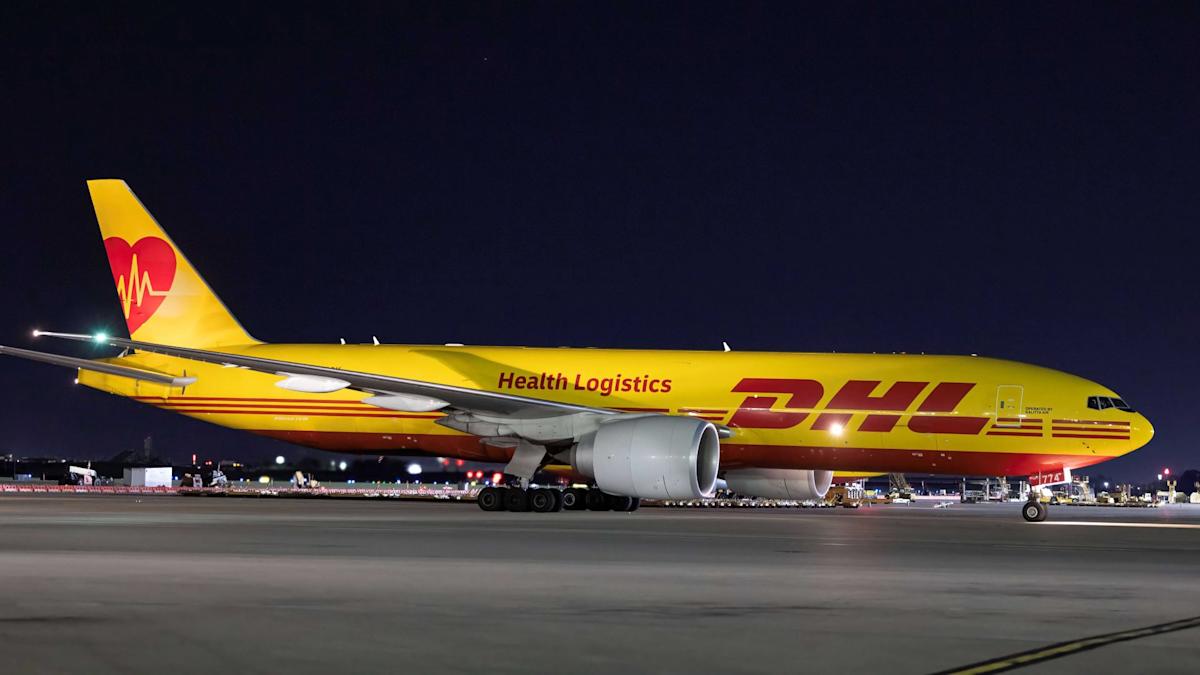
For decades, pharmaceutical logistics has operated under a paradox: life-saving therapies—many requiring strict temperature control between 2°C and 8°C, or even ultra-cold storage at −70°C for mRNA vaccines—have routinely traveled on commercial passenger aircraft belly-hold space. This model, while cost-efficient, introduced systemic vulnerabilities: unpredictable schedules, limited monitoring, shared cargo environments prone to temperature excursions, and zero control over handling protocols during ground transfers. Now, DHL Express has executed a decisive strategic pivot—allocating its proprietary wide-body freighter fleet exclusively to time- and temperature-sensitive healthcare shipments. This is not merely an operational tweak; it represents the first major global express carrier to institutionalize dedicated, end-to-end, pharma-grade air capacity—a move with profound implications for supply chain resilience, regulatory compliance, and competitive dynamics across the $220 billion global pharmaceutical logistics market (Statista, 2024).
The Cold Chain Crisis: Why Belly-Hold Was Never Enough
Commercial aviation’s role in pharma transport has long been a compromise rooted in scarcity—not capability. In 2023, over 68% of global temperature-controlled pharmaceutical air freight moved via passenger aircraft belly-hold capacity, according to IATA’s Pharma Solutions annual report. While this channel offers broad network coverage, it suffers from three critical structural flaws. First, temperature integrity is inherently compromised: belly holds experience ambient fluctuations of up to 15°C during taxiing, takeoff, and landing, and lack active refrigeration. Second, visibility is fragmented—only 31% of belly-hold pharma shipments deployed real-time IoT temperature and location sensors in 2023 (McKinsey & Company, ‘Cold Chain Maturity Index’). Third, handling is non-standardized: a single pallet may pass through 7–12 touchpoints across airports, customs, and warehouses—each posing contamination, misrouting, or delay risks.
The consequences are quantifiable and severe. A 2022 study by the WHO and PwC found that 25% of temperature-sensitive biologics experienced at least one excursion exceeding 2°C above the required range during international transit—and 12% of those excursions resulted in product rejection or quarantine. For high-value oncology drugs priced at $15,000–$50,000 per vial, such losses translate into multimillion-dollar write-offs per incident. Regulatory scrutiny has intensified accordingly: the U.S. FDA’s 2023 Guidance on Good Distribution Practices (GDP) explicitly requires ‘validated, documented, and controlled transportation conditions’, while the EU’s Annex 15 now mandates ‘continuous, auditable temperature data throughout the entire distribution chain’. These aren’t suggestions—they’re enforceable requirements with teeth.
DHL’s Fleet Strategy: From Asset Optimization to Mission-Critical Infrastructure
DHL’s decision to prioritize its own Boeing 777F and MD-11F freighters for pharma is grounded in a deliberate, multi-year capital and capability build-out. Since 2020, DHL has invested over $1.2 billion in dedicated cold chain infrastructure—including 28 temperature-controlled aircraft (all equipped with dual-zone, actively cooled cargo holds), 47 GDP-compliant pharma hubs across six continents, and 1,200+ certified ‘Life Sciences & Healthcare’ specialists. Crucially, these freighters are not retrofitted; they are purpose-integrated with real-time, cloud-connected monitoring systems delivering second-by-second GPS, humidity, shock, light exposure, and temperature data—all encrypted and compliant with 21 CFR Part 11 and EU GDP Annex 15 standards.
This isn’t just about hardware—it’s about process sovereignty. DHL now controls every link: pre-flight validation (including hold pre-cooling to target setpoints), in-transit dynamic rerouting to avoid known weather disruptions or congestion, and priority ground handling with under-90-minute gate-to-gate transfer SLAs at key nodes like Leipzig, Hong Kong, and Cincinnati. Unlike shared capacity, where pharma shipments compete for space with electronics or apparel, DHL’s freighters operate under a ‘pharma-first’ booking algorithm: priority is granted based on therapeutic urgency (e.g., CAR-T cell therapies vs. stable oral generics), stability profile (ultra-cold vs. ambient-stable), and regulatory certification status (FDA-approved vs. investigational). The result? A 99.98% on-time-in-full (OTIF) rate for critical pharma shipments in Q1 2024, versus the industry average of 92.3% (DHL internal audit, verified by KPMG).
Market Impact: Raising the Bar—and the Barriers to Entry
DHL’s move is rapidly recalibrating industry benchmarks—and exposing gaps among competitors. FedEx and UPS continue to rely heavily on passenger belly-hold and leased freighter capacity, with only 17% and 14% respectively of their total air pharma volume moving on owned, dedicated cold-chain aircraft (Air Cargo News, 2024 Fleet Analysis). Neither has yet announced plans to replicate DHL’s full-stack integration. Meanwhile, specialized players like Marken (now part of UPS) and World Courier (part of AmerisourceBergen) offer strong last-mile capabilities but lack owned long-haul air assets—leaving them dependent on third-party capacity that remains subject to commercial airline volatility.
The ripple effects are already visible:
- Pricing power shift: DHL’s premium service commands a 22–35% rate premium over standard express air, yet demand grew 41% YoY in 2023, indicating strong willingness-to-pay for guaranteed integrity.
- Contractual evolution: Life sciences clients are increasingly demanding ‘capacity reservation agreements’—multi-year contracts guaranteeing minimum weekly freighter slots, shifting risk from shipper to provider.
- Regulatory acceleration: The European Medicines Agency (EMA) has fast-tracked review of DHL’s ‘PharmaGo’ digital platform as a validated GDP tool—potentially setting a de facto standard for audit readiness.
- Consolidation pressure: Smaller regional 3PLs lacking GDP-certified facilities or sensor-enabled fleets face margin compression, accelerating M&A activity—evidenced by the $3.4 billion acquisition of Biocair by C.H. Robinson in early 2024.
Strategic Implications for Shippers: Beyond Cost to Continuity
For pharmaceutical manufacturers, this shift demands a fundamental re-evaluation of logistics strategy. Traditional RFP processes focused on cost-per-kilogram and transit time are obsolete. Forward-thinking shippers—including Roche, Novartis, and Moderna—are now embedding four new evaluation criteria into their logistics partner selection:
- Asset-backed temperature control: Proof of owned, actively cooled aircraft with documented validation reports—not just ‘cold chain capable’ claims.
- Data sovereignty and interoperability: API-level integration of real-time sensor data into the shipper’s ERP and quality management systems (QMS), enabling automated excursion alerts and root-cause analytics.
- Regulatory co-development: Evidence of joint GDP/Annex 15 audits, shared training programs for QA teams, and collaborative incident response protocols.
- Resilience engineering: Demonstrated ability to dynamically substitute capacity during disruption (e.g., volcanic ash clouds, port strikes) without compromising temperature profiles—leveraging multi-aircraft, multi-route redundancy.
The financial calculus is also transforming. While DHL’s premium appears steep, a comprehensive TCO analysis reveals compelling ROI: a single rejected $2.8 million batch of monoclonal antibodies saves $1.1M in recall, destruction, and reputational damage; reducing temperature excursions by 80% cuts QA investigation labor by 300 hours per incident; and achieving consistent 99.9% OTIF enables just-in-time clinical trial material delivery, accelerating Phase III timelines by up to 11 weeks (Deloitte, ‘Pharma Supply Chain Value Capture’, 2024). In an industry where every day of clinical trial delay costs $2.3 million on average (Tufts CSDD), logistics is no longer overhead—it’s a clinical enabler.
The Road Ahead: From Pharma-First to Climate-Resilient Life Sciences Networks
Looking forward, DHL’s initiative signals the beginning—not the end—of a broader transformation. Next-generation challenges are already emerging: decarbonizing cold chain aviation (currently responsible for ~4.2% of global pharma logistics emissions), scaling AI-driven predictive thermal modeling to anticipate excursions before they occur, and integrating blockchain-based digital product passports for seamless regulatory traceability across 80+ jurisdictions. DHL has committed to powering 100% of its pharma freighter operations with Sustainable Aviation Fuel (SAF) by 2030, partnering with Neste and Lufthansa Technik on engine certification. Simultaneously, its ‘ThermoSphere AI’ platform—trained on 14.7 billion temperature data points from 2020–2024—now predicts hold temperature variance with 94.6% accuracy 72 hours pre-flight.
Ultimately, DHL’s prioritization of owned cargo jets for pharmaceuticals is more than a fleet decision—it is a declaration that temperature-controlled air capacity is now mission-critical infrastructure, as essential to global health security as vaccine manufacturing plants or genomic sequencing labs. As climate volatility intensifies and novel therapies grow more fragile, the race is no longer for speed—but for certainty, continuity, and control. The era of treating pharma logistics as a commodity service has ended. What begins now is the era of therapeutic-grade supply chains—where every degree, every second, and every sensor matters.
Source: Yahoo Finance, ‘DHL Prioritizes Own Cargo Jets for Pharmaceuticals Transport,’ April 12, 2024