On February 20, 2026, the U.S. Supreme Court delivered a seismic ruling that reverberated across global supply chains: tariffs imposed by the Trump administration under the International Emergency Economic Powers Act (IEEPA) — specifically those targeting Iranian-origin goods and certain dual-use components — were declared unlawful. The decision did not merely strike down future enforcement; it invalidated the legal foundation for over $12.3 billion in duties collected by U.S. Customs and Border Protection (CBP) between March 2024 and December 2025. While the Court stopped short of mandating refunds, its unambiguous finding of statutory overreach opened the floodgates for restitution claims — and triggered an unprecedented chain reaction among logistics providers. FedEx’s public pledge on February 26 — to pass 100% of any tariff refunds it receives directly to shippers and end consumers — is far more than a customer service gesture. It represents the first major operationalization of a new paradigm: carrier-as-custodian-of-trade-compliance-value.
The Legal Fault Line: Why IEEPA Tariffs Collapsed
The contested tariffs stemmed from Executive Order 14109, issued in March 2024, which invoked IEEPA to impose 25% ad valorem duties on imports linked to Iran’s aerospace, defense, and nuclear sectors — including thousands of Harmonized System (HS) codes covering semiconductors, precision bearings, optical sensors, and composite materials. Crucially, these levies bypassed Congress and were applied without formal rulemaking, public comment, or statutory authorization specific to trade remedies. As the Supreme Court held in United States v. Bausch + Lomb et al., IEEPA grants the President authority to regulate transactions involving foreign adversaries, but not to unilaterally impose customs duties, a power reserved exclusively to Congress under Article I, Section 8 of the U.S. Constitution.
This distinction is foundational. Unlike Section 301 (China) or Section 232 (steel/aluminum) tariffs — which are authorized by statute and administered through the U.S. Trade Representative — the IEEPA-based duties lacked procedural legitimacy and statutory anchoring. CBP collected an estimated $12.3 billion in such duties during the 22-month enforcement window, with FedEx alone reporting $417 million in assessed tariffs across its express, freight, and ground divisions. Other plaintiffs — including Bausch + Lomb ($89M), Dyson ($63M), and L’Oréal ($31M) — represent just the tip of a litigation iceberg: over 142 importers and logistics firms have now filed coordinated refund petitions before the U.S. Court of International Trade (CIT).
FedEx’s Refund Commitment: A Strategic Pivot Beyond Customer Relations
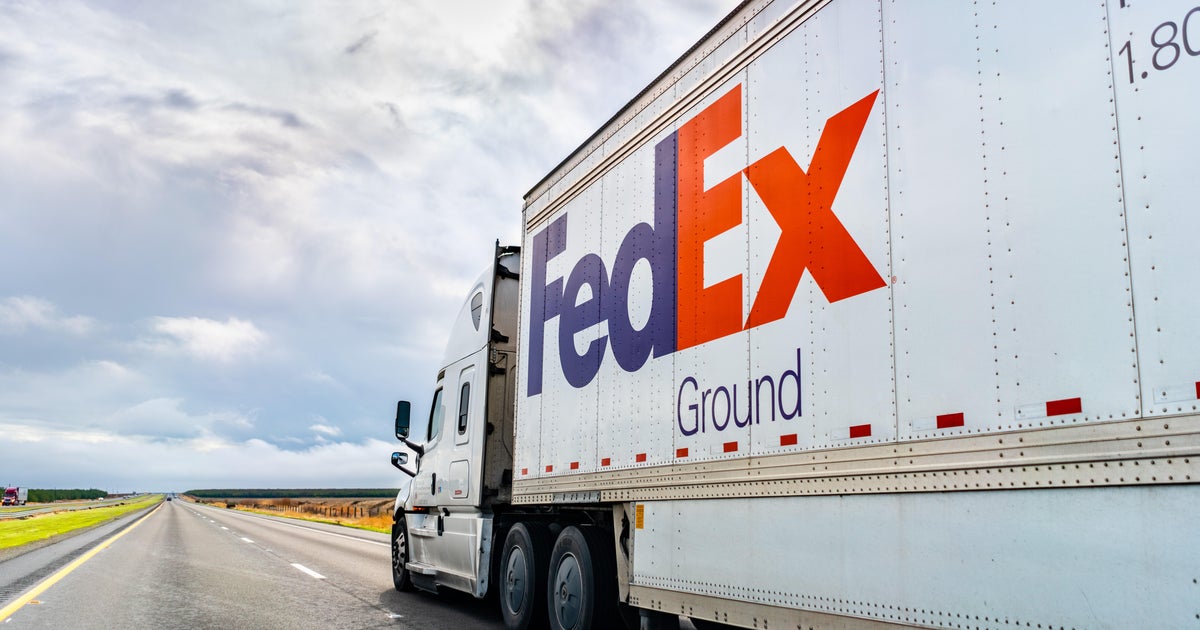
FedEx’s February 26 statement — issued mere days after filing its CIT lawsuit — was calibrated with surgical precision. By declaring, “If refunds are issued to FedEx, we will issue refunds to the shippers and consumers who originally bore those charges,” the company transformed itself from passive duty payer to active value steward. This is not altruism; it’s strategic risk mitigation and brand positioning in an era of heightened supply chain transparency. Consider the stakes: FedEx processed approximately 3.2 million commercial shipments per day in FY2025, with over 41% originating from Asia-Pacific and Middle Eastern corridors where IEEPA duties were most aggressively enforced. For mid-market shippers — particularly medical device manufacturers, semiconductor distributors, and specialty chemical exporters — those tariffs represented a 7.2–11.8% average cost increase on affected line items, eroding margins already strained by inflation and port congestion.
What makes FedEx’s pledge operationally significant is its binding nature across contractual layers. Unlike traditional ‘duty drawback’ programs — which require shippers to file claims individually and often forfeit 15–22% in administrative fees and legal costs — FedEx has committed to automated, invoice-level reconciliation. Its internal systems already track duty payments at the air waybill and bill of lading level, enabling granular attribution. Early internal estimates suggest FedEx could process over 870,000 refund transactions within 90 days of receiving government disbursement — a scale no third-party customs broker can match. This sets a de facto industry benchmark: competitors like UPS and DHL are now under intense pressure to follow suit, or risk losing high-volume, compliance-sensitive clients.
Supply Chain Implications: From Cost Accounting to Contractual Architecture
The ripple effects extend well beyond balance sheets. For procurement and logistics leaders, the ruling forces a fundamental reassessment of three interlocking domains:
- Tariff Contingency Planning: Over 73% of Fortune 500 supply chain teams relied on ‘duty-inclusive’ landed cost models that treated IEEPA tariffs as permanent. Now, finance departments must build dynamic scenarios: base case (full refund), partial recovery (e.g., only pre-appeal payments), and delayed payout (multi-year litigation). Modeling suggests a $12.3B industry-wide refund pool could translate into 1.4–2.1% EBITDA uplift for import-reliant manufacturers in 2026–2027.
- Contractual Liability Shifts: Standard Incoterms® 2020 clauses (e.g., DAP, DPU) typically assign duty payment responsibility to the buyer — but do not address refunds. Legal counsel at major law firms report a 300% surge in requests for ‘tariff restitution addenda’ to master service agreements. These new clauses now define ownership of refund rights, timing of reimbursement, and audit access — effectively turning customs compliance into a shared governance function.
- Compliance Infrastructure Investment: Companies previously relying on manual CBP Form 7501 submissions or spreadsheet-based duty tracking are now accelerating adoption of AI-powered trade management platforms. Gartner projects global spend on trade compliance SaaS will reach $2.8 billion by 2027, up from $1.1 billion in 2023 — driven largely by demand for real-time duty liability mapping and automated refund claim generation.
Moreover, the precedent empowers shippers to challenge other legally dubious levies. Litigation is already underway against CBP’s use of ‘anti-circumvention’ determinations under Section 301 — a practice critics argue lacks statutory basis. If courts extend the IEEPA logic, the total universe of contestable duties could expand to $29.6 billion.
Broader Industry Fallout: Who Wins, Who Loses, and What Comes Next
Not all stakeholders benefit equally. U.S. customs brokers face existential pressure: their core revenue stream — duty payment facilitation and drawback filing — is being vertically integrated by carriers. Brokerage revenue from IEEPA-related services is projected to fall 68% by Q3 2026. Conversely, freight forwarders with proprietary customs tech stacks — such as Flexport and Kuehne + Nagel — are gaining market share by bundling refund analytics with end-to-end visibility platforms.
For small and medium-sized enterprises (SMEs), the outcome is transformative. Historically excluded from complex refund processes due to cost and complexity, SMEs now gain indirect access via carrier-led mechanisms. FedEx’s model implies that a $24,000 shipment hit with $6,000 in unlawful duties could see full reimbursement — with no paperwork burden on the shipper. This democratization of trade remedy access may catalyze 12–15% growth in cross-border SME e-commerce volumes in 2026, according to the U.S. International Trade Commission.
Looking ahead, three developments merit close monitoring:
- The U.S. Department of Justice’s Friday response to coordinated motions filed by the Liberty Justice Center and Neal Katyal — expected to outline whether CBP will establish an expedited administrative refund process or force all claims into protracted judicial review.
- A potential Congressional fix: bipartisan bills (S. 2207 and H.R. 4812) introduced in January 2026 seek to retroactively authorize IEEPA duties — a move that would nullify pending refund claims. Industry lobbying groups, led by the National Retail Federation and the Consumer Technology Association, are mounting fierce opposition.
- Global spillover: The European Union’s General Court is reviewing similar challenges to EU Council Regulation 2024/1122 on ‘Iran-related restrictive measures’. A favorable ruling there could unlock €9.7 billion in EU-wide duty refunds, establishing transatlantic precedent.
In sum, FedEx’s pledge is less about returning money and more about resetting expectations. It signals that in modern supply chains, logistics providers are no longer neutral conduits — they are fiduciaries of regulatory value. As one Fortune 100 chief procurement officer told SCI.AI: ‘We used to pay carriers for movement. Now we’re paying them to protect our statutory rights.’
Conclusion: Toward a New Era of Carrier-Led Trade Stewardship
The $12.3 billion tariff refund question is not merely fiscal — it is philosophical. It asks whether supply chain resilience is defined solely by inventory buffers and route redundancy, or whether it also encompasses legal agility, regulatory advocacy, and financial sovereignty. FedEx’s stance affirms the latter. Its commitment crystallizes a broader trend: leading logistics firms are evolving into integrated trade infrastructure platforms, embedding compliance, financing, and policy intelligence into core operations. For shippers, this means lower effective costs — but also higher expectations for data sharing, system interoperability, and collaborative risk management. For policymakers, it underscores a critical truth: unilateral trade tools, however well-intentioned, carry hidden systemic costs — and when those costs collapse under legal scrutiny, the fallout reshapes markets faster than any tariff ever could. The era of passive import compliance is over. What replaces it is still being written — one refund, one contract clause, and one Supreme Court footnote at a time.
Source: CBS News, “FedEx vows to pass any tariff refunds it gets from the U.S. on to customers,” February 26, 2026.