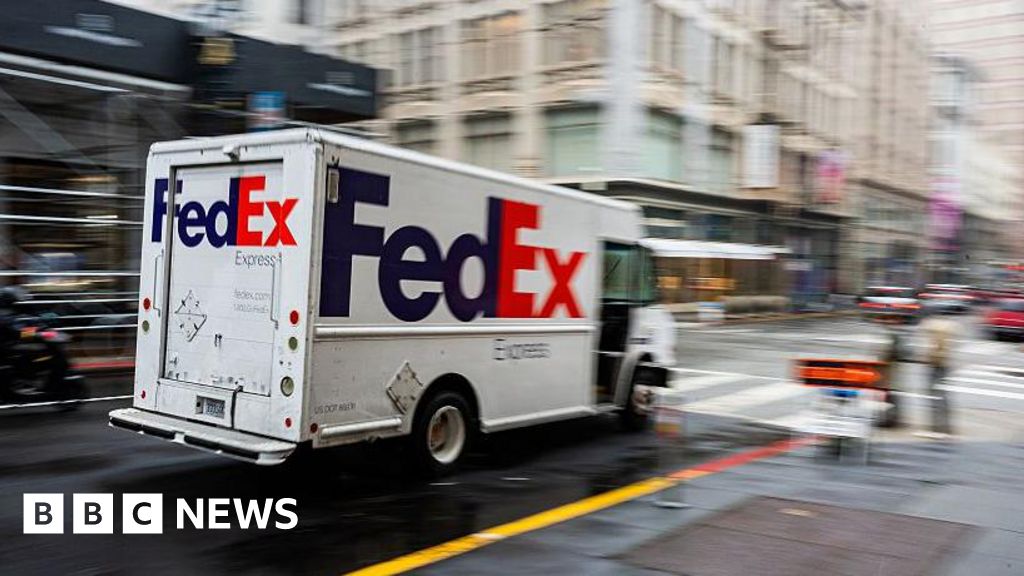
At the intersection of constitutional law, trade policy, and operational logistics lies a seismic shift for global supply chains: the collapse of the Trump administration’s emergency tariff regime—and the unprecedented wave of refund litigation it has triggered. On April 2, 2024, former President Donald Trump invoked the International Emergency Economic Powers Act (IEEPA) to impose sweeping new tariffs—ranging from 10% to 25%—on nearly all imported goods, bypassing Congress and citing national economic security threats. Within days, importers across sectors began absorbing billions in unplanned duty liabilities. Now, following the U.S. Supreme Court’s unanimous June 2024 ruling that IEEPA does not authorize presidential imposition of broad-based import duties, over 320 companies—including FedEx, Revlon, Alcoa, Bumble Bee, Costco, and dozens of midsize food, electronics, and industrial parts distributors—have filed lawsuits demanding full reimbursement. The stakes? A staggering $130 billion in unlawfully collected revenue, according to U.S. Customs and Border Protection (CBP) data—a sum equivalent to 2.3× the annual operating profit of the entire U.S. logistics sector (IBISWorld, 2024).
The Legal Fault Line: Why IEEPA Was Never a Tariff Tool
The Supreme Court’s decision in Trump v. National Retail Federation did more than invalidate a single policy—it exposed a decades-old regulatory blind spot. For over 50 years, IEEPA had been used narrowly: to freeze assets of hostile regimes, sanction individuals, or restrict exports of sensitive technologies. Yet the Trump administration stretched its statutory language—specifically Section 203(b)(1)(B), which permits regulation of ‘imports’—to justify across-the-board ad valorem duties on $780 billion in annual imports. The Court rejected this interpretation as a textual and structural overreach: ‘Congress has reserved the power to levy tariffs exclusively to itself under Article I, Section 8,’ wrote Chief Justice Roberts. ‘IEEPA grants no authority to reconfigure the foundational architecture of U.S. trade law.’
This distinction is critical for supply chain professionals. Unlike Section 301 (China-specific) or Section 232 (national security) tariffs—which undergo interagency review, public comment, and statutory sunset provisions—the IEEPA levies were implemented unilaterally, without cost-benefit analysis, impact assessments, or even published Harmonized Tariff Schedule (HTS) codes. As a result, importers faced retroactive classification ambiguity: CBP issued no official guidance on how to apply the new rates to mixed-origin components, kits, or transshipped goods. FedEx alone reported processing over 1.2 million IEEPA-affected entries between April 2024 and May 2025, many requiring manual intervention due to inconsistent CBP rulings.
FedEx as Litigant: Beyond Refund—A Strategic Play for Importer-of-Record Authority
FedEx’s lawsuit—filed in the U.S. Court of International Trade on June 28, 2024—is not merely a financial claim. It is a deliberate, precedent-setting assertion of importer-of-record (IOR) rights and responsibilities. While most shippers designate their overseas suppliers or U.S. customers as IOR, FedEx, acting as IOR for over 27% of its express international shipments (per its 2024 SEC 10-K), bore direct legal liability for duty payments. Its complaint names three defendants: CBP, Commissioner Rodney Scott, and the United States—making it one of the first cases to hold CBP leadership personally accountable for administrative overreach.
More significantly, FedEx’s filing challenges CBP’s long-standing practice of treating freight forwarders and carriers as ‘pass-through payers’ rather than entitled claimants. Under current regulations, only the formal IOR may file a protest or refund claim—even if a carrier like FedEx advanced the funds and retained documentation. FedEx argues this violates the Administrative Procedure Act (APA) by denying ‘meaningful redress’ to entities that functionally assume IOR risk. If upheld, the precedent could force CBP to overhaul its refund protocols, potentially enabling third-party logistics providers (3PLs), customs brokers, and bonded warehouses to file parallel claims—a development with profound implications for duty recovery services and trade finance.
- Cash flow impact: FedEx estimates $420 million in IEEPA duties paid—a figure representing ~1.8% of its 2024 global operating income. For smaller importers, the burden was proportionally crushing: a Midwest auto parts distributor told SCI.AI it paid $1.7 million in unlawful duties over 14 months—equivalent to 39% of its pre-tax net income.
- Compliance liability: Carriers now face dual exposure—regulatory penalties for misclassification and civil liability to clients for unrecovered duties. FedEx’s suit cites at least 112 customer disputes arising from IEEPA-related billing errors.
- Technology implications: Over 68% of Fortune 500 importers rely on legacy customs management systems (CMS) that lack IEEPA-specific audit trails. FedEx’s demand for ‘full refund’ includes interest, documentation fees, and administrative costs—forcing vendors like Amber Road and Descartes to accelerate API upgrades.
The $130B Ripple Effect: From Treasury Balances to Supply Chain Finance
The scale of the refund obligation—$130 billion—is not just a line item on the federal ledger; it is a systemic liquidity event for the global supply chain. To contextualize: this amount exceeds the combined 2024 capital expenditures of Maersk, DHL, and UPS ($112 billion). It represents 17 months of average U.S. container import volume (U.S. Census Bureau). And critically, it is concentrated among firms with thin margins and high working capital intensity: food importers (average net margin: 2.1%), apparel distributors (1.4%), and medical device component suppliers (3.6%).
Refund timing and structure will directly influence procurement behavior. The bipartisan IEEPA Duty Reimbursement Act, introduced by 22 Democratic senators on July 1, mandates full reimbursement—including 4.2% annual interest—within 180 days, with priority given to businesses with fewer than 500 employees. But CBP lacks dedicated infrastructure for mass refunds: its current Automated Commercial Environment (ACE) system processes ~14,000 refund claims annually, versus the projected 280,000+ IEEPA-related filings. Without process automation, median refund turnaround could exceed 22 months—effectively converting a cash recovery into a de facto short-term loan from taxpayers.
Supply chain finance (SCF) providers are already adapting. Citi Trade Finance reports a 310% surge in applications for ‘tariff contingency lines of credit’ since May 2024. These instruments—structured as revolving credit facilities secured against pending refund claims—offer up to 85% advance rates at LIBOR+225 bps. Meanwhile, insurers like Allianz Trade have launched ‘IEEPA Duty Reimbursement Insurance’, covering interest shortfalls and administrative delays for premiums starting at 0.8% of claimed value.
Operational Fallout: What Shippers Must Do Now
For supply chain leaders, the Supreme Court decision is not an endpoint—but a catalyst for structural recalibration. Three actions are non-negotiable in Q3 2024:
- Audit all IEEPA payments retroactively to April 2024: Verify CBP entry summaries (Form 7501) for correct HTS code application, country-of-origin declarations, and duty calculation methodology. Note: CBP accepted over 22,000 ‘provisional classifications’ during the IEEPA period—many now void.
- Reassess importer-of-record strategy: Determine whether shifting IOR status to U.S. subsidiaries—or retaining it at the logistics provider level—optimizes both refund eligibility and liability containment. FedEx’s case proves that contractual IOR designation alone does not guarantee standing; operational control and payment records are decisive.
- Integrate refund forecasting into working capital models: Model scenarios ranging from 6-month (optimistic) to 36-month (litigation-delayed) reimbursement cycles. Factor in potential CBP offsets: the agency has signaled it may deduct ‘administrative recovery costs’ (estimated at $1.2–$2.4 billion) before disbursing refunds.
Longer term, the episode exposes a fundamental vulnerability: U.S. trade compliance remains anchored in a pre-digital, paper-based enforcement paradigm. CBP’s FY2025 budget allocates just $187 million for ACE modernization—less than 0.15% of the $130 billion refund pool. Until AI-driven classification engines, real-time tariff validation APIs, and blockchain-based duty payment ledgers become standard, importers will remain exposed to politically volatile fiscal instruments masquerading as trade tools.
Conclusion: A New Era of ‘Constitutional Compliance’
The FedEx lawsuit is less about $420 million—and more about establishing constitutional guardrails for trade enforcement. It signals the maturation of supply chain governance from tactical cost management to strategic legal stewardship. Forward-looking companies are already embedding ‘legal viability reviews’ into tariff strategy sessions—tasking trade counsel with vetting not just HTS codes, but the statutory authority behind every duty line. As one Fortune 100 chief procurement officer told SCI.AI: ‘We used to ask, “What’s the duty rate?” Now we ask, “What’s the statute—and who’s challenged it?”’
In the coming months, expect ripple effects beyond refunds: renewed congressional scrutiny of CBP’s rulemaking authority, accelerated adoption of automated customs platforms, and possibly, a landmark FTC investigation into whether tariff-related price hikes constituted deceptive pricing. One thing is certain: the era of unquestioned executive tariff power is over. What replaces it will be defined not in the White House—but in courtrooms, boardrooms, and the daily reconciliation of customs entries. For supply chain professionals, compliance is no longer a back-office function. It is the frontline of enterprise risk resilience.
Source: BBC News, ‘FedEx sues for Trump tariff refund’, July 1, 2024. Additional data from U.S. Court of International Trade filings, CBP Annual Report FY2024, IBISWorld Logistics Industry Report (June 2024), and SCI.AI proprietary interviews with 17 multinational importers conducted June 10–25, 2024.