Producer Price Index Hits New Highs, Exposing Supply Chain Cost Pressures
January 2026 delivered a sobering wake-up call to global supply chain managers. The Producer Price Index (PPI) rose 0.5% month-over-month, with the annual increase reaching 2.9%—significantly exceeding market expectations. Beneath these headline figures lies a more complex supply chain signal: final demand services prices surged 0.8%, with trade margins jumping 2.5%. This indicates that every distribution layer, from wholesale to retail, is either absorbing or passing on cost pressures. For businesses already navigating tariff volatility and fragile global supply chains, this trend means that even as commodity prices stabilize, supply chain uncertainty will continue driving up end-consumer prices.
The cost pressure is not evenly distributed. PYMNTS Intelligence tracking data reveals that goods-producing sectors face sharper squeezes, with nearly three in ten CFOs reporting high uncertainty. More alarming is the correlation between supply chain globalization and risk perception: among firms relying solely on domestic suppliers, 18% of CFOs report high uncertainty; when overseas suppliers exceed 40% of the total, this figure nearly doubles to 33%. This globalization penalty is reshaping corporate supply chain strategic thinking, forcing decision-makers to find new equilibrium points between cost efficiency and resilience.
AI Emerges as Supply Chain Stabilizer: Three Critical Use Cases
Faced with unprecedented uncertainty, artificial intelligence is transforming from experimental technology to core supply chain infrastructure. The 2025-2026 Growth Corporates Working Capital Index, jointly published by PYMNTS Intelligence and Visa Acceptance Solutions, reveals a critical inflection point: 42% of North American growth corporates have adopted AI for working capital efficiency optimization, while 85% are using some form of working capital solution. Behind this adoption rate lies AI’s demonstrated value in three critical scenarios.
First is predictive demand modeling. Traditional ERP systems rely on historical data for linear forecasting, frequently failing in volatile environments. AI-driven predictive analytics can integrate multiple variables—tariff policy changes, supplier geographic risk, seasonal fluctuations—to anticipate demand curves months in advance. Second is anomaly detection and risk early warning. Machine learning algorithms can monitor tens of thousands of data points in real-time, identifying anomalous patterns human analysts might miss—whether early warning signs of supplier delivery delays or congestion risks on specific shipping routes. Third is intelligent workflow optimization. AI does not just provide insights; it can automatically trigger response mechanisms, such as dynamically adjusting safety stock levels, rerouting freight paths, or activating backup suppliers.
From Reactive Response to Proactive Defense: AI Restructures Supply Chain Decision Logic
Traditional supply chain management follows a linear sense-analyze-respond pattern, performing well in stable environments but proving inadequate in 2026’s uncertainty storm. The paradigm shift AI brings is upgrading supply chains from reactive response systems to forward-looking defense architectures. The core of this transformation is real-time data fusion capability—AI platforms can simultaneously process GPS and telematics data, carrier performance history, transit time variability, weather conditions, port congestion updates, inventory movements, and historical disruption patterns, forming a 360-degree risk view.
More importantly, AI is changing the time dimension of decision-making. Previously, supply chain teams made adjustments based on monthly or quarterly reports; now, AI systems continuously recalculate optimal strategies with minute-level precision. When early warning signals of geopolitical tension emerge from an overseas supplier location, the system can automatically increase order shares from alternative suppliers before human decision-makers even recognize the risk. This predictive intervention capability is precisely the weapon needed to navigate tariff volatility—businesses can pre-adjust procurement and inventory strategies before policies formally take effect, avoiding being caught off-guard by sudden changes.
New Working Capital Strategies Under Tariff Volatility
The 2026 tariff environment is full of variables, placing entirely new demands on corporate working capital management. Data shows that among CFOs lacking confidence in their ability to adapt to tariff-related disruptions, 54% report high uncertainty; for those with at least some adaptation confidence, this figure is only 17%. This confidence gap is driving a technological revolution in working capital management. North American corporate working capital index scores have risen from 52 to 55, improvements closely tied to stronger cash flow visibility and more prudent working capital deployment strategies.
AI’s role in this process is increasingly critical. Through predictive analytics modeling demand fluctuations, businesses can more precisely match accounts receivable and payable cycles, reducing idle capital. AI also helps enterprises anticipate tariff exposure, automatically incorporating tariff cost variables into procurement decisions, optimizing supplier portfolios. More cutting-edge applications include using generative AI for trade contract and document lifecycle management, and extending analytical capabilities to non-specialist users through conversational interfaces—empowering frontline procurement managers to make better-informed decisions based on AI insights.
AI-Powered Supply Chain Visibility: From Tracking to Prediction
Supply chain visibility has evolved from nice-to-have to essential for survival. But 2026 visibility is no longer simple GPS tracking; it is intelligent visualization fused with predictive analytics. AI-driven visibility platforms continuously evaluate multiple variables—from carrier performance history to weather conditions, from port congestion to inventory movements—proactively predicting delays, optimizing estimated time of arrival (ETA), and recommending corrective actions.
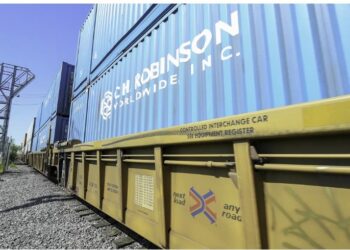
This capability is particularly critical for managing multimodal coordination challenges. When a shipment needs to travel through ocean freight, rail, and road transport to reach its destination, delays in any single link can trigger chain reactions. AI systems can simulate thousands of scenarios, identify optimal paths, and replan in real-time when surprises occur. For B2B and B2C markets where customer transparency demands are increasingly stringent, this means being able to provide accurate delivery commitments and communicate proactively when delays are unavoidable—transforming customer experience from passive notification of damage to active expectation management.
Strategic Implications for Global Supply Chain Leaders
For supply chain leaders worldwide, 2026 represents a decisive moment. The convergence of PPI pressures, tariff uncertainty, and AI maturity is creating a window for strategic repositioning. Organizations that treat AI as merely an efficiency tool will find themselves outmaneuvered by competitors who leverage AI for strategic resilience. The differentiator lies not in having AI capabilities, but in embedding AI insights into operational DNA—making predictive analytics the default lens through which supply chain decisions are made.
Looking ahead, the supply chains that thrive will be those that combine AI’s computational power with human strategic judgment. AI excels at pattern recognition and rapid response; humans excel at contextual interpretation and long-term relationship building. The winning formula is a symbiotic partnership where AI handles the complexity of real-time optimization while human leaders focus on supplier ecosystem cultivation and strategic risk positioning. As we progress through 2026, this human-AI collaboration model will increasingly separate supply chain leaders from laggards, defining the competitive landscape for years to come.
Source: PYMNTS.com