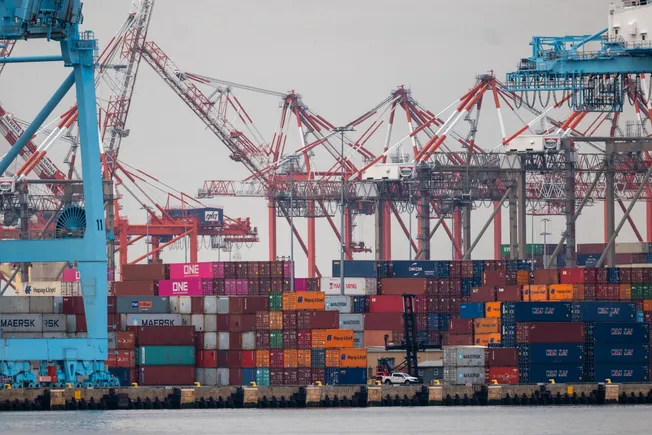
A Guide to Strikes at East Coast and Gulf Ports
If the threat of a strike at East Coast and Gulf ports materializes on October 1, US West Coast, Canadian, and Mexican ports are seen as viable alternatives.
Published on September 19, 2024
By Alejandra Carranza, Reporter
If workers at the East Coast and Gulf ports of the United States go on strike, shippers have less than two weeks to prepare contingency plans.
The main contract between the International Longshoremen’s Association (ILA), with 85,000 members, and the United States Maritime Alliance (USMX) expires on September 30.
Concerns over automation and wage disputes have delayed negotiations, reducing the chances of avoiding a strike on October 1. ILA President Harold Daggett has made it clear that the union intends to strike and shared its mobilization plans earlier this month.
A strike would significantly impact operations at multiple ports and the flow of goods. The contract between the ILA and USMX covers ports in Texas, Maine, New York, New Jersey, and Florida, but a strike could disrupt other regions and industries as well.
“Shippers will feel this particularly hard, especially those bringing European, Oceanian, and Asian goods to the United States. This will trigger a ripple effect on the movement of goods within the US, Canada, and Mexico,” said Mia Ginter, North American ocean director at C.H. Robinson, in a blog post in August.
Supply Chain Dive spoke with shipping and logistics experts about how shippers can prepare for a strike, including rerouting cargo and other considerations.
How Can Shippers Prepare for the Strike?
Shippers have several options to minimize disruption, such as exploring alternative routes.
Michael Aldwell, Executive Vice President of Ocean Logistics at Kuehne and Nagel, stated that importers and exporters can establish multiple coastal networks in advance to prepare for potential labor disruptions.
“This could take the form of transshipment capacity or operations, or establishing a smaller-scale backup coastal gateway that can be scaled up during an interruption,” Aldwell said.
Another option is cargo diversion, which shippers are already familiar with after years of port interruptions. Cargo can be diverted to US West Coast, Canadian, or Mexican ports, according to Josh Jungwirth, Executive Vice President of Freight Forwarding Americas at Geodis.
Other Ports Shippers Can Use for Diverting Cargo from the East Coast and Gulf
| Region | Ports | Services |
|---|---|---|
| US West Coast | Los Angeles, Long Beach, or Oakland | Transshipment and full truckload or rail and drayage |
| Canada | Vancouver, Prince Rupert, or Halifax | Transshipment and full truckload or rail and drayage |
| Mexico | Lázaro Cárdenas | Inbound rail options to Houston and Kansas City through CPKC |
Source: Josh Jungwirth, Executive Vice President of Freight Forwarding Americas at Geodis
The choice of alternative port depends on the origin and destination of the cargo, shipping lanes, and available capacity, according to Jungwirth.
Is Air Freight a Viable Alternative?
Air freight is an option for shippers dealing with time-sensitive goods but comes at a higher cost and faces some capacity issues.
According to Xeneta’s September 5 report, airfreight spot prices surged by 24% year-over-year in August, reaching $2.68 per kilogram.
“Shippers should remember that passenger flights will decrease from the current busy summer travel season into October. Currently, air freight capacity is limited due to increased e-commerce demand from Asia and transshipment through the Red Sea,” said Ginter of C.H. Robinson.
Large e-commerce retailers like Temu and Shein have driven recent spikes in air freight demand. According to data shared by ShipMatrix with Supply Chain Dive, these retailers provided about 900,000 packages daily to the US in July.
The extensive booking activity of Temu and Shein has exacerbated the capacity crisis in the market, said Kathy Liu, Global Sales & Marketing Vice President at Dimerco Express Group, on an episode of “The Freight Buyers’ Club” podcast. With only a few freighters available in the market, this further restricts air freight options for other shippers, she added.
Which Goods Will Be Affected?
All types of goods will be affected if there is a strike, but those relying on just-in-time inventory models, such as automotive parts, will be more impacted.
Joshua Bowen from CEVA Logistics stated, “Considering the challenges that could arise for exports, chemicals and agricultural products are expected to be the most severely affected in the short term. From an import perspective, any supply chain heavily reliant on Middle East, Europe, and Africa (MEA) cargo flows will face challenges, with significant impacts anticipated in industrial and automotive sectors.”
Even seasonal goods could be impacted, according to Goetz Alebrand, Senior Vice President of Ocean at DHL. This includes Black Friday or holiday season items as well as temperature-controlled goods with limited shelf lives.
Is It Too Late to Act Now?
Experts are divided on whether it is too late for companies to implement strike contingency plans, but most agree that the longer a company waits, the higher the cost of adjustment will be.
“The key challenge lies in making contingency or rerouting plans before an interruption occurs. Finding the required capacity and partners at this stage could be difficult and expensive,” Aldwell said.
This may also depend on where the cargo originates, according to Judah Levine, Freightos Research Director. In a September 10 update, Levine stated that it is “almost too late” for shippers to move containers from Asia to the East Coast, while transatlantic shippers still have some time. This is because the voyage from Asia to the US East Coast takes much longer than from Europe.
Even diverting cargo to alternative ports does not guarantee that shippers will avoid major challenges during a strike.
“Many shippers are already using these solutions, but they are temporary as none of them can handle the required volume if there is a severe slowdown or stoppage,” said CEVA Logistics’ Bowen.
Lastly, rerouting cargo to the West Coast could also bring inland capacity issues. Without prior planning, cargo diverted from the East Coast and Gulf may not be prioritized for domestic intermodal trucking or rail services, according to Ginter.
“In addition to capacity and delay issues, storage space might be needed to hold diverted cargo until inland capacity is available,” she added.
Source: Supply Chain Dive