## Criticism of U.S. Tariffs on Chinese Container Cranes Along the Gulf Coast
According to port officials, potential tariffs on container cranes manufactured in China will significantly increase costs and may impact future projects at ports along the Gulf Coast.
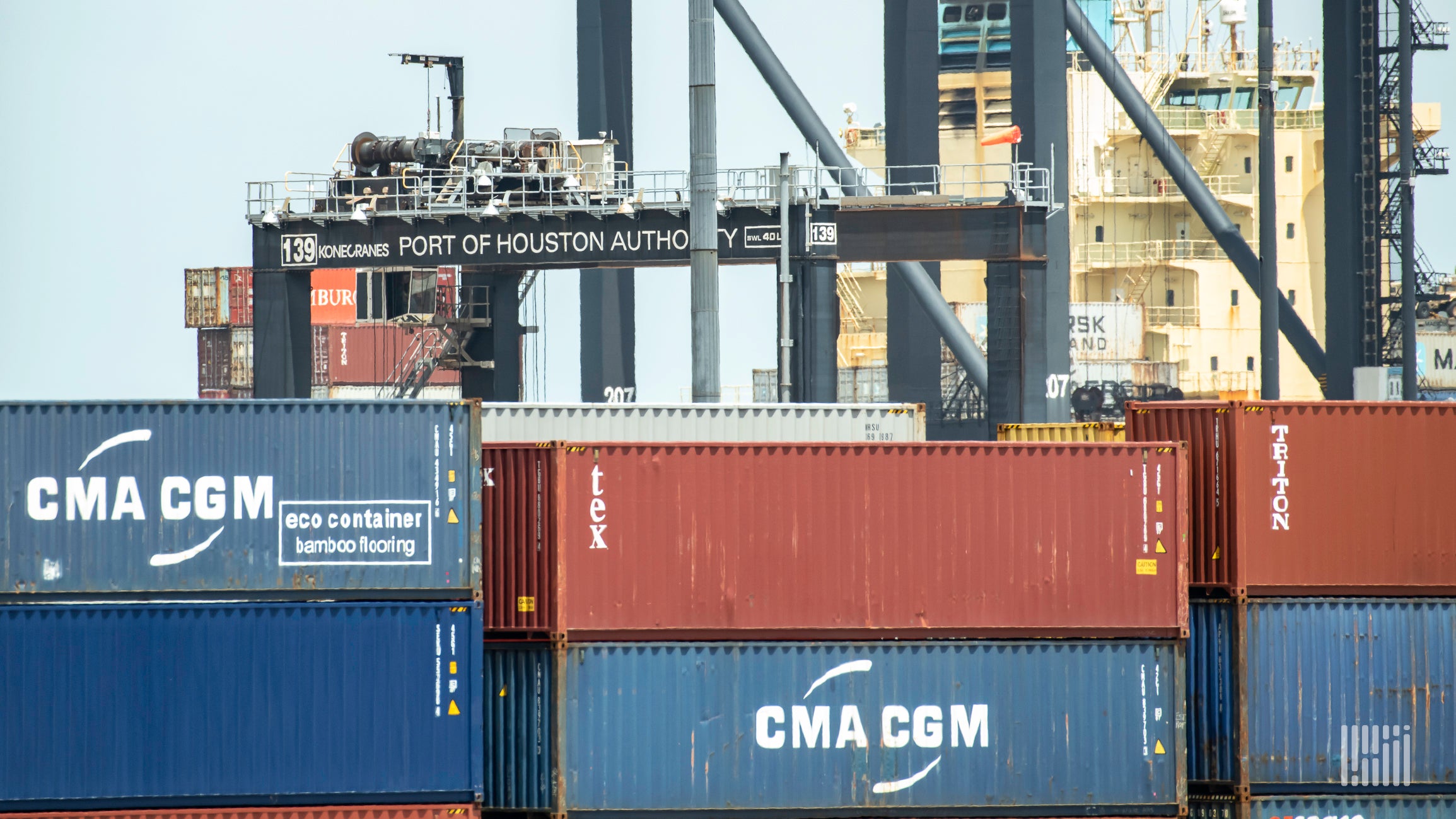
In July this year, Port Houston approved the purchase of eight electric ship-to-shore container cranes for over $113 million, marking the largest order in the port’s history. These cranes are manufactured by ZPMC, a state-owned enterprise from China and the world’s largest manufacturer of container cranes, accounting for more than 70% of the global market.
Port Houston CEO Charlie Jenkins said that due to tariffs on Chinese products initiated by the Biden administration in May this year, these eight ship-to-shore cranes could face an additional 25% tariff, significantly raising their prices.
Jenkins told FreightWaves: “At present, we are uncertain whether the eight ship-to-shore cranes awarded in July will be affected by tariffs. However, if they are, we estimate that costs would increase by $28.5 million.” He added, “These eight cranes are a crucial part of our capital investment plan to meet forecasted demand, stay ahead of the curve, and support larger vessels entering Houston following the completion of Project 11.”
Project 11 is an $1.1 billion expansion project for the Houston Ship Channel that will increase annual vessel throughput by up to 1,400 ships and may have a potential economic impact of up to $134 billion annually, with completion expected in 2028.
Jenkins stated that a 25% tariff on Chinese cranes would not affect Project 11 but “it remains unclear whether other projects might be delayed.”
Port authorities across the U.S., terminal operators, and industry groups are urging the United States Trade Representative (USTR) to reconsider imposing a 25% tariff on all Chinese ship-to-shore container cranes.
In addition to Port Houston, the Port of Freeport in southeast Texas may face an additional $6 million cost due to two ship-to-shore cranes ordered from Chinese manufacturers.
The Port of New Orleans, which is expanding and planning the Louisiana International Terminal (LIT) at a cost of $1.8 billion, stated that tariffs could have significant impacts on project budgets and feasibility.
In May, USTR announced an increase in tariffs on a range of products from China, including ship-to-shore cranes, electric vehicles, lithium batteries, steel and aluminum, semiconductor chips, solar cells, and medical devices.
“To address unfair trade practices by China and mitigate the resulting harm, President Biden instructed his Trade Representative to impose additional tariffs on $18 billion worth of goods imported from China under Section 301 of the 1974 Trade Act to protect American workers and businesses,” USTR stated in a press release.
Port authorities across the U.S., terminal operators, and industry groups immediately opposed the tariffs on ship-to-shore container cranes.
In July, the American Association of Port Authorities (AAPA) joined major ports nationwide in sending a letter to U.S. Trade Representative Katherine Tai urging her to reconsider imposing tariffs on cranes.
“AAPA is confident that if implemented, these tariffs will fail to achieve their intended goals,” wrote AAPA head Cary Davis in the letter. “In fact, they would lead to negative consequences, including severe damage to port efficiency and capacity, supply chain pressures, increased consumer prices, and weakening of the U.S. economy.”
Last month, Tai announced that Chinese ship-to-shore cranes ordered before May 14, 2024, and entering the U.S. by May 14, 2026, would be exempt from tariffs.
This ruling helped Port Houston avoid tariff costs for three recently acquired ship-to-shore cranes from a Chinese manufacturer but the port still needs to pay import duties on the eight cranes ordered in July.
“We are working with many stakeholders on this issue,” Jenkins said at the Port Houston Commission meeting on September 24. “We will continue to seek exemptions for these cranes. This is a significant financial burden.”
AAPA commended Tai’s decision. AAPA and port officials noted that one major issue with tariffs is that there are currently no manufacturers of ship-to-shore cranes in the U.S.
“Moving forward, our organization continues to urge the Biden administration and Congress to seriously consider long-term alternatives,” AAPA pointed out. “USTR should not impose tariffs on cranes until there are crane manufacturers in the U.S., as this is simply a tax on port development.”
In July, Finnish crane manufacturer Konecranes announced plans to begin building port cranes in the United States. The company currently manufactures cranes for the U.S. market at its factory in China.
“Konecranes expects its network to expand across states including Ohio, Virginia, and Wisconsin, and has received initial interest from several clients,” the company stated in a press release.
Konecranes did not provide a timeline for opening factories in the United States.
## Volkswagen Opens $114 Million Gulf Coast Shipping Center in Texas
Volkswagen Group of America recently opened a large logistics facility in Freeport, Texas, capable of handling up to 140,000 vehicles annually.
According to official statements, the VW Gulf Coast Center has created more than 110 direct jobs and also increased indirect employment across trucking, rail, and vessel operations.
“Our new Gulf Coast Center represents a $114 million investment in the Freeport area,” Volkswagen Group of America President and CEO Pablo Di Si said on social media. “Port Freeport will import and process up to 140,000 vehicles annually, directly supporting one-third of our retail dealerships in the U.S.”
Port Freeport is located about 60 miles southeast of Houston where the Brazos River meets the Gulf of Mexico.
The port offers container, bulk cargo, breakbulk, and roll-on/roll-off services. Roll-on/roll-off service providers include Hoegh Autoliners, Glovis, Liberty Global Logistics, Sallaum, and Grimaldi Lines.
## Southeastern Freight Line Launches Direct Route to New Mexico
LTL carrier Southeastern Freight Lines has expanded its service by launching a direct route to Las Cruces in New Mexico.
According to the press release, this new route will be serviced from Southeastern’s El Paso Service Center in Texas to meet growing freight demands in the Southwest region.
The new service aims to reduce transportation costs, improve reliability, and enhance delivery times, including overnight deliveries from Dallas, Fort Worth, San Antonio, and Odessa in Texas.
Southeastern Freight Lines is headquartered in Lexington, Kentucky. According to data from the Federal Motor Carrier Safety Administration, the company has 3,083 trucks and 4,210 drivers.
## Warehouse On Wheels Opens New Location in Mexico
Warehouse On Wheels, based in Fort Mitchell, Kentucky, announced the opening of a new facility in Monterrey, Mexico.
The location will operate under the brand name Almacenes Moviles, providing mobile storage trailers to businesses in industries such as automotive, plastics, general manufacturing, retail distribution, and construction.
“We are expanding our project into Monterrey to emphasize our commitment to meeting the evolving storage needs of local enterprises and supporting their growth through practical and cost-effective solutions,” said Brady Rodgers, President of Warehouse On Wheels Mexico Operations.
Founded in 2017, Warehouse On Wheels has expanded to over 40 locations across North America with more than 36,000 trailer units.
—
Source: FreightWaves