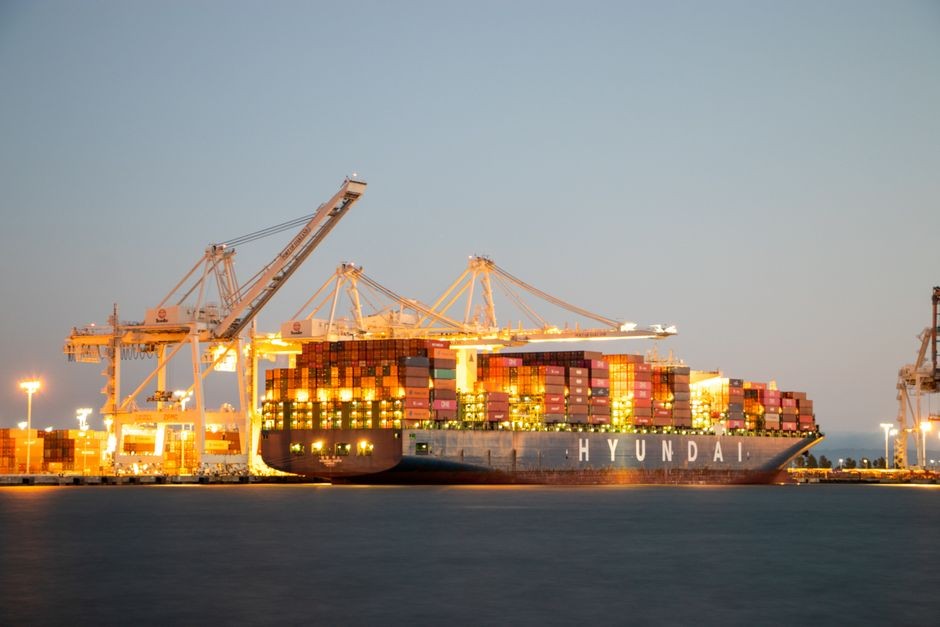
According to The Loadstar, COSCO Shipping Specialised Carriers launched a direct container shipping service from Jiangyin, China, to Manzanillo, Mexico, on 24 September 2026, carrying 500 containers of machinery and finished goods aboard the general cargo ship CSPC Jade.
Yangtze River ports expand deep-sea reach
Jiangyin and Nanjing — two major Yangtze River ports — have recently advanced ocean-going ambitions through new container services. Last Friday, COSCO initiated a container route from Nanjing to North Africa, building on test voyages conducted in 2024 and 2025 via the Northern Sea Route. These developments reflect a coordinated push by Yangtze River ports to establish deep-sea container shipping routes aimed at cutting logistics costs and improving supply chain efficiency for local and hinterland enterprises.
The lower reaches of the Yangtze host critical manufacturing hubs producing home appliances, electronics, automotive parts, and photovoltaics — sectors highly sensitive to logistics cost and time. Traditionally, cargo from this hinterland required barge transport to Shanghai or Ningbo, adding port handling fees, short-haul transport charges, and transit delays. Direct routes eliminate transhipment, reducing complexity and cost exposure.
Time savings and strategic routing
The new Jiangyin–Manzanillo service takes 22 days, cutting approximately 15 days compared to conventional transhipment routes. This timing appears calibrated to mitigate disruptions caused by Panama Canal bottlenecks. Some cargo will be moved onward from Manzanillo into the United States via rail or truck. In March, COSCO Shipping Specialised Carriers also executed a one-off voyage from Jiangyin to Antwerp, Belgium, using the 1,070 teu vessel Tian Lu.
These services collectively signal a structural shift: Yangtze River ports are no longer just inland nodes but emerging origin points for global containerized trade. The 1,070 teu capacity of the Tian Lu, combined with the 500 containers deployed on the CSPC Jade, underscores the scale of initial deployment — modest by mega-vessel standards but operationally significant for river-port integration.
Source: The Loadstar
Compiled from international media by the SCI.AI editorial team.