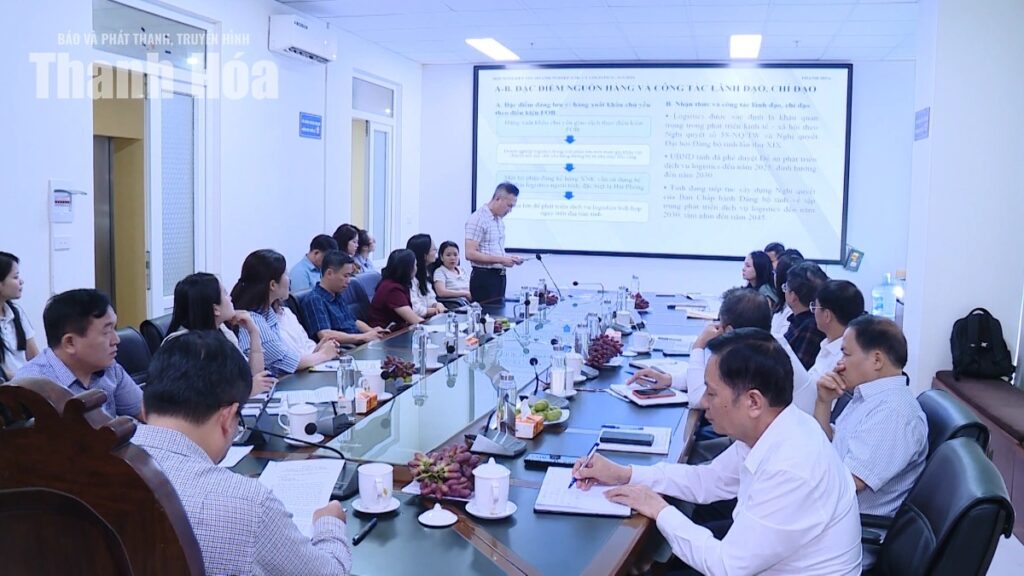
According to tapchicongthuong.vn, a Vietnamese delegation from the Import-Export Department (Ministry of Industry and Trade) conducted an eight-day logistics survey and business-matching mission across Hangzhou, Ningbo, Shenzhen, and Qinzhou in China from 6–13/9/2026. The trip supported Vietnam’s Go Global program for 2026–2030 and implemented Prime Ministerial Decision No. 2229/QĐ-TTg dated 09/10/2025.
Business Matching and Strategic Dialogue
The delegation engaged with the Zhejiang Security Technology Industry Association, the Shenzhen International Freight Forwarding Association, and leading Chinese enterprises including Alibaba, Getwin Logistics, BYD, CEVA Logistics, and CIMC Wetrans. In Shenzhen, it hosted the Vietnam-China Logistics and Supply Chain Cooperation Seminar, attended by over 140 enterprises and government agencies from both countries.
The discussions focused on three pillars: modern logistics infrastructure and technology assessment; cross-border multimodal transport, warehousing, and supply chain models; and direct B2B matchmaking for agency services, freight forwarding, warehousing, customs clearance, and end-to-end logistics solutions. At meetings with Alibaba and BYD, Vietnamese officials learned about advanced governance models and future development roadmaps in cross-border e-commerce, electric vehicle manufacturing, autonomous transport, smart devices, green supply chain management, and intelligent logistics operations.
Deputy Director Tran Thanh Hai of the Import-Export Department emphasized practical collaboration opportunities during working sessions in Zhejiang Province, underscoring how these exchanges could deepen Vietnamese participation in global supply chains through technology adoption and integrated service delivery.
Smart Port Insights: Mai Shan and Qinzhou
On 08/9/2026, the delegation visited the Mai Shan container terminal within the Ningbo–Zhoushan port cluster. As one of China’s largest container terminals, Mai Shan pioneered large-scale deployment of autonomous container trucks. Officials were briefed on its Digital Twin platform and integrated intelligent management system, anchored by the n-TOS/iECS operating software and coordinated control of both driverless and manned vehicles.
This synchronized human-machine-data integration—enabled by high-precision positioning, AI, and traffic coordination algorithms—optimized truck routing, reduced waiting time, and improved safety amid mixed vehicle operations. According to port operators, the hybrid autonomous-manual model increased yard turnaround efficiency by 30% and cut off-route autonomous vehicle deviations by 10%.
On 12/9/2026, the delegation surveyed the fully automated Qinzhou container port, operated by the Beibu Gulf Port Group. Its U-shaped operational layout boosted intelligent guided vehicle (IGV) task density by 50%, shortened equipment travel distance by 35%, and lifted overall port operational efficiency by 30%. Real-time rail-port connectivity increased container transshipment efficiency by 50%.
Technology Transfer and Joint Development Pathways
The visits confirmed that Chinese ports are shifting from isolated automation to integrated smart port ecosystems—unifying automated equipment, data platforms, 5G networks, AI, Digital Twin, and port operating systems into unified workflows. These models offer actionable benchmarks for Vietnam’s port modernization, digitalization, and green transition.
Qinzhou’s seamless port-rail integration is especially instructive for Vietnam, given planned developments like the Binh Luc Canal—which will serve as a key node linking cargo to Nanning and Guangxi. As Vietnam advances international gateway ports, transshipment hubs, and logistics centers along transport corridors with China, adopting integrated port-water-rail-road operations can lower logistics costs, shorten transit times, and strengthen export competitiveness.
Potential cooperation areas identified include joint consulting, technology transfer, and implementation of automation solutions; co-development of port and supply chain management platforms; AI, IoT, Digital Twin, and 5G applications; smart port operator training; and cross-modal and cross-border transport integration. Ports such as Lach Huyen and Cai Mep–Thi Vai may progressively adopt context-appropriate technologies—and move beyond equipment supply toward co-developing scalable, standardized, and operationally shared solutions with Chinese partners.
Source: tapchicongthuong.vn
Compiled from international media by the SCI.AI editorial team.