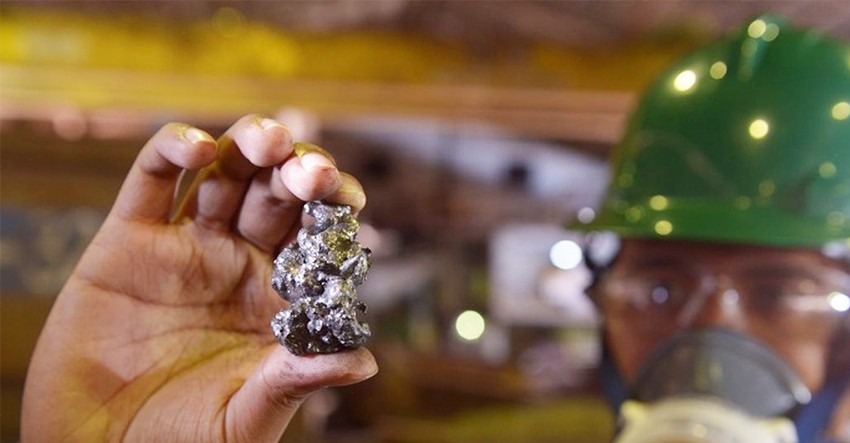
According to nikel.co.id, Indonesia’s nickel and nickel-based product exports grew 49.84% year-on-year from January to July 2026, reaching a cumulative value of US$160.01 billion for non-oil-and-gas exports — of which nickel was a key growth driver.
Nickel Performance Amid Broader Export Gains
The Ministry of Trade reported that HS code 75 (nickel and related products) posted the second-highest growth among non-oil-and-gas commodities in the first seven months of 2026, trailing only aluminum and its derivatives (85.78%) but outperforming copper and its derivatives (36.14%). Total non-oil-and-gas exports for the period amounted to US$160.01 billion, up 5.21% year-on-year, while overall exports reached US$167.03 billion, rising 4.43% over the same period in 2025.
Industrial processing accounted for 82.18% of total exports during January–July 2026, significantly surpassing mining and other sectors (11.73%), oil and gas (4.20%), and agriculture (1.89%). This dominance underscores the government’s ongoing mineral downstreaming agenda, with nickel playing a central role in value-added manufacturing.
The export performance of metals broadly strengthened: aluminum and its derivatives surged 85.78%, while copper and its derivatives rose 36.14%. These gains align with increased output from domestic smelters and refineries supported by national policy.
July 2026: Sharp Monthly Decline, Sustained Annual Strength
Despite strong cumulative growth, nickel exports fell sharply in July 2026, declining 38.25% month-on-month compared to June 2026. This dip contributed to downward pressure on non-oil-and-gas export momentum for the month, even as overall exports reached US$26.22 billion, up 2.98% from June and 6.05% year-on-year.
Non-oil-and-gas exports in July totaled US$25.43 billion, growing 4.25% monthly and 6.84% annually. The trade surplus for the month stood at US$0.12 billion, driven by a US$3.10 billion non-oil-and-gas surplus offsetting a US$2.98 billion oil-and-gas deficit.
Trade Minister Budi Santoso emphasized resilience amid global volatility:
“The July 2026 trade surplus shows Indonesia’s export performance remains stable. Diversification of export markets and commodities must be continuously strengthened to boost non-oil-and-gas trade contributions. The government will keep encouraging businesses to seize opportunities across destination markets and expand Indonesian product exports.” — Budi Santoso, Minister of Trade of the Republic of Indonesia
Structural Shift Toward Processing and Value Addition
Cumulative January–July 2026 non-oil-and-gas trade surplus totaled US$3.70 billion, anchored by a US$22.45 billion surplus in that category — sufficient to cover an US$18.75 billion oil-and-gas deficit. Within non-oil-and-gas, animal/vegetable fats and oils generated US$20.96 billion, mineral fuels US$16.39 billion, and iron and steel US$10.32 billion in surplus — collectively contributing US$7.90 billion of the US$3.10 billion July surplus.
Budi Santoso linked the industrial processing share — now at 82.18% — directly to domestic value-addition efforts:
“The processing industry is one of Indonesia’s main export strengths. Enhancing added value through downstreaming and improving export competitiveness must continue so more Indonesian products can penetrate global markets.” — Budi Santoso, Minister of Trade of the Republic of Indonesia
This structural shift reflects deliberate policy implementation, with nickel serving as both a strategic raw material and a catalyst for integrated battery and stainless-steel supply chains.
Source: nikel.co.id
Compiled from international media by the SCI.AI editorial team.