Skip to content

Manufacturing

Analysis

RSGT, CMA CGM ink $434M deal to add 2.6M TEUs at Jeddah Islamic Port

Red Sea Gateway Terminal (RSGT) and CMA CGM Group have signed definitive agreements to jointly develop Terminal 4 at Jeddah Islamic Port, committing USD 434 million (SAR 1.6 billion) and adding up to 2.6 million TEUs of annual capacity. The project includes 10 new ship-to-shore cranes and deep-water berths to handle the world’s largest container vessels. Signed in Paris during the French-Saudi Investment Roundtable, it aligns with Saudi Vision 2030 and strengthens regional trade connectivity. Leadership from Mawani, RSGT, and CMA CGM underscored its strategic importance for national logistics transformation and global supply chain resilience.

Original source: Source information pending

RSGT, CMA CGM ink $434M deal to add 2.6M TEUs at Jeddah Islamic Port

According to cyprusshippingnews.com, Red Sea Gateway Terminal (RSGT) and CMA CGM Group signed definitive agreements to jointly develop and operate Terminal 4 at Jeddah Islamic Port in partnership with Saudi Ports Authority (Mawani), representing one of the largest foreign direct investments in Saudi Arabia’s maritime sector.

USD 434 Million Investment and Strategic Alignment

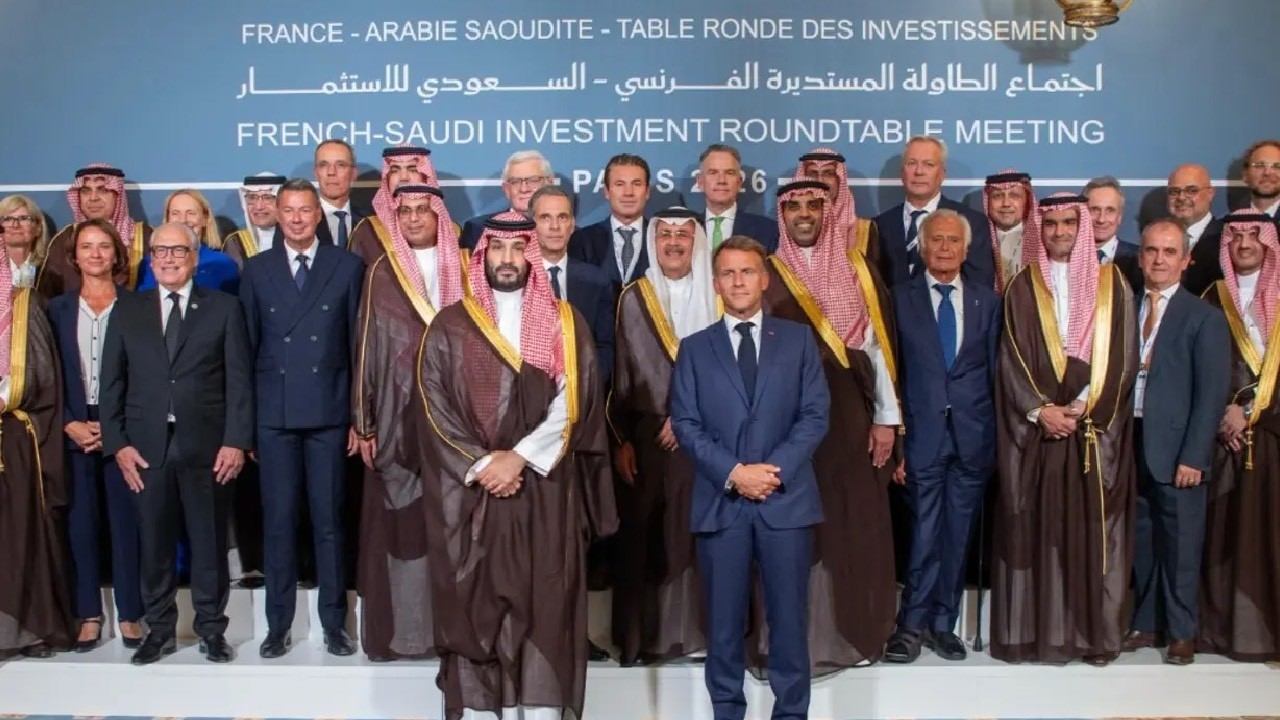
The project brings approximately USD 434 million (SAR 1.6 billion) in investment into Jeddah Islamic Port and directly supports the Kingdom’s National Transport and Logistics Strategy and Vision 2030 ambitions. The agreement was signed in Paris during the French-Saudi Investment Roundtable Meeting, attended by Crown Prince and Prime Minister His Royal Highness Prince Mohammed bin Salman bin Abdulaziz Al Saud and President of the French Republic His Excellency Emmanuel Macron. This high-level endorsement underscores the project’s national strategic weight and its role in advancing Saudi Arabia’s logistics transformation agenda.

New Capacity and Infrastructure Enhancements

The development will add approximately up to 2.6 million TEUs of annual handling capacity to Jeddah Islamic Port as part of RSGT’s existing concession. It includes new deep-water berths designed to accommodate the world’s largest container vessels, supported by advanced terminal technologies and 10 new ship-to-shore cranes. These upgrades are intended to enhance productivity, efficiency, and service reliability for customers across the Kingdom and the wider region — directly strengthening the port’s ability to serve larger vessels and major international shipping services.

Leadership Perspectives on National Impact

H.E. Eng. Suliman bin Khalid Al-Mazrou, President of the Saudi Ports Authority, affirmed that the agreement represents a significant milestone reflecting the Kingdom’s attractiveness for investment in the maritime sector and growing global investor confidence in the Saudi ports ecosystem. Aamer Abdullah Alireza – Executive Chairman of the Board of Directors of RSGT – stated:

“This partnership represents a defining milestone for both RSGT and Saudi Arabia’s maritime sector. It reflects the Kingdom’s ability to attract world-class international investors and demonstrates growing confidence in Saudi Arabia’s economic future, logistics ambitions and strategic position at the heart of global trade.” — Aamer Abdullah Alireza, Executive Chairman of the Board of Directors of RSGT

Long-Term Commitment to Regional Connectivity

Lars Vang. Christensen, Group Chief Executive Officer of RSGT, emphasized the project’s long-term value:

“Today’s signing marks a significant milestone in the development of RSGT and Jeddah Islamic Port. The agreement also reflects our long-term commitment to supporting Saudi Arabia’s logistics ambitions as well as our service to valuable customers. Through our upcoming partnership with CMA CGM, and with the continued support of the Ministry of Transport and Logistics Services and Mawani, we are delivering a project that will increase our container capacity significantly, enhance RSGT’s competitiveness and create long-term value for the Kingdom.” — Lars Vang. Christensen, Group Chief Executive Officer of RSGT

Source: cyprusshippingnews.com

Compiled from international media by the SCI.AI editorial team.

Ask SCI.AI Finished reading? Continue with SCI.AI. Explore the related policy, route, company and historical context. Continue asking
India’s Solar Module Utilisation Falls to 35–40% Amid Overcapacity
Manufacturing

India’s Solar Module Utilisation Falls to 35–40% Amid Overcapacity

India’s solar module manufacturing capacity reached 233 GW by June 2026, yet factory utilisation stands at just 35–40% — far below the 50–65% needed for sustainability. A joint IEEFA–JMK Research report reveals extreme downstream concentration: module capacity is 7x cell capacity and 116x ingot-wafer capacity. With 135 GW more planned or under construction, standalone manufacturers face stranded asset risks. US exports — 97% of FY2026 volume — fell 44–47% after 200%+ duties. New demand from green hydrogen and EU market access offer partial relief, but upstream investment and policy reform remain critical through 2030.

India’s Solar Module Capacity Hits 233 GW, Runs at 35–40% Utilisation
Manufacturing

India’s Solar Module Capacity Hits 233 GW, Runs at 35–40% Utilisation

India’s solar PV module manufacturing capacity reached 233 GW by June 2026, yet operates at only 35–40% utilisation — far below the 50–65% needed for sustainability. A pipeline of 135 GW in committed new module capacity raises near-term overcapacity risks. Upstream segments like cells and wafers remain underdeveloped, widening the value-chain gap. While top Chinese producers posted USD 4–4.7 billion in combined losses in 2025, Indian firms stayed profitable through 2025 and Q1 2026. The price gap with China narrowed by 28.6% from 2024 levels, but cost competitiveness hinges on upstream integration.

Asia-Europe freighter capacity up 18% amid e-commerce slump
Manufacturing

Asia-Europe freighter capacity up 18% amid e-commerce slump

Freighter capacity from Asia Pacific to Europe surged 18% in mid-August versus late June, even as Hong Kong–Europe tonnage plunged 33% year-on-year and mainland China–Europe traffic fell 8%. Route-level shifts were dramatic: Hong Kong–Budapest capacity jumped 321% (+1,100 tonnes), while Hong Kong–Frankfurt vanished entirely. Spot rates on China–Europe rebounded to $4.14/kg — 13% above 2025 — as Asia Pacific–Europe averages rose 15% YoY. Fleet growth remains constrained to ~2%/year through 2030.

Welcome Back!

Login to your account below

Create New Account!

Fill the forms below to register

Retrieve your password

Please enter your username or email address to reset your password.

Scan to share via WeChat

Open WeChat and scan the QR code to share

QR Code

Add New Playlist