Skip to content

South Asia Supply Chain

Analysis

India Captures 18% of Global Smartphone Production by 2025

India’s smartphone production share rose to 18% by 2025, making it the second-largest global hub after China (63%). A Times Kuwait report highlights India’s twentyfold domestic production growth and 100-fold export surge in under a decade. India now assembles ~25% of Apple’s iPhones and is the top smartphone supplier to the U.S. The government has pledged $10 billion via Semicon India, targeting a $120–150 billion semiconductor value chain by 2035. Crucially, the strategy focuses not on replacing China but reducing dependency by building parallel manufacturing centers.

Original source: Source information pending

India Captures 18% of Global Smartphone Production by 2025

According to investmentguruindia.com, India has become a primary beneficiary of the global shift away from concentrated electronics manufacturing in China, with its share of smartphone production rising to 18% by 2025.

China Plus One in Action

A report from Times Kuwait states that multinational companies are retaining production in China while building parallel manufacturing bases — a strategy known as ‘China plus one’. India and Vietnam emerged as the two major beneficiaries. By 2025, China, India, and Vietnam collectively accounted for more than 90 per cent of global smartphone production. China remained dominant at 63 per cent of output, while India’s share surged to 18%.

The report attributes India’s rapid ascent partly to government policy, especially the Production Linked Incentive (PLI) scheme, which rewards manufacturers for increasing domestic production and meeting localisation targets. Domestic mobile phone production has expanded over twentyfold in less than a decade, and exports have surged more than 100-fold.

India now assembles nearly a quarter of Apple’s iPhones and has become the largest source of smartphones imported into the United States. Google is shifting Pixel production toward India and plans to end Chinese manufacturing of some devices by 2027.

From Assembly to Advanced Capabilities

The report notes that India aims to move beyond final assembly of imported components and develop domestic capabilities in printed circuit boards, camera modules, batteries, displays, and semiconductors. Domestic value addition in mobile phones has risen to approximately 23 per cent, though most components and the majority of value still originate abroad.

The Indian government has committed $10 billion through its Semicon India program to build semiconductor infrastructure, including funding for chip design, manufacturing equipment, specialty materials, and skilled engineers.

“The emerging strategy is therefore not to replace China but to reduce dependence on it by developing additional manufacturing centers,”

Looking ahead, the publication projects India will build a semiconductor value chain valued between $120 billion and $150 billion by 2035. This ambition underscores a long-term, multi-decade industrial transformation anchored in targeted public investment and private-sector alignment.

Source: investmentguruindia.com

Compiled from international media by the SCI.AI editorial team.
Ask SCI.AI Finished reading? Continue with SCI.AI. Explore the related policy, route, company and historical context. Continue asking
India’s QCOs Cut Chemical Imports 30% Amid 56.6% Firm Exposure
South Asia Supply Chain

India’s QCOs Cut Chemical Imports 30% Amid 56.6% Firm Exposure

A CSEP report finds India’s Quality Control Orders (QCOs) reduced imports of QCO-impacted intermediate goods by ~30% over three years, while exposure among chemical-using firms rose from 12% in 2019 to 56.6% by 2024. QCO coverage expanded from 70 products in 2017 to 756 by December 2024, with 46% classified as intermediate goods. The chemical sector is the fourth-most affected, with 52 chemical products under QCOs by 2024. Policy adjustments in 2025 and the 2026 Transition Facilitation Order aim to ease compliance, yet mandatory standards persist for key inputs.

SkyDrive, Air India, Suzuki ink eVTOL medical logistics MoU
South Asia Supply Chain

SkyDrive, Air India, Suzuki ink eVTOL medical logistics MoU

SkyDrive Inc., Air India, and Suzuki signed a Memorandum of Understanding in July 2026 to evaluate eVTOL aircraft for urgent medical logistics in India. The initiative targets emergency transport of radioactive isotopes, emergency medical supplies, and human organs — use cases requiring sub-hour delivery windows. Evaluation of initial operational routes began in August 25, 2026, amid growing urban traffic congestion that impedes ground-based medical supply chains. A joint working group will conduct quarterly reviews through Q4 2026. No funding amounts or fleet sizes are disclosed in the source.

India, Japan Target $150B Semiconductor Demand by 2032
South Asia Supply Chain

India, Japan Target $150B Semiconductor Demand by 2032

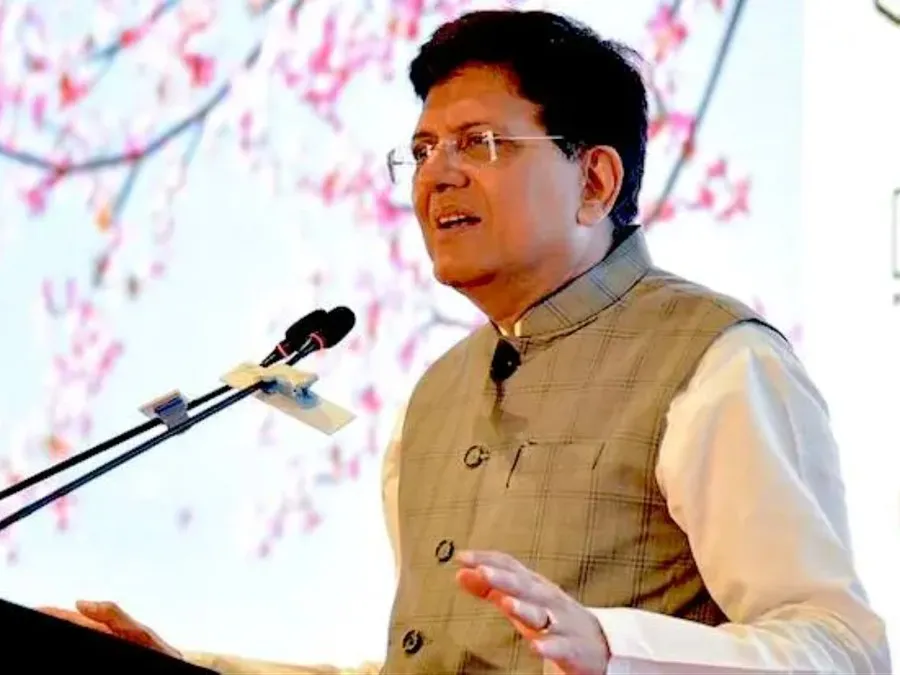
India and Japan advanced strategic economic cooperation during Commerce Minister Piyush Goyal’s visit to Tokyo, Nagoya, and Osaka. Discussions with over 30 Japanese companies and institutions targeted JPY 10 trillion in private investment by 2035, aligned with the 2025 Modi-Akazawa agreement. A key focus was scaling semiconductor collaboration, with India’s demand projected to hit USD 150 billion by 2032. The Minister outlined a six-pillar national strategy and emphasized synergies between India’s young talent pool and Japan’s engineering expertise. India’s 7.7% GDP growth and USD 30 trillion economy vision by 2047 were highlighted to reinforce investor confidence.

Welcome Back!

Login to your account below

Create New Account!

Fill the forms below to register

Retrieve your password

Please enter your username or email address to reset your password.

Scan to share via WeChat

Open WeChat and scan the QR code to share

QR Code

Add New Playlist