Skip to content

South Asia Supply Chain

Analysis

India’s QCOs Cut Chemical Imports 30% Amid 56.6% Firm Exposure

A CSEP report finds India’s Quality Control Orders (QCOs) reduced imports of QCO-impacted intermediate goods by ~30% over three years, while exposure among chemical-using firms rose from 12% in 2019 to 56.6% by 2024. QCO coverage expanded from 70 products in 2017 to 756 by December 2024, with 46% classified as intermediate goods. The chemical sector is the fourth-most affected, with 52 chemical products under QCOs by 2024. Policy adjustments in 2025 and the 2026 Transition Facilitation Order aim to ease compliance, yet mandatory standards persist for key inputs.

Original source: Source information pending

India’s QCOs Cut Chemical Imports 30% Amid 56.6% Firm Exposure

According to csep.org, India’s Quality Control Orders (QCOs) have reduced imports of QCO-impacted intermediate goods by approximately 30% over a three-year period following implementation, with chemical-using firms’ exposure rising from 12% in 2019 to 56.6% by 2024.

Regulatory Expansion and Legal Framework

QCOs — mandatory product standards enforced under the Bureau of Indian Standards (BIS) Act, 2016 — derive legal authority from legislation notified on 22 March 2016 and brought into force in October 2017. The regulatory scope has expanded rapidly: from 70 covered products in 2017 to 756 by December 2024. Around 46% of these products are intermediate goods, intensifying supply-chain implications for domestic manufacturing.

Chemical Sector Impact and Supply-Chain Pressures

The chemical sector ranks as the fourth-largest sector affected by QCOs — after Metals, Machinery & Electronics, and Textiles. The first QCO targeting chemicals was introduced in 2018, and coverage grew to 52 chemical products by 2024. Empirical analysis covering 2000 to 2023 shows India’s overall imports of QCO-impacted goods declined by 24% post-implementation, while imports of QCO-impacted intermediate goods fell by 30%. This indicates substantial disruption for import-dependent chemical users across sectors including pharmaceuticals, rubber and plastic products, and electrical equipment.

Policy Adjustments and Ongoing Concerns

In 2025, the Government of India revoked or suspended several QCOs covering plastics, steel, chemicals, textiles, and critical minerals — offering temporary relief. This recalibration continued with the Transition Facilitation (Quality Control) Order, 2026, which grants eligible firms greater flexibility in meeting BIS certification requirements. However, numerous QCO-covered intermediate goods remain subject to mandatory standards, sustaining concerns about long-term effects on supply chain resilience and manufacturing competitiveness.

Source: csep.org

Compiled from international media by the SCI.AI editorial team.
Ask SCI.AI Finished reading? Continue with SCI.AI. Explore the related policy, route, company and historical context. Continue asking
SkyDrive, Air India, Suzuki ink eVTOL medical logistics MoU
South Asia Supply Chain

SkyDrive, Air India, Suzuki ink eVTOL medical logistics MoU

SkyDrive Inc., Air India, and Suzuki signed a Memorandum of Understanding in July 2026 to evaluate eVTOL aircraft for urgent medical logistics in India. The initiative targets emergency transport of radioactive isotopes, emergency medical supplies, and human organs — use cases requiring sub-hour delivery windows. Evaluation of initial operational routes began in August 25, 2026, amid growing urban traffic congestion that impedes ground-based medical supply chains. A joint working group will conduct quarterly reviews through Q4 2026. No funding amounts or fleet sizes are disclosed in the source.

India, Japan Target $150B Semiconductor Demand by 2032
South Asia Supply Chain

India, Japan Target $150B Semiconductor Demand by 2032

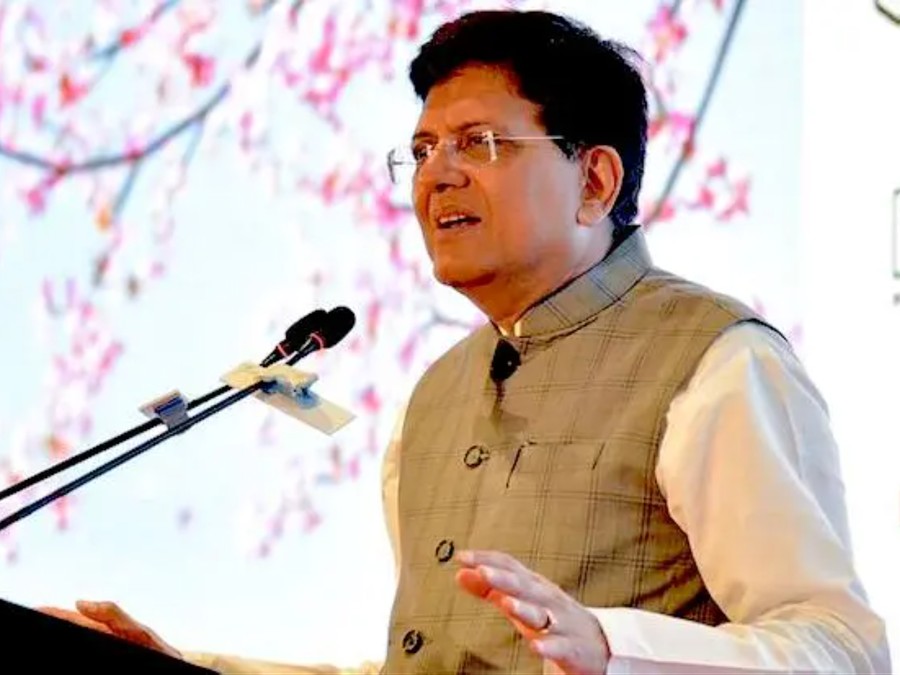
India and Japan advanced strategic economic cooperation during Commerce Minister Piyush Goyal’s visit to Tokyo, Nagoya, and Osaka. Discussions with over 30 Japanese companies and institutions targeted JPY 10 trillion in private investment by 2035, aligned with the 2025 Modi-Akazawa agreement. A key focus was scaling semiconductor collaboration, with India’s demand projected to hit USD 150 billion by 2032. The Minister outlined a six-pillar national strategy and emphasized synergies between India’s young talent pool and Japan’s engineering expertise. India’s 7.7% GDP growth and USD 30 trillion economy vision by 2047 were highlighted to reinforce investor confidence.

35% of Indian Farmers Report Fake Agro-Inputs in Past Year
South Asia Supply Chain

35% of Indian Farmers Report Fake Agro-Inputs in Past Year

A 2025 Crisil Intelligence and ASPA report reveals 35% of Indian farmers encountered counterfeit agro-inputs in the past year, with 82% believing fakes have grown more common. Local retailers enabled 75% of counterfeit purchases, while farmers showed willingness to pay a 14% premium for verified inputs. ASPA documented 276 counterfeit incidents from 2018–2025, including 50 in 2018 and 17 in 2025. Fertilisers made up 40% of reported cases, and detection remains weak: only 58% of farmers feel confident identifying fakes.

Welcome Back!

Login to your account below

Create New Account!

Fill the forms below to register

Retrieve your password

Please enter your username or email address to reset your password.

Scan to share via WeChat

Open WeChat and scan the QR code to share

QR Code

Add New Playlist