Skip to content

Manufacturing · Supply Chain

India Launches Rs 10,000 Crore Container Manufacturing Scheme

India has launched the Container Manufacturing Assistance Scheme (CMAS) with a Rs 10,000 crore budget over five years, as announced in the Union Budget 2026–27. The initiative aims to boost domestic container production to 7.5 lakh TEUs annually and cut dependence on the nearly 2 million empty containers imported each year. Driven by supply-chain vulnerabilities highlighted by UNCTAD — including freight volatility and port network stress — CMAS supports greenfield and brownfield investments, testing infrastructure, and workforce skilling. It aligns with Maritime Amrit Kaal Vision 2047 and Make in India, targeting enhanced maritime capability and long-term trade competitiveness.

Original source: Source information pending

India Launches Rs 10,000 Crore Container Manufacturing Scheme

According to maritimegateway.com, India has launched the Container Manufacturing Assistance Scheme (CMAS), a Rs 10,000 crore initiative announced in the Union Budget 2026-27, designed to build domestic container manufacturing capacity and reduce reliance on imports.

Strategic Rationale Behind CMAS

The scheme responds to structural vulnerabilities exposed by recent global disruptions: geopolitical tensions, supply-chain interruptions, and shifting shipping routes have intensified freight-rate volatility and strained maritime transport networks, according to the United Nations Conference on Trade and Development (UNCTAD). With 80% of global merchandise trade by volume moving by sea, and containerised cargo representing nearly two-thirds of international trade value, efficient container logistics is foundational to resilient supply chains.

India’s expanding EXIM trade and rapid logistics development have not been matched by domestic container production. The country imports nearly 2 million empty containers annually for domestic use and repositioning — a dependency that leaves availability exposed to global market fluctuations and logistical shocks.

This import reliance directly undermines supply-chain resilience and contradicts national initiatives including Make in India, Maritime Amrit Kaal Vision 2047, and multimodal logistics development — all of which emphasize self-reliance in critical infrastructure.

Implementation and Capacity Targets

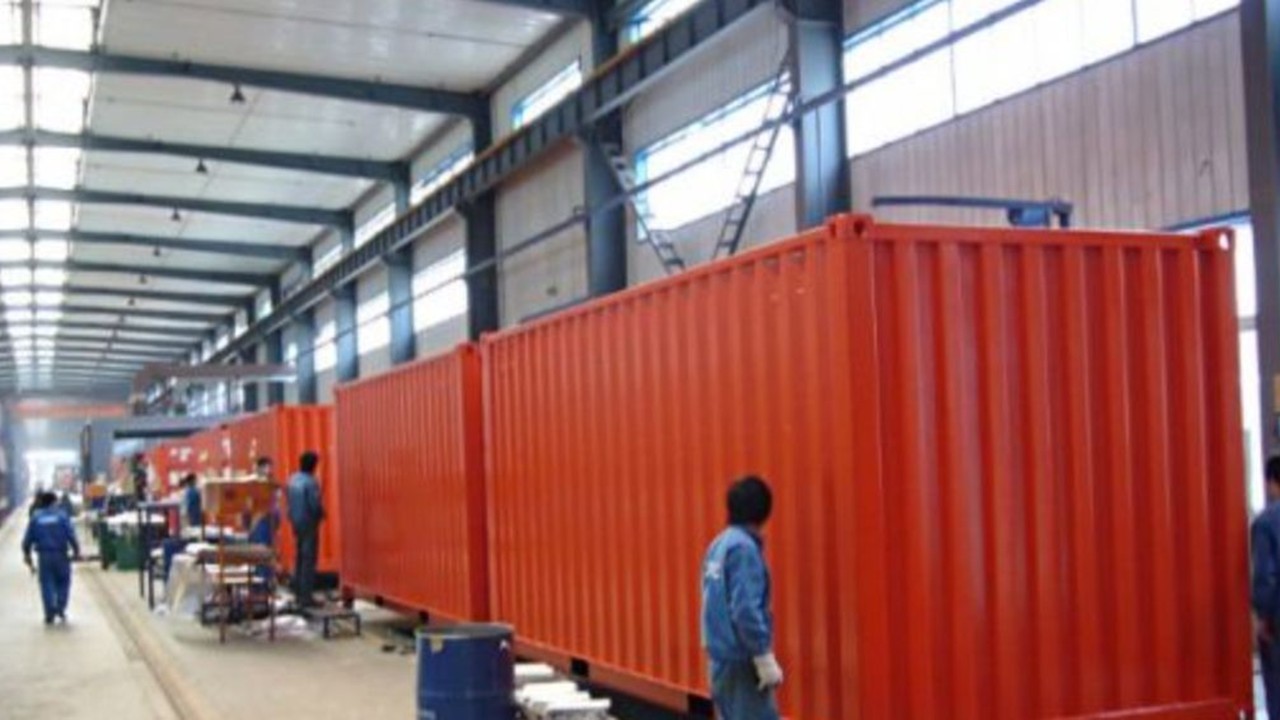
CMAS will operate over five years, delivering financial and institutional support to establish greenfield facilities, expand existing brownfield units, and upgrade testing infrastructure, skilling, and operational competitiveness. The scheme aims to scale India’s annual domestic container production capacity to approximately 7.5 lakh TEUs — a targeted increase intended to displace significant portions of the current import volume.

Capital assistance will be provided for new manufacturing facilities, while operational support will help domestic producers improve cost efficiency and technological readiness. The initiative explicitly links container manufacturing to broader maritime capability-building, positioning it as a pillar of India’s long-term trade competitiveness.

The Rs 10,000 crore outlay underscores the government’s prioritization of logistics sovereignty — aligning with global trends where nations are reinforcing domestic manufacturing of essential logistics assets amid heightened uncertainty.

Source: maritimegateway.com

Compiled from international media by the SCI.AI editorial team.
Ask SCI.AI Finished reading? Continue with SCI.AI. Explore the related policy, route, company and historical context. Continue asking
RoadOne acquires Port of Charleston facility to expand operations
AI & Automation

RoadOne acquires Port of Charleston facility to expand operations

RoadOne has acquired a new facility at the Port of Charleston in South Carolina to expand its East Coast logistics operations. The company plans to integrate the site by Q4 2026 and invest $2.3 million in equipment upgrades over 18 months. The Port of Charleston handles over 3.2 million TEUs annually and offers direct access to I-26 and I-95. RoadOne will retain all current on-site personnel and target full operational readiness in early 2027.

China’s Auto Exports Strain Shipping Capacity, Vessels Delayed to 2030
Manufacturing

China’s Auto Exports Strain Shipping Capacity, Vessels Delayed to 2030

Surging Chinese vehicle exports are intensifying global shortages of pure car and truck carriers (PCTCs), according to FreightWaves. Shipyard capacity is fully booked through 2029, pushing new vessel deliveries to 2030 or later. Older vessels approaching 30 years of age face retirement, and fleet scrapping may offset new deliveries late this decade. China-linked spot and time-charter rates jumped ~80% in Q2 and likely doubled from Q1 lows. These dynamics reflect structural constraints — not cyclical fluctuations — in global auto shipping capacity.

Walmart fast delivery fuels 24% e-commerce sales growth
AI & Automation

Walmart fast delivery fuels 24% e-commerce sales growth

Walmart’s fast delivery initiatives drove a 24% increase in e-commerce sales, supported by expansion to 3,500 stores with same-day/next-day capability, deployment of 1,200 dedicated delivery vans, and a 42% year-over-year rise in micro-fulfillment centers to 197 facilities. Average delivery time fell from 2.8 to 1.3 days, while e-commerce gross margin improved to 29.4% from 27.1%. Fiscal year 2025 capital expenditures for e-commerce logistics totaled $2.1 billion.

Welcome Back!

Login to your account below

Create New Account!

Fill the forms below to register

Retrieve your password

Please enter your username or email address to reset your password.

Scan to share via WeChat

Open WeChat and scan the QR code to share

QR Code

Add New Playlist