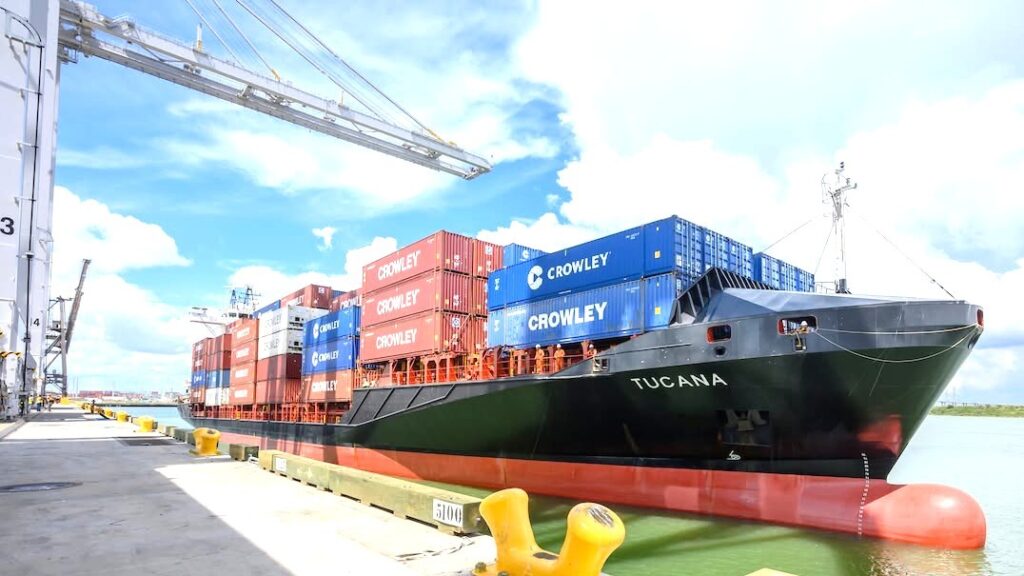
According to www.marketscale.com, on July 1, 2026, CMA CGM Group completed its acquisition of FedEx Supply Chain, the contract logistics arm of FedEx. The deal places one of the world’s largest container shipping companies in direct control of a warehousing, fulfillment, and managed logistics network serving a wide range of North American enterprise shippers. It is the most consequential ownership change in contract logistics this year, arriving at a moment when the rest of the global freight market is equally unsettled.
CMA CGM extends its reach from port to warehouse
The Marseille-based carrier has spent several years building beyond ocean freight, acquiring CEVA Logistics and expanding into air cargo. The FedEx Supply Chain purchase continues that trajectory, adding domestic U.S. distribution infrastructure to an already broad logistics portfolio. For enterprise procurement and supply chain leaders, the practical question is straightforward: a company that previously sold them ocean freight now also competes for their warehousing and fulfillment contracts.
CMA CGM told Bloomberg that a transpacific demand revival has boosted its profits in 2026, partially offsetting trade volatility from tariff policies and Middle East conflicts. That financial momentum gives the company room to integrate its new U.S. ground assets without immediate pressure to rationalize services.
When a carrier owns the ship, the warehouse, and the last-mile network, the shipper’s negotiating position changes at every renewal.
For operators who currently use FedEx Supply Chain for outsourced logistics, the ownership change warrants a contract review. Service continuity is the near-term priority, but longer-term, buyers should assess whether CMA CGM’s integrated model aligns with their own supplier diversification strategies.
Hormuz toll threat rattles carriers and shippers alike
Iran’s potential imposition of transit fees in the Strait of Hormuz has moved from diplomatic noise to an active operational concern. According to Bloomberg’s reporting via SupplyChainBrain, shipowners are clear on what would follow: surcharges would not stay confined to Hormuz. Carriers would apply compensatory fees across other trade lanes to recoup costs, spreading the financial impact well beyond Gulf-bound routes.
The strait handles roughly 20% of globally traded oil, and a meaningful share of containerized cargo transits the wider Persian Gulf region. Any disruption or new cost layer at Hormuz therefore ripples into energy prices, raw material costs, and finished-goods freight rates simultaneously. Oman has been hosting talks between the U.S. and Iran on a pause in strikes, but as of early August 2026, no durable framework has been reached, according to Bloomberg.
Supply chain leaders who have not updated their Middle East routing contingencies since the Red Sea disruptions of 2024 and 2025 are running on stale assumptions. The Hormuz situation adds a second potential chokepoint in the same region, and shipowners’ warnings about cascading surcharges suggest the cost exposure extends to lanes nowhere near the Gulf.
Kuehne+Nagel’s Apex review adds airfreight uncertainty
Kuehne+Nagel is weighing strategic options for its Apex Logistics unit, Bloomberg reported via SupplyChainBrain in late July 2026. Apex is a significant player in Asia-originating airfreight and cross-border e-commerce fulfillment, with particular strength on China-to-U.S. and China-to-Europe corridors. The nature and outcome of the review, whether a sale, restructuring, or other disposition, has not been confirmed.
For enterprise buyers who rely on Apex for air cargo capacity or e-commerce logistics, the uncertainty itself is operationally relevant. Provider reviews of this kind can affect pricing, account management continuity, and capital investment in network capacity during the evaluation period. Procurement teams with material Apex volume should open dialogue with their account contacts now and begin mapping alternative capacity sources as a precaution.
The Kuehne+Nagel move also reflects a broader pattern the CSCMP’s 2026 State of Logistics Report flagged: a freight market defined by persistent uncertainty, where logistics providers as well as shippers are reassessing their portfolios in response to volatile trade flows and margin pressure. Helen Atkinson of SupplyChainBrain summarized the CSCMP report’s tone as an instruction to operators to get comfortable operating in fog.
What this means for your team
Here are key actions for supply chain professionals, based on the report:
- Review your FedEx Supply Chain contracts and service agreements now that CMA CGM is the parent company; assess whether integrated-carrier ownership changes your leverage or diversification goals at the next renewal.
- Update Middle East routing contingencies to account for a potential second chokepoint at Hormuz, and model the landed-cost impact of broad-lane surcharges if carriers pass through new transit fees across non-Gulf routes.
- If your freight program has material Apex Logistics volume, open a dialogue with your account team and identify alternative air cargo capacity on Asia-originating lanes before any Kuehne+Nagel structural decision is announced.
- Evaluate whether your current provider mix is concentrated enough in any single integrated carrier that a corporate transaction or geopolitical event could simultaneously affect ocean, air, and warehousing services.
Source: marketscale.com
Compiled from international media by the SCI.AI editorial team.