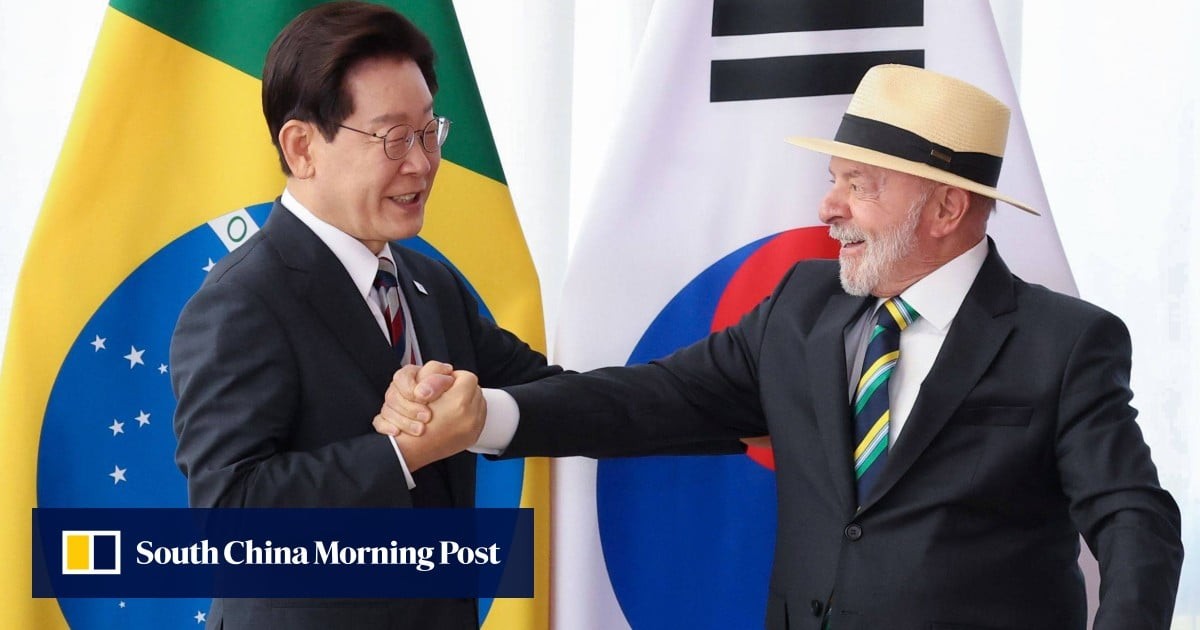
According to www.scmp.com, South Korean President Lee Jae Myung and Brazilian President Luiz Inacio Lula da Silva agreed on 29 July 2026 to revive free-trade negotiations between South Korea and Mercosur — the South American trade bloc comprising Argentina, Brazil, Paraguay, Uruguay, and Bolivia.
Joint Working Group to Prepare December Summit Declaration
A joint working group will be established to draft a formal declaration ahead of the Mercosur summit in December 2026, per the joint statement issued after the leaders’ meeting in Brasília. The talks — originally launched in 2018 — have been stalled since late 2021, when concerns intensified over potential damage to regional manufacturing from surging Korean imports.
Manufacturing Sector Skepticism Remains High
Analysts stress that skepticism remains entrenched across Latin America, especially within Brazil’s domestic manufacturing industry. According to observers cited in the report, Seoul must move beyond diplomatic language and deliver concrete, verifiable commitments — particularly in direct investment and technology transfer — to build credibility as a development partner rather than a resource-extraction competitor.
Technology Transfer and Investment as Core Conditions
“To win support in Latin America, Seoul should demonstrate tangible commitments through investment and technology transfer — not just diplomatic rhetoric,” analysts stated in the source article. This emphasis reflects longstanding industrial policy priorities in Mercosur countries, where import surges from highly automated economies like South Korea have triggered fears of deindustrialization. Mercosur is one of the world’s largest trade blocs by geographic scope and GDP contribution, representing over 270 million people and generating combined GDP exceeding $3.5 trillion annually.
Historical Context and Strategic Stakes
The 2018 launch of South Korea–Mercosur negotiations marked Seoul’s first major bilateral trade initiative targeting Latin America’s integrated market. Since then, bilateral trade has grown steadily: South Korean exports to Mercosur reached $8.2 billion in 2025, while Mercosur exports to South Korea totaled $4.7 billion in the same year — with soybeans, iron ore, and beef dominating the latter. Yet without a binding agreement, tariffs on key Korean exports — including automobiles, electronics, and machinery — remain at an average of 14% across Mercosur members, compared to near-zero rates under existing Korean FTAs with the EU and U.S.
Practitioner Implications for Supply Chain Teams
For supply chain professionals, successful conclusion of a Korea–Mercosur FTA would directly impact landed cost modeling, tariff classification workflows, and nearshoring feasibility assessments. A ratified agreement could reduce customs clearance delays by up to 30% for Korean-manufactured components entering Mercosur markets — a factor increasingly relevant amid tightening global semiconductor supply chains and rising demand for localized battery material processing. It would also unlock preferential access for Korean firms investing in local assembly plants in Paraguay and Uruguay, where labor costs are 42% lower than in Brazil’s industrial heartland.
Source: South China Morning Post
Compiled from international media by the SCI.AI editorial team.