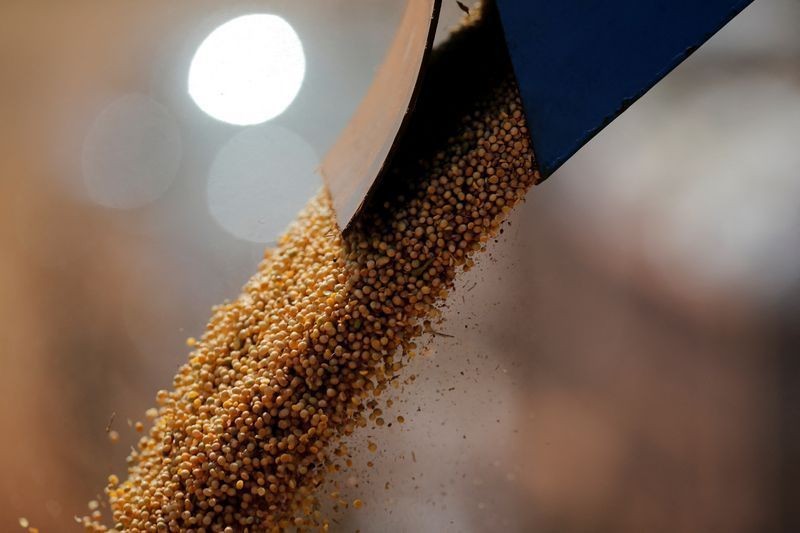
According to www.cnnbrasil.com.br, China imported 1.26 million tons of U.S. soybeans in June 2026 — marking a renewed, though modest, uptick in bilateral agricultural trade amid a broader agreement targeting annual purchases of 25 million tons through 2028.
June Import Surge and Brazilian Dominance
Chinese customs data show the country imported 13.554 million tons of soybeans in June 2026 — the highest monthly volume on record and a 10.3% increase over June 2025. Yet year-to-date imports totaled just 50.202 million tons, up only 1.6% year-on-year, underscoring that the June surge has not yet materially shifted the full-year trajectory.
Of that June total, 12.075 million tons came from Brazil — accounting for nearly 90% of all Chinese soybean imports that month. This figure exceeds the 10.28 million tons reported by Brazil’s Secex (Secretaria de Comércio Exterior), a discrepancy attributed to transit times exceeding 40 days between Brazilian ports and Chinese discharge points.
U.S. Soy Reentry and Bilateral Commitments
While Brazil maintains overwhelming market share, China’s renewed acquisition of U.S. soy reflects progress on commitments made during high-level talks. Following a summit in Beijing between President Xi Jinping and former U.S. President Donald Trump, Chinese buyers resumed purchasing American soy — even though soy was not a formal agenda item. The U.S. soy purchase pledge, first announced by the White House, envisions 25 million tons annually until 2028.
Royal Rural consultancy reports China has already booked at least 1.25 million tons of U.S. soy for shipment starting in September 2026 — aligning with the traditional seasonal shift from Brazilian to U.S. supplies. Still, Carlos Cogo, Sócio-Diretor at Cogo Inteligência, cautions against overinterpreting early orders: “
Despite the resumption of trade, there remains uncertainty whether China will fulfill its announcement of purchasing approximately 25 million tons annually.
” He cites recent purchases of six U.S. cargoes totaling 264,000 tons for delivery in the 2026/27 crop year as evidence of incremental, not systemic, reengagement.
Climatic Risk and U.S. Production Outlook
The USDA now projects U.S. soy production for the 2026/27 season at 121.8 million tons, up from 120.70 million tons forecast in June — driven by an expanded planted area of 34.56 million hectares. However, analyst Cogo stresses that actual execution hinges critically on weather conditions during July and August, when grain filling occurs across U.S. fields.
“Although increased planting area and output ease immediate supply concerns, the market remains extremely sensitive to climate conditions during July and August,” he explains. Any meaningful deterioration could rapidly revise yield forecasts and disrupt the current supply-demand equilibrium. U.S. export projections stand at 45.18 million tons, supported by strong domestic crushing — which reached 74.84 million tons — fueled by robust margins and growing demand for vegetable oil used in biodiesel production.
Brazil’s Structural Cost Advantage
Brazil retains decisive competitiveness in global soy trade. Its soybeans are priced US$0.50–US$0.60 per bushel below U.S. equivalents, while its average production cost is US$1.20 per bushel lower. This structural advantage enables Brazil to sustain its dominant position even as U.S.-China commercial ties recalibrate.
“This advantage allows Brazil to maintain a privileged position in international markets despite the U.S.-China rapprochement,” Cogo notes. With port line-ups indicating 13.15 million tons of Brazilian soy exports in July — of which 9.23 million tons are destined for China — and strong forward bookings expected to sustain volumes into August, Brazil is positioned to expand its export footprint beyond traditional markets currently served by U.S. suppliers.
Source: cnnbrasil.com.br
Compiled from international media by the SCI.AI editorial team.