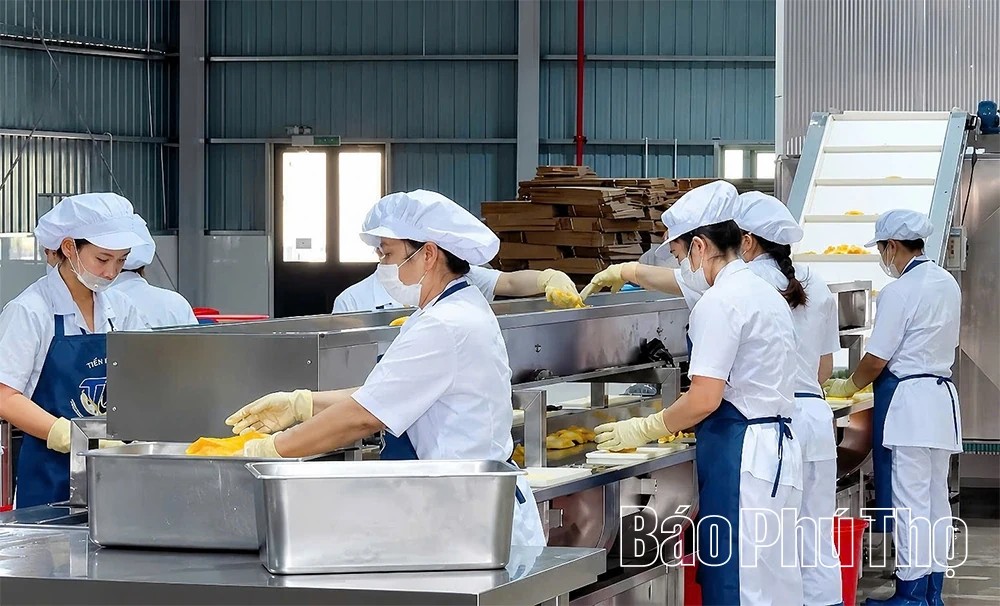
According to www.vietnam.vn, after more than five years of implementation, the EU–Vietnam Free Trade Agreement (EVFTA) has enabled over 1,000 enterprises in Phú Thọ Province to expand exports — with total import-export turnover reaching approximately $48.77 billion in the first half of 2026.
EU Market Access Accelerates Under EVFTA
The EU remains one of Vietnam’s most attractive export destinations — and for Phú Thọ specifically. Upon EVFTA’s entry into force, the EU eliminated tariffs on roughly 70% of tariff lines for Vietnamese goods. The remaining duties are being phased out gradually, with full elimination scheduled by 2030. Key beneficiary sectors include agricultural products, tea, wood, textiles and apparel, footwear, and electronic components.
“EVFTA does not just open a new market — it creates momentum for high-quality growth,” said Hoàng Xuân Phú, Deputy Director of the Department of Industry and Trade, Phú Thọ Province. His department has intensified outreach on rules of origin, technical standards, and EU regulatory requirements while supporting firms with trade promotion and investment attraction.
Export Readiness: Certifications, Traceability, and Green Standards
To qualify for EVFTA’s tariff preferences, exporters must comply strictly with rules of origin — a requirement that has driven systemic upgrades across Phú Thọ’s supply chains. As of mid-2026, the provincial Plant Protection and Crop Production Sub-Department had issued more than 660 production site codes for fruit, vegetable, tea, and other crops. Of these, 109 codes were designated specifically for export to the EU, South Korea, and China.
Companies such as Công ty TNHH Chè Hoài Trung (Chí Tiên Commune) have invested in organic raw material zones and developed OCOP 5-star certified tea for EU markets. Similarly, Đoan Hùng and Tân Lạc grapefruit — grown under tightly controlled, traceable protocols — have entered European distribution channels. “We implemented strict quality control at every stage to meet the EU’s demanding standards,” noted a representative from the local agricultural authority.
Wood Processing and FDI Spillovers
The province’s wood industry — supported by over 123,000 hectares of planted forest and ~200 enterprises and cooperatives — is upgrading technology to produce higher-value finished goods for export. Meanwhile, foreign-invested enterprises operating in Phú Thọ, including COSMOS Co., Ltd. (Thụy Vân Industrial Park, Nông Trang Ward), report indirect benefits: although COSMOS primarily serves U.S.-based clients, its products are widely distributed across Europe — and EVFTA’s preferential treatment has increased partner confidence and order volumes.
“Tariff advantages under EVFTA help our international partners scale orders from Phú Thọ-based manufacturers,” stated a COSMOS Co., Ltd. representative. This reflects broader spillover effects: even non-EU-focused FDI firms contribute to regional export capacity when their output qualifies for preferential access.
Non-Tariff Barriers Demand Strategic Shifts
Beyond tariffs, the EU enforces rigorous non-tariff requirements — including full supply chain traceability, carbon emission reductions, social responsibility compliance, labor standards, and environmental sustainability. Economic experts stress that long-term competitiveness now hinges less on tariff cuts and more on operational excellence: digital transformation, internationally certified production zones, green manufacturing practices, and third-party certifications such as ISO or FSC.
As noted by industry analysts cited in the source:
“To fully leverage EVFTA in this new phase, enterprises cannot rely solely on tariff advantages — they must compete on quality, technology, and international standard compliance.”
This shift is already visible in footwear and electronics assembly facilities, where process digitization and energy-efficient equipment adoption are accelerating.
Source: vietnam.vn
Compiled from international media by the SCI.AI editorial team.