Skip to content

Japan & Korea Supply Chain

Analysis

BMW cuts new X5 lifecycle emissions by 40%

BMW Group has reduced the lifecycle CO₂e emissions of its new fifth-generation X5 by around 40%, according to Automotive Logistics. Vice President of Product Sustainability Nils Hesse identified battery cells as the largest single emissions lever — delivering a 28% CO₂e reduction per watt-hour versus prior Gen5 cells. Material innovations include 50% EAF steel, 35% recycled aluminum in doors, 100% recycled PET in headliners, and 940 kg of secondary materials in the iX5 60 xDrive. BMW mandates 100% renewable energy for battery suppliers and sources battery packs from Plant Woodruff, just 15 miles from Spartanburg. All figures are benchmarked against an internationally recognised LCA database.

Original source: Source information pending

BMW cuts new X5 lifecycle emissions by 40%

According to www.automotivelogistics.media, BMW Group has reduced the lifecycle CO₂e emissions of its new fifth-generation X5 by around 40% — a figure benchmarked against industry averages from an internationally recognised life cycle assessment (LCA) database.

Supply chain drives largest emissions reduction

Nils Hesse, vice president of product sustainability at BMW Group, confirmed in an exclusive interview with Automotive Manufacturing Solutions that the supply chain is the main contributor to CO₂ reduction in electric vehicles — and that battery cells represent the single largest lever. “In an electric vehicle, the supply chain is the main contributor to CO₂ reduction. The measures with the highest impact are battery cells. Reducing the CO₂ footprint of the cells was the biggest single lever, followed by aluminum and steel,” he said.

This ordering underscores a critical industry reality: battery cells dominate the carbon footprint of EVs more than body structure, production energy, or any other bill-of-materials component. That insight directly informs BMW’s investment in Gen6 cylindrical high-voltage battery cells used in the iX5 60 xDrive, which deliver a 28% lower CO₂e per watt-hour compared with the Gen5 prismatic cells in the BMW iX.

Material decarbonisation in Spartanburg

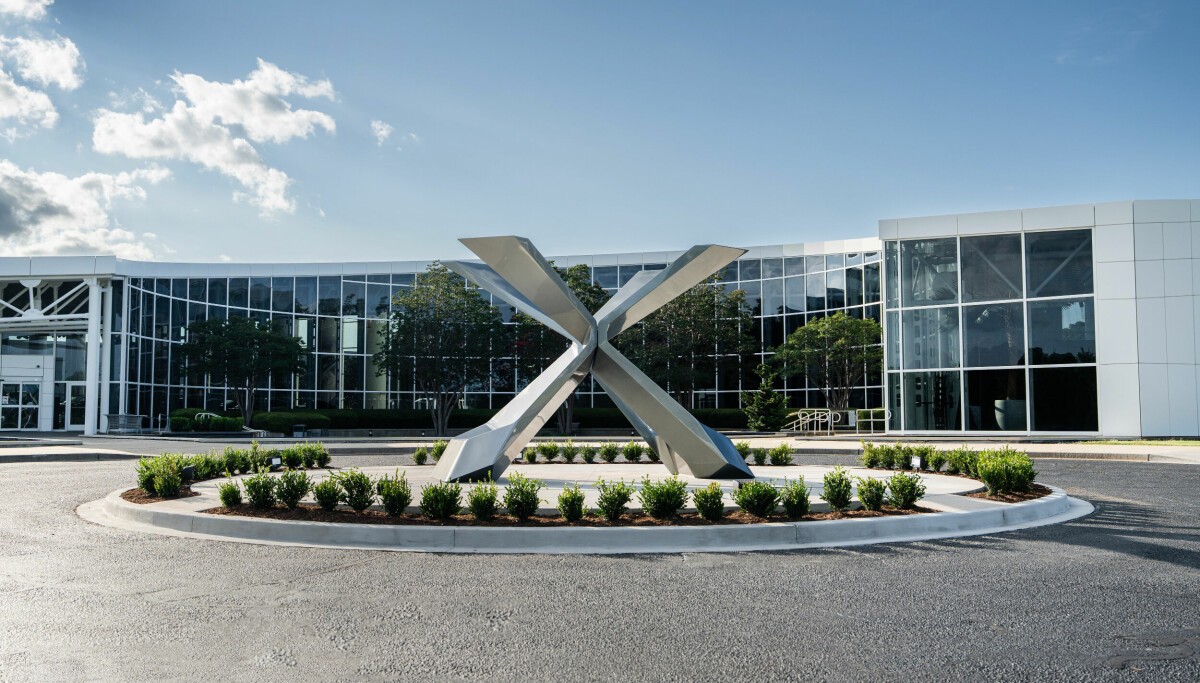
The new X5 is assembled at BMW Group Plant Spartanburg in South Carolina — where local circularity initiatives significantly cut upstream emissions. 50% of flat steel used is electric arc furnace (EAF) steel with high secondary content, produced using renewable energy via long-standing partnerships with North American suppliers. In addition, 35% recycled aluminum is used in doors — sourced via a closed-loop system recovering scrap from Spartanburg’s own press shop.

The vehicle’s interior also reflects material innovation: the headliner yarn is made entirely from 100% recycled PET. And across the iX5 60 xDrive model, roughly one third of total vehicle weight — equivalent to 940 kg — consists of secondary materials, including aluminum suspension parts, rims, wheel carriers, and swivel bearings. All aluminum components in this category are manufactured using 100% renewable energy for both electrolysis and production.

Constraints and contractual levers

Hesse acknowledged persistent challenges: “The most challenging stage remains across the supply chain. In an electric vehicle, the use phase is already largely electrified, shifting the main CO₂ reduction potential into the supply chain itself.” He noted that while BMW mandates 100% renewable energy for all direct battery cell suppliers, scaling secondary materials remains difficult — not due to technical capability, but because recycled battery-grade cobalt, lithium, and nickel are not yet available at sufficient scale.

This constraint shapes BMW’s strategy: it requires every tier-one battery supplier to operate on 100% renewable energy, and it sources high-voltage battery packs from BMW Group Plant Woodruff, located just 15 miles from Spartanburg — enabling tight control over logistics and energy sourcing. Figures cited are preliminary forecast values for the X5 40d xDrive and iX5 60 xDrive, to be confirmed in the official Vehicle Footprint (VFP) ahead of Start of Production — scheduled for 2026.

Source: automotivelogistics.media

Compiled from international media by the SCI.AI editorial team.
Ask SCI.AI Finished reading? Continue with SCI.AI. Explore the related policy, route, company and historical context. Continue asking
India, Japan Ink Next-Gen Pact Targeting JPY 10 Trillion Investment
Japan & Korea Supply Chain

India, Japan Ink Next-Gen Pact Targeting JPY 10 Trillion Investment

Union Commerce and Industry Minister Piyush Goyal concluded a four-day Japan visit on August 27, advancing the India-Japan Next Generation Economic Partnership. The initiative targets JPY 10 trillion in Japanese private investment in India over the next decade, as set during PM Modi’s 2025 Japan visit. Goyal’s delegation — nearly 200 strong — engaged over 200 industry participants across Tokyo, Osaka, and a third city, yielding early outcomes including a robotics firm’s commitment to invest in and manufacture in India. Discussions emphasized semiconductors, AI, clean energy, defence-linked manufacturing, space, and robotics for ageing societies — all under the framework of resilient supply chains and economic security.

South Korea, Brazil Ink Deal to Restart Mercosur FTA Talks
Japan & Korea Supply Chain

South Korea, Brazil Ink Deal to Restart Mercosur FTA Talks

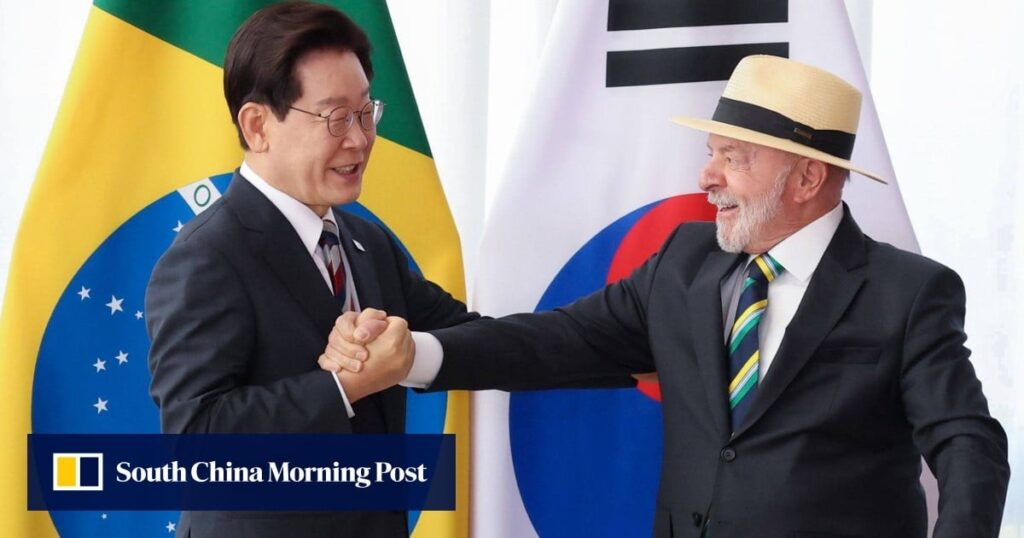
South Korean President Lee Jae Myung and Brazilian President Luiz Inacio Lula da Silva agreed on 29 July 2026 to restart free-trade negotiations with Mercosur — the South American bloc of Argentina, Brazil, Paraguay, Uruguay, and Bolivia. A joint working group will prepare a formal declaration for the Mercosur summit in December 2026. Talks, launched in 2018, stalled in late 2021 amid manufacturing-sector concerns. Analysts say Seoul must back diplomacy with real investment and technology transfer. Mercosur’s $3.5 trillion GDP and 270 million consumers make it a high-stakes opportunity for Korean exporters and supply chain planners.

Nissan to export US-built Murano to Japan in early 2027
Japan & Korea Supply Chain

Nissan to export US-built Murano to Japan in early 2027

Nissan will begin exporting the U.S.-built Murano SUV from its Smyrna, Tennessee plant to Japan in early 2027 — enabled by a September 2025 U.S.-Japan trade agreement that lowered U.S. tariffs on Japanese vehicles from 25% to 15% and allowed U.S. safety certification to satisfy Japanese regulatory requirements. The move follows similar announcements by Toyota and Honda to export U.S.-assembled models to Japan. Nissan sold 42,747 Muranos in the U.S. in 2025 (+121% YoY), while U.S. imports from Japan fell 17.4% to 113,094 units.

Welcome Back!

Login to your account below

Create New Account!

Fill the forms below to register

Retrieve your password

Please enter your username or email address to reset your password.

Scan to share via WeChat

Open WeChat and scan the QR code to share

QR Code

Add New Playlist