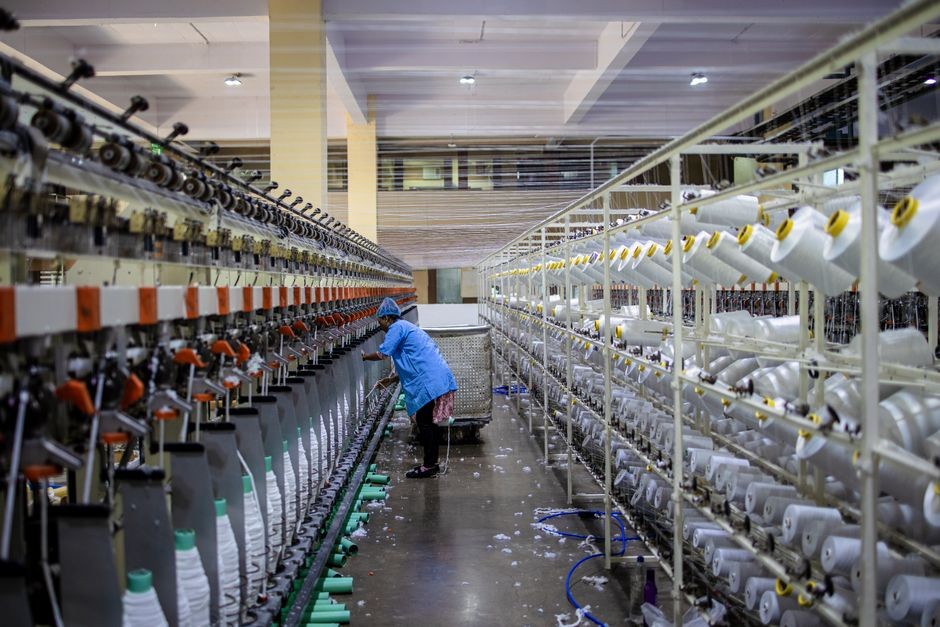
According to ciosea.economictimes.indiatimes.com, Orbbec — a leading Chinese developer of 3D vision sensors and robotics perception technologies — has established a new production facility in Vietnam to bolster supply chain resilience and accelerate delivery to North America, Europe, and Southeast Asia.
Strategic response to supply chain volatility
The move follows escalating geopolitical and logistical pressures that have reshaped electronics manufacturing priorities. With US-China trade tensions intensifying and pandemic-era bottlenecks exposing single-source vulnerabilities, Orbbec’s investment reflects a broader industry pivot toward geographic diversification. According to market research cited by DIGITIMES, Southeast Asia is rapidly gaining traction as a hub for electronics manufacturing, with Vietnam at the forefront due to government incentives and ongoing investment in infrastructure.
Vietnam offers Orbbec access to skilled labor, competitive production costs, and proximity to major international shipping routes — factors critical for high-value optical modules and 3D vision sensors used in robotics, smart devices, and automation solutions. The facility enables faster order fulfillment: delivery times to key markets including North America, Europe, and Southeast Asia are expected to improve significantly. This aligns with growing client demand for secure, reliable, and responsive supply chains — a requirement increasingly emphasized by international customers since 2020.
Manufacturing footprint expansion amid global robotics growth
Orbbec’s Vietnam hub marks a deliberate scaling of its international operational capacity. The company’s core products — including time-of-flight (ToF) and structured-light 3D vision sensors — serve sectors such as logistics, healthcare, and smart manufacturing, where demand is surging. Industry analysts note that for sensor manufacturers, production flexibility and regional proximity are now as vital as R&D capability.
The new facility supports Orbbec’s stated ambition to become a truly global player — a goal underscored by its prior product deployments across 12 countries and partnerships with over 300 robotics integrators worldwide. By anchoring part of its manufacturing in Vietnam, Orbbec reduces dependency on any single jurisdiction while maintaining strict quality control standards required for industrial-grade optical components. This approach mirrors parallel moves by other technology suppliers who have opened or expanded operations in Vietnam since 2022, including firms specializing in AI edge devices and precision optics.
Broader implications for tech supply chains
Orbbec’s decision contributes to a measurable shift in regional manufacturing concentration. Data from the Vietnam Ministry of Industry and Trade shows electronics exports grew 14.7% year-on-year in Q1 2024, with high-tech components accounting for 68% of total electronics export value. That growth trajectory reinforces Vietnam’s role as a strategic node — not just for assembly, but for advanced sensor production requiring cleanroom environments and calibrated optical testing.
Practitioners in global supply chain management report that nearshoring decisions like Orbbec’s now routinely include assessments of local supplier maturity, certification readiness (e.g., ISO 9001, IATF 16949), and logistics lead times — metrics that Vietnam has improved substantially over the past five years. For robotics OEMs sourcing perception hardware, this means shorter design-to-deployment cycles and reduced exposure to tariff fluctuations affecting China-origin components. As one supply chain director at a European industrial automation firm noted:
“Having a second-source manufacturer within 48 hours’ air freight — with full traceability and audit-ready documentation — changes how we plan inventory and manage risk.” — Lena Schmidt, Head of Global Sourcing, RoboForge GmbH
The trend extends beyond Orbbec: companies including Hikrobot, UFactory, and CloudMinds have all announced Vietnam-based production or testing centers between 2023 and 2024. Collectively, these investments signal a structural recalibration — one where supply chain agility is measured in weeks, not quarters, and resilience is built through distributed, interoperable manufacturing nodes rather than centralized scale.
Source: ciosea.economictimes.indiatimes.com
Compiled from international media by the SCI.AI editorial team.