According to www.marketscale.com, the US e-commerce market is projected to reach $2.28 trillion by 2031, driven primarily by mobile commerce, digital payment infrastructure, and rapid fulfillment expansion.
Three Converging Growth Drivers
The forecast identifies three interlocking forces accelerating e-commerce scale: the ongoing shift of consumer purchasing to mobile devices; the maturation of digital payment rails; and the aggressive physical buildout of rapid fulfillment networks. Each imposes distinct operational demands on retail and logistics organizations.
Mobile commerce now accounts for a majority of online transactions, intensifying pressure on checkout systems and inventory visibility tools. Platforms failing to complete mobile transactions in under three seconds risk immediate cart abandonment. Meanwhile, digital payments — including digital wallets, BNPL, and real-time bank transfers — directly impact treasury operations: reconciliation workflows, fraud detection latency, and working capital velocity all scale nonlinearly with payment method diversity. As volume approaches the $2.2792 trillion projection cited by Barchart, enterprise finance teams face exponentially growing complexity in accounts receivable and liquidity forecasting.
Fulfillment Infrastructure: The Longest Lead-Time Bet
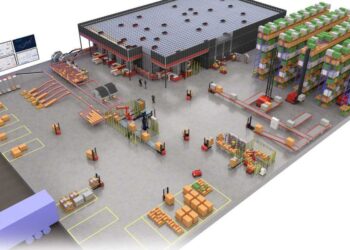
Fulfillment expansion represents the most capital-intensive and time-constrained driver. Building or certifying new fulfillment nodes requires 18 to 36 months, according to the report. This timeline forces strategic decisions today — in 2026 — about warehouse location, automation contracts, and carrier partnerships, all of which determine competitive delivery speed at peak market scale.
Major retailers and third-party logistics providers have responded by acquiring urban-adjacent sites and deploying robotic picking and sortation systems. These investments are not incremental upgrades but foundational infrastructure bets. For procurement and supply chain directors, delaying capacity commitments until demand fully materializes is no longer viable — the lead time eliminates reactive scaling.
Omnichannel Pressure on Legacy Distribution Networks
Existing distribution centers — many originally designed for bulk wholesale replenishment — are struggling to handle high-velocity, single-unit e-commerce picking. Retrofitting or replacing them with purpose-built e-fulfillment centers has become a capital allocation priority. Labor costs and throughput rates at traditional DCs often fall short without automation, making ROI analysis urgent.
Carrier network capacity compounds this pressure. As parcel volume grows, shipper leverage declines unless diversified. Procurement teams negotiating multi-year agreements in 2026 must weigh current carrier capacity investments against projected volume growth. The report notes that favorable terms remain available for shippers committing sufficient volume while carriers still compete for share — a window expected to narrow as the 2031 target nears.
Practical Implications for Supply Chain Teams
The report outlines four actionable steps for operations leaders. First, audit fulfillment node locations against top customer ZIP codes now — securing well-positioned warehouse space at pre-peak pricing is time-sensitive. Second, review mobile checkout conversion rates: if mobile abandonment exceeds desktop baseline by more than a few percentage points, that gap will compound as mobile share rises. Third, pressure-test carrier contract terms against projected volume curves. Fourth, evaluate automation ROI timelines: robotic picking deployments typically require 18–24 months to reach full productivity — projects launched in 2026 will come online precisely as volumes accelerate toward the $2.28 trillion threshold.
- US e-commerce market projected to hit $2.28 trillion by 2031
- Fulfillment node development lead times range from 18 to 36 months
- Robotic deployment ROI timelines average 18–24 months
- Mobile checkout abandonment must be resolved within seconds to avoid lost sales
- Procurement negotiations underway in 2026 will shape delivery competitiveness through 2031
Source: marketscale.com
Compiled from international media by the SCI.AI editorial team.