According to solarquarter.com, Australia and India have formalized a broad-based energy partnership centered on clean energy deployment, supply chain resilience, and secure access to critical inputs—including uranium and critical minerals—during a high-level meeting in Melbourne on 10th July 2026.
Joint Statement and Dual-Track Energy Strategy
Australian Prime Minister Anthony Albanese and Indian Prime Minister Narendra Modi jointly welcomed a new Joint Statement on Energy Security, reaffirming mutual commitment to reliable energy supplies while accelerating the shift toward low-carbon sources. The statement explicitly recognizes that conventional fuels—including coal, natural gas, diesel, and other liquid fuels—will remain essential for grid stability during the energy transition.
The partnership builds on longstanding trade flows: Australia continues as a long-term supplier of coal and liquefied natural gas to India, while India has become Australia’s fourth-largest source of refined petroleum products. This two-way energy exchange underpins deeper strategic coordination across infrastructure, technology, and resource governance.
Clean Energy Capacity Building and Technology Transfer
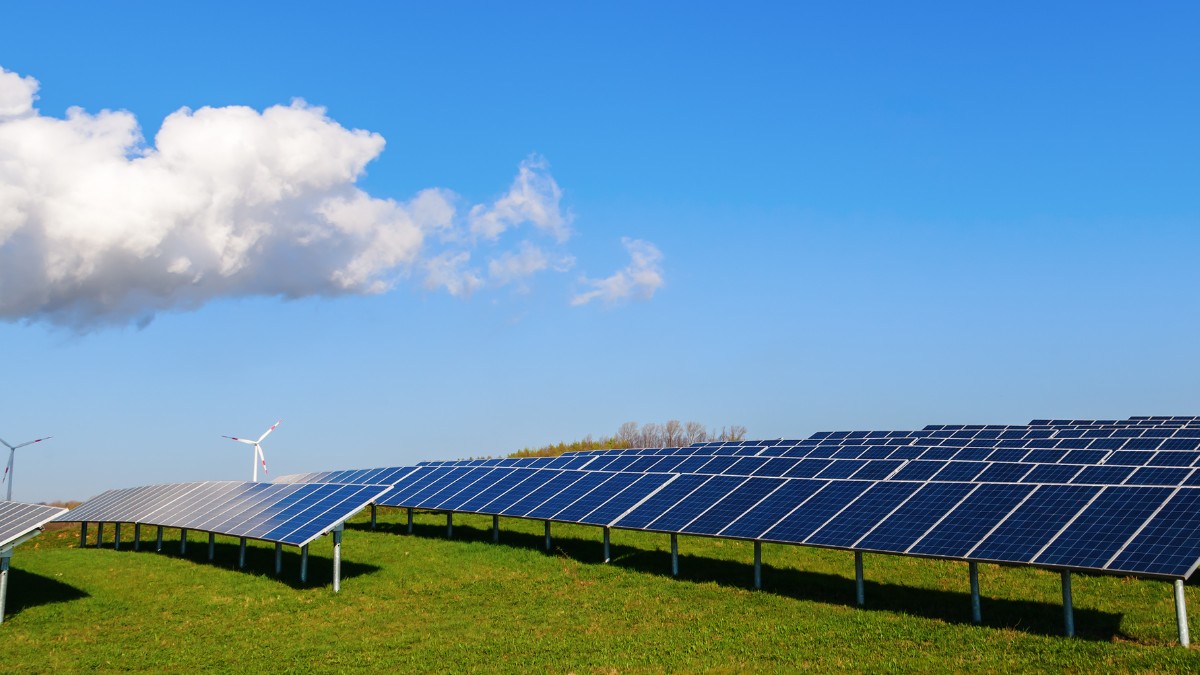
A cornerstone of the collaboration is the India-Australia Renewable Energy Partnership, which has delivered tangible capacity-building outcomes. One key milestone is the inauguration of the Rooftop Solar Training Academy in Gujarat, designed to train skilled professionals by integrating Australian technical expertise with India’s rapidly scaling solar installation base. The academy directly supports India’s national target of 162 GW of installed solar PV capacity—a figure confirmed as of July 2026.
The initiative reflects a practitioner-oriented approach: rather than abstract policy alignment, it focuses on workforce development needed to deploy, maintain, and scale distributed solar assets across India’s urban and rural grids. According to the report, the academy will serve as a regional hub for curriculum standardization and certification recognized by both national energy regulators.
Uranium Export and Critical Minerals Cooperation
In a landmark step, Australia and India signed an Administrative Arrangement enabling the export of Australian uranium to India for peaceful civilian nuclear energy use. The arrangement operates under the bilateral civil nuclear agreement signed in 2015 and is expected to support India’s goal of expanding non-fossil fuel electricity generation—particularly through its planned fleet of pressurized heavy water reactors.
Concurrently, Geoscience Australia and the Geological Survey of India renewed their Memorandum of Understanding to deepen cooperation in geological mapping and mineral exploration. This effort targets minerals essential to batteries, electric vehicles, and grid-scale storage—including lithium, cobalt, nickel, and rare earth elements—strengthening upstream inputs for both nations’ clean energy supply chains.
Major Project Status Restored for $750M Fertilizer Initiative
The Australian Government restored Major Project Status to the Perdaman Project Ceres in Western Australia. The project, backed by nearly AUD $750 million in government loans, aims to construct Australia’s largest urea production facility. Its output is intended to bolster global fertilizer supply chains, enhance food security, and generate new bilateral trade opportunities—particularly with India, one of the world’s largest agricultural importers of nitrogen-based fertilizers.
This decision signals coordinated action beyond energy alone: by linking energy security, critical mineral access, and agricultural inputs, the partnership addresses interlocking vulnerabilities in sovereign supply chains. As noted in the original reporting, the project is projected to create over 1,200 direct jobs during construction and sustain 450 permanent operational roles.
Strategic Implications for Supply Chain Professionals
For supply chain practitioners, the agreement delivers concrete levers for risk mitigation: diversified sourcing of energy inputs (coal, LNG, uranium), co-developed human capital pipelines (e.g., Gujarat training academy), and joint geological intelligence to de-risk battery material procurement. Unlike broad declarations, this framework includes enforceable administrative arrangements, loan-backed infrastructure milestones, and time-bound technical cooperation protocols.
It also sets a precedent for other Global South partnerships seeking to balance climate commitments with energy reliability and industrial sovereignty—without relying solely on Western or Chinese-led financing or technology transfer models. With India’s peak power demand projected to reach 300 GW next year, according to India’s Power Minister speaking at IESW 2026, such pragmatic, multi-layered energy diplomacy gains immediate operational relevance.
Source: solarquarter.com
Compiled from international media by the SCI.AI editorial team.