According to www.agribusinessglobal.com, fertilizer cost pressures are shifting from logistics to raw material inputs as geopolitical tensions and shipping disruptions intensify — with Oxford Economics projecting fertilizer prices will climb more than 30% in 2026.
Geopolitical bottlenecks drive input inflation
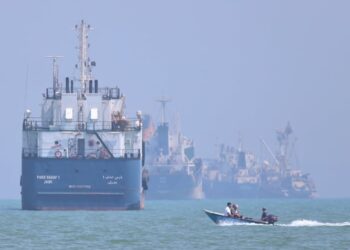
The Strait of Hormuz — a critical maritime chokepoint — is now central to fertilizer supply chain risk. Corey Rosenbusch, President and CEO of the Fertilizer Institute (TFI), emphasized that half of the world’s traded sulfur passes through this waterway. Sulfur is a foundational raw material for manufacturing phosphate fertilizers such as monoammonium phosphate (MAP) and diammonium phosphate (DAP). As shipping disruptions persist, urea prices are expected to rise even faster than broader fertilizer indices, according to Oxford Economics’ latest outlook.
Lead Economist Kiran Ahmed at Oxford Economics noted that historically low fertilizer affordability — measured by the grains-to-fertilizer price ratio — amplifies sector-wide impacts:
“However, the impact across countries and crops will vary while historically low fertilizer affordability […] will result in a bigger impact on the agriculture sector than otherwise in terms of yields and margins.” — Kiran Ahmed, Lead Economist, Oxford Economics
This dynamic means yield pressure and margin compression will hit hardest where growers lack pricing leverage or access to subsidized inputs.
Purchasing lag creates 12–18 month exposure
Frank Kenney, Vice President of Go-to-Market Strategy and Enablement at Cleo, warned that fertilizer procurement cycles introduce significant delayed risk:
“The fertilizer piece is the next hit. Many of the larger agricultural companies had already locked in their 2026 fertilizer costs before this latest spike moved through the market.” — Frank Kenney, Cleo
Because fertilizer is typically purchased months before planting, price shocks propagate through the chain long after headline events subside. Kenney explained:
“The price was already paid somewhere in the chain. Someone must carry it.”
This lag means financial exposure extends well into the next 12 to 18 months. While large retailers, cooperatives, and integrated farming operations can hedge or pre-book inventory, smaller retailers and independent growers face acute vulnerability. As Kenney observed:
“When fertilizer moves from $350 or $400 a ton to $600, $900 or more, the smaller guys get hit hardest.”
Agricultural distributors must now manage customers with vastly divergent financial flexibility — a structural challenge not captured in headline price averages.
Visibility replaces passive price monitoring
Kenney stressed that effective response requires moving beyond price tracking alone. Agribusinesses need real-time insight into supplier commitments, shipment timing, regional inventories, and alternative sourcing options. Nitrogen- and phosphate-based fertilizers remain especially exposed due to concentrated global production — particularly in regions affected by sanctions, export restrictions, or port congestion.
Supply chain visibility also extends to ancillary cost drivers. Kenney noted that transportation expenses are rising due to higher fuel prices, reduced refrigerated freight capacity, and labor costs — especially for fresh produce logistics. He stated:
“Those costs work their way into what gets planted and what gets passed through.”
To operationalize visibility, he recommended monitoring seven concurrent data streams: fertilizer pricing, fuel costs, freight capacity, supplier commitments, shipment delays, inventory levels, open purchase orders, and regional product availability.
Innovation benchmarks support long-term resilience
While navigating near-term volatility, industry stakeholders are advancing standardized innovation frameworks. The International Fertilizer Association (IFA) recently launched its Fertilizer Industry Innovation Benchmark — described as the sector’s first standardized metric for measuring R&D performance against verified industry averages. Alzbeta Klein, CEO and Director General of IFA, underscored its strategic utility:
“Advances in plant nutrition have the potential to deliver outsized benefits — from improving nutrient use efficiency and climate performance to building more resilient, nutritious food systems. This report equips the industry with the data and insight needed to make informed decisions and accelerate action.” — Alzbeta Klein, CEO and Director General, International Fertilizer Association
The benchmark supports long-term goals including improved nutrient efficiency, reduced environmental footprint, and enhanced grower productivity per unit of input. It reflects a broader industry pivot: while immediate challenges center on Strait of Hormuz disruptions and 2026 cost spikes, capital allocation increasingly favors technologies that decouple yield growth from escalating input dependency.
Source: agribusinessglobal.com
Compiled from international media by the SCI.AI editorial team.