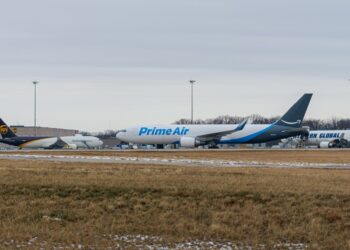
According to www.credaily.com, Amazon has launched its Amazon Supply Chain Services platform, opening its U.S.-leading logistics infrastructure—including freight, warehousing, and last-mile delivery—to external companies, a move expected to accelerate consolidation among third-party logistics (3PL) providers.
The Efficiency Imperative
The rollout coincides with a sector-wide pivot from portfolio expansion to operational efficiency. As Commercial Property Executive reported, occupiers are now prioritizing shared infrastructure over dedicated facilities, reevaluating warehouse footprints and location strategies amid persistent economic uncertainty and rising inflation. Michelle Comerford of Biggins Lacy Shapiro & Co. noted that access to Amazon’s network could enable clients to shrink their warehouse footprints—reducing reliance on owned or long-term leased space.
This shift is reflected in leasing behavior: industrial leasing surged in the first half of 2026, with major occupiers signing larger, longer-term leases. According to CBRE’s 2026 industrial outlook, 3PLs accounted for 41% of all new leasing activity over the past year—a share expected to grow as companies weigh outsourcing against costly internal expansion.
Consolidation Pressure on Smaller 3PLs
David Greek of Greek Development stated that Amazon’s scale and capital will pressure smaller 3PL providers, potentially accelerating market consolidation. Larger, well-funded competitors are best positioned to respond, as the industry restructures around national-scale networks rather than regional or local players.
The source states that this dynamic mirrors broader trends observed in logistics M&A: CMA CGM acquired FedEx Supply Chain for $1.4 billion in July 2026, underscoring intensified competition and vertical integration in the sector. Microsoft also cut 4,800 jobs across its workforce in early July 2026, while planning an additional 20% reduction at its Xbox division—highlighting how AI-driven optimization is reshaping labor and operational models across adjacent tech-enabled industries.
Prime Logistics Hubs Gain Momentum
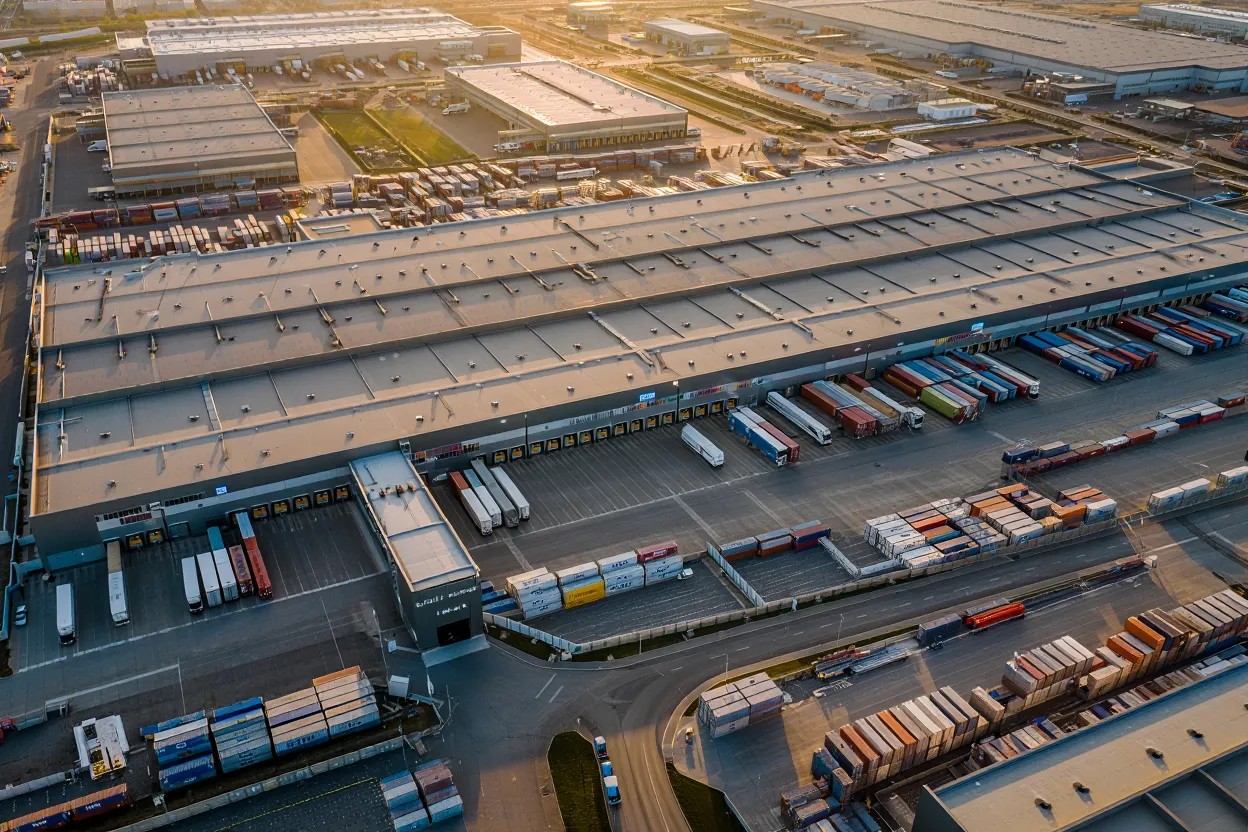
Demand is concentrating in top-tier logistics markets. Experts from Newmark and Darwin Realty cited by Commercial Property Executive identify Northern New Jersey and Chicagoland as key beneficiaries of shifting demand. Occupiers increasingly prioritize facilities with generous clear heights, ample loading docks, parking, and advanced utilities—features that command premium rents.
Gonzalo Vivanco of First Capital emphasized that functional, well-located assets—particularly those situated along major distribution corridors—will become even more valuable. Meanwhile, obsolete or poorly located industrial properties risk depreciation. The trend reflects a broader “flight-to-quality” pattern, where the last market cycle’s warehouse land rush gives way to footprint optimization and inventory rationalization—strategic advantages Amazon’s integrated platform is built to exploit.
Strategic Implications for Developers and Landlords
Developers and investors face recalibrated demand signals. While Amazon’s entry does not reduce overall industrial demand, it redirects it toward best-in-market assets. Landlords must adapt lease structures and partnership models to accommodate occupiers seeking flexible, tech-enabled solutions without large capital outlays.
Amazon’s investment in real-time inventory software and logistics systems creates an off-the-shelf solution for supply chain optimization—impacting everything from site selection criteria and building design specs to tenant mix and service-level agreements. As one expert observed, occupiers are increasingly attracted to platforms that let them tap warehousing, fulfillment, and transportation capacity on demand—
“This could reverberate throughout the sector, from site selection and design specs to the types of leases and partnerships landlords pursue.” — Commercial Property Executive
Source: credaily.com
Compiled from international media by the SCI.AI editorial team.