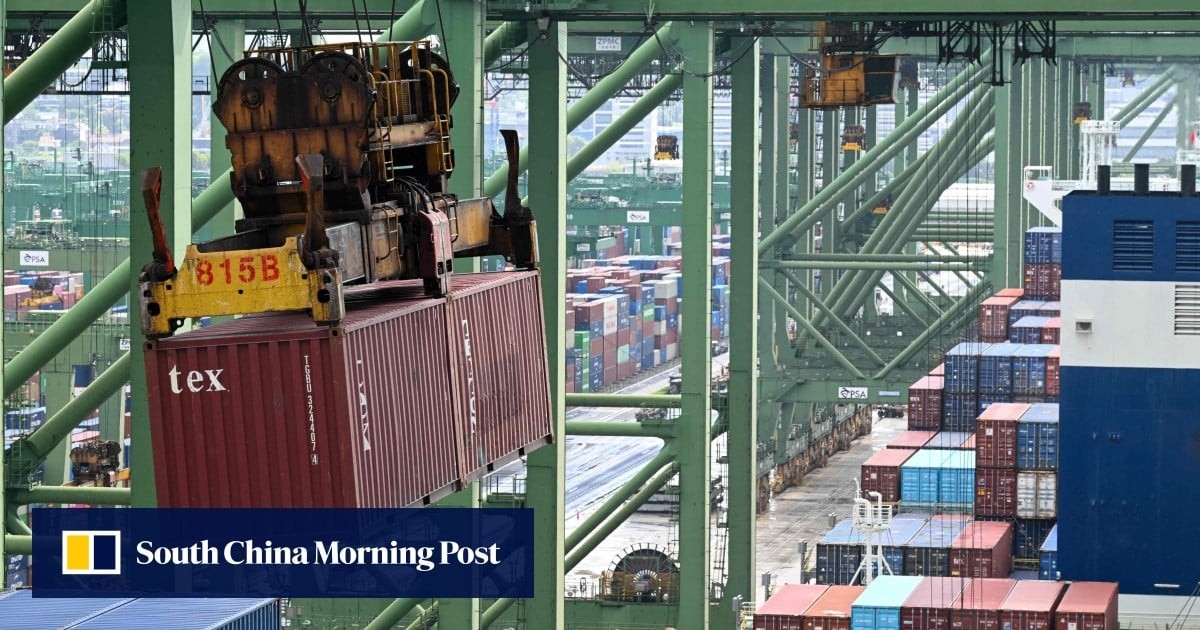
According to www.scmp.com, three major geopolitical and health shocks — the Covid-19 pandemic, Russia’s invasion of Ukraine, and the US-Israel war on Iran — have collectively upended Asia’s decades-long reliance on hyper-efficient, cost-optimized ‘just in time’ supply chains.
Three Crises, One Structural Shift
The timeline is precise: within a span of six years, Asia absorbed three systemic disruptions. First, the Covid-19 pandemic shuttered factories across China and Southeast Asia, halting component flows to global electronics and automotive assembly lines. Then, in 2022, Russia’s full-scale invasion of Ukraine severed Black Sea grain exports — a critical source for over 30% of global wheat imports — while simultaneously spiking energy prices by more than 70% year-on-year in key Asian importers like Japan and South Korea. Most recently, escalating hostilities between the US, Israel, and Iran have raised acute concerns about maritime chokepoints — particularly the Strait of Hormuz, through which 20 million barrels per day of oil transit, or roughly 30% of all seaborne crude.
From Anomaly to Norm
What was once treated as isolated, exceptional events is now widely recognized as structural reality. Jakir Ahmed, economist and research analyst at industrial data firm IbisWorld, stated:
“Taken together, they show that serious disruption is now a regular event.” — Jakir Ahmed, economist and research analyst at IbisWorld
This reframing has forced both public and private actors to abandon assumptions rooted in frictionless globalization. Governments across Japan, South Korea, and Singapore have launched national stockpiling initiatives for critical medical supplies and semiconductor precursors. Meanwhile, multinational manufacturers — including those headquartered in China and India — are diversifying sourcing away from single-country dependencies, with 42% of surveyed firms reporting active nearshoring or friend-shoring efforts in Q2 2026.
Hormuz as Catalyst
The Strait of Hormuz crisis served as the decisive inflection point. Unlike earlier shocks — which were largely land-based or domestic — this threat directly targets maritime arteries essential to Asia’s export-led growth model. Over 85% of Asia’s oil imports pass through Hormuz, and nearly 40% of its containerized exports rely on vessels transiting the Gulf. As Shay Wester, director of Asian economic affairs at the Asia Society Policy Institute, observed:
“The lesson has sunk in. Disruption is a recurring feature of the trade landscape rather than an exception.” — Shay Wester, director of Asian economic affairs at the Asia Society Policy Institute
This sentiment is reflected in concrete action: Japan’s Ministry of Economy, Trade and Industry announced in May 2026 a $2.1 billion fund to accelerate dual-sourcing for rare earth magnets used in EV motors, while South Korea’s Ministry of Trade, Industry and Energy mandated redundancy plans for all Tier-1 suppliers by end of 2026.
Operational Realities on the Ground
Supply chain professionals report measurable shifts in procurement logic. Lead times for electronic components have extended from 12 weeks in early 2020 to 34 weeks in mid-2026. Inventory buffers — once minimized to near-zero under just-in-time doctrine — now average 28% higher across APAC manufacturing firms, according to logistics data platform FreightWaves. Warehousing capacity utilization in Singapore and Malaysia rose 17% year-on-year in Q1 2026, driven by strategic stockpiling. Crucially, these changes are not theoretical: 73% of regional procurement officers surveyed by IbisWorld confirmed formal revisions to supplier risk scoring models since 2024, explicitly weighting geopolitical exposure alongside cost and quality metrics.
Source: South China Morning Post
Compiled from international media by the SCI.AI editorial team.