According to wwd.com, five years after the Covid-19 pandemic exposed systemic fragility in U.S. supply chains, logistics providers have fundamentally restructured operations — shifting from centralized distribution to regional fulfillment networks, improving inventory visibility, and strengthening collaboration with third-party logistics (3PL) partners.
Resilience Through Structural Realignment
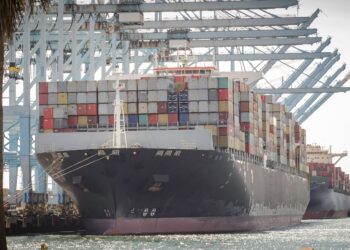
The transformation was catalyzed by port congestion, inventory shortages, and soaring freight costs during the pandemic — conditions that forced rapid recalibration. Rather than betting on a single technological breakthrough, logistics leaders redesigned where inventory is held, how it moves, and how quickly disruptions can be absorbed. As Dale Rogers, supply chain professor at Arizona State University and co-founder of the Logistics Managers’ Index (LMI), observed:
“The untold story in the economy has been the ability of supply chain managers to figure out things that weren’t really possible 10 years ago, but in the last five years have been changed substantially.” — Dale Rogers, supply chain professor at Arizona State University and co-founder of the Logistics Managers’ Index
He added that modern supply chain systems are “so amazing compared to what they used to be.”
The May 2026 LMI registered 69.5, the index’s second-fastest expansion rate since March 2022. That growth reflects sustained expansion across inventory levels, warehousing utilization, and transportation activity — even amid persistent global trade uncertainty.
Cost Efficiency Amid Pricing Pressure
Despite record-high transportation prices and elevated inventory carrying costs, the U.S. logistics sector achieved measurable cost reduction. According to the 2026 State of Logistics Report from the Council of Supply Chain Management Professionals (CSCMP), U.S. business logistics costs fell 1 percent year-over-year — totaling $2.4 trillion in 2025. That represents 7.8 percent of GDP, down from $2.6 trillion and 8.7 percent of GDP in 2024.
These savings were enabled by strategic infrastructure investments — particularly in warehouse networks, real-time inventory tracking, and last-mile delivery infrastructure — rather than automation alone. As Jackie Swanson, managing partner at Gartner Consulting, noted:
“Automation attracts the attention, yet automating against unreliable data only accelerates the error.” — Jackie Swanson, managing partner at Gartner Consulting
She highlighted RFID adoption by Nike, Macy’s, and Lululemon as foundational to improving data integrity across fulfillment networks.
Regionalization as the Core Structural Shift
The most consequential change has been the move from national, single-hub distribution models to geographically dispersed, consumer-proximate fulfillment centers. Amazon played a pivotal role by prioritizing speed and customer service over traditional inventory-cost minimization — challenging the long-held “square root law,” which posits that inventory requirements scale with the square root of warehouse count.
That shift is now mainstream: 59 percent of brands already operate more than one fulfillment center, according to ShipBob’s 2026 State of Ecommerce Fulfillment Report. Further, 44 percent plan to increase their number of fulfillment centers this year. This strategy shortens delivery windows and reduces reliance on costly expedited transport — a direct response to the 2021 freight crisis, which revealed the brittleness of legacy models.
Swanson emphasized the origins of this evolution:
“The U.S. apparel supply chain advanced over the past five years largely because Amazon reset consumer delivery expectations and the 2021 freight crisis exposed how brittle the old single-warehouse model had become.” — Jackie Swanson, managing partner at Gartner Consulting
She called the transition to regional networks “the clearest structural shift” — one upon which nearly all subsequent improvements depend.
Operational Modernization Beyond Automation
Behind the headlines about robotics and AI lies deeper, less visible modernization: investments in item-level tracking, warehouse management systems (WMS), and cross-network inventory visibility tools. These capabilities allow retailers to manage stock across increasingly complex, multi-tiered fulfillment ecosystems — including reverse logistics for returns.
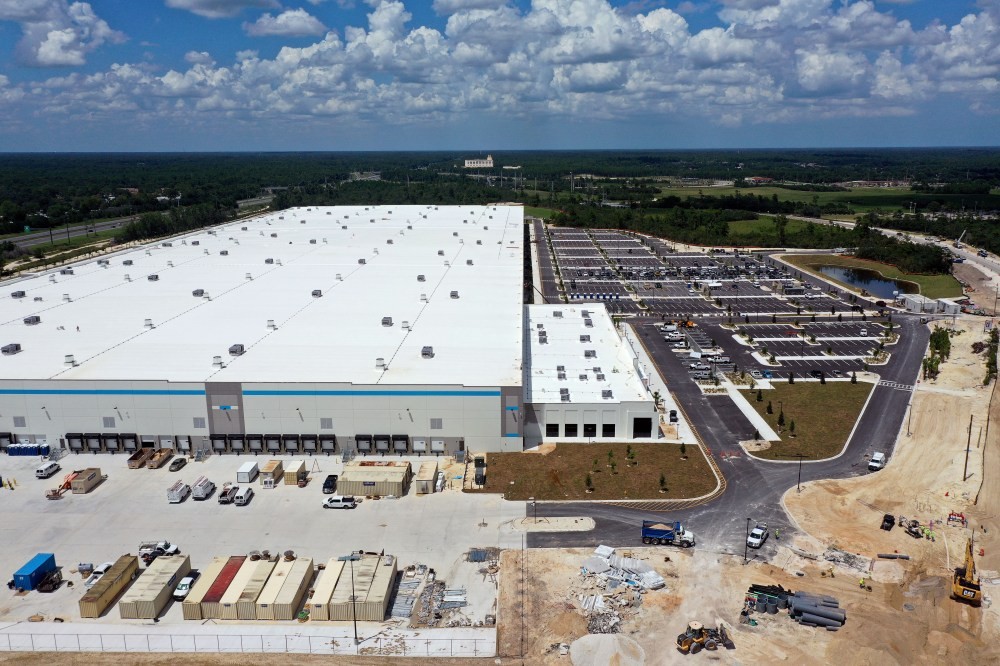
A concrete example is the 1.4 million-square-foot Amazon fulfillment center under construction in Deltona, Florida, scheduled to open in November 2020. It was the company’s fifth such facility in the state, joining existing centers in Miami, Tampa, Orlando, and Jacksonville, and projected to create 500 full-time jobs. This expansion exemplifies the deliberate, capital-intensive scaling of regional capacity — not just for speed, but for resilience.
Source: wwd.com
Compiled from international media by the SCI.AI editorial team.