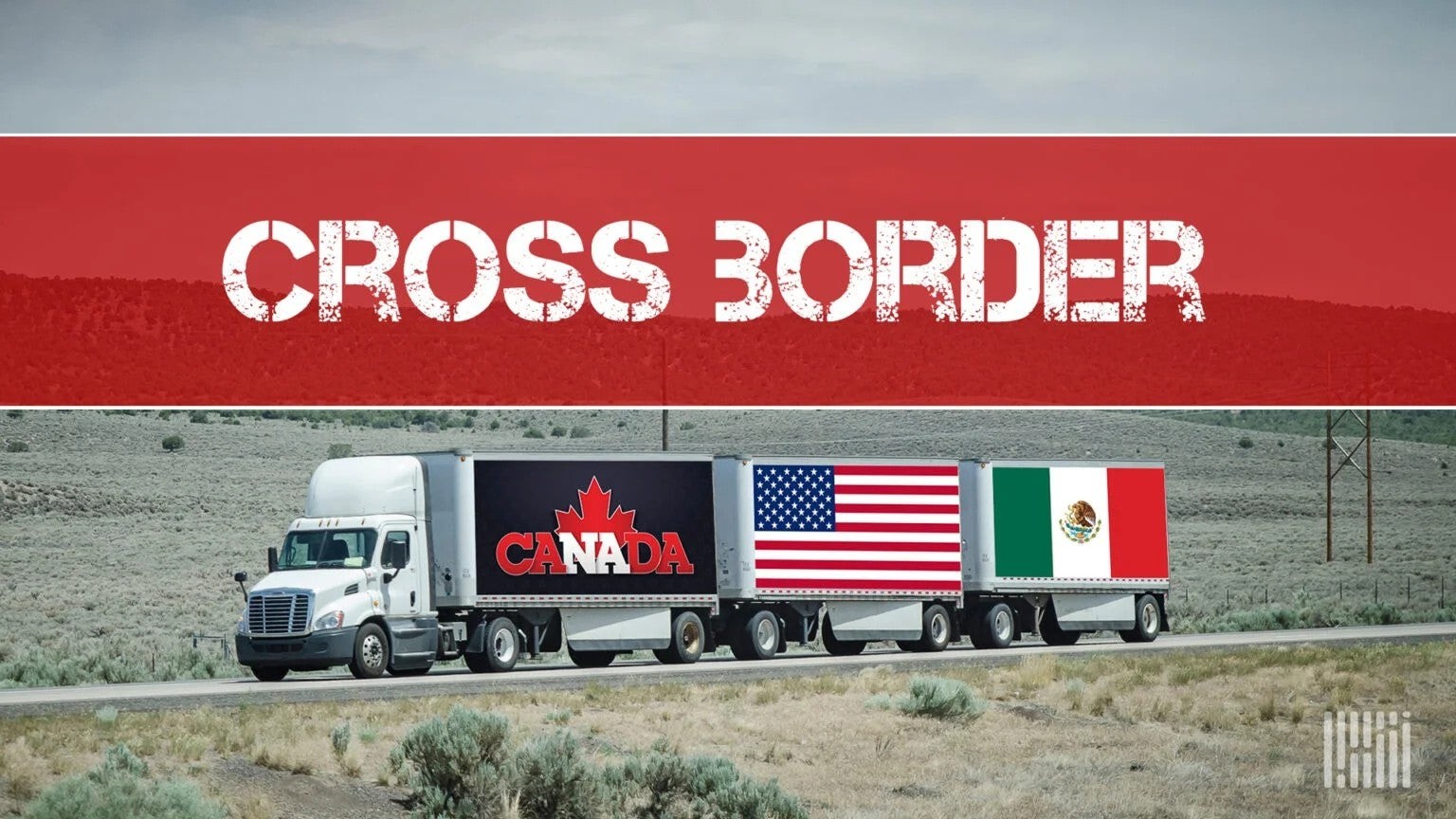
According to www.freightwaves.com, the Trump administration has declined to renew the United States-Mexico-Canada Agreement (USMCA) in its current form, initiating annual bilateral and trilateral negotiations while allowing the pact to remain in force pending revisions.
U.S. rejects automatic renewal, launches review cycle
The decision follows the first mandatory joint review under USMCA’s sunset provision, which required evaluation six years after the agreement entered into force in 2020. On July 1, 2026, the deadline passed without U.S. consent to extend the agreement for another 16 years. As stated in a news release from the Office of the U.S. Trade Representative,
“The United States did not agree to renew the USMCA in its current form. As a result, the USMCA is not renewed.”
The announcement was issued by Jamieson Greer, U.S. Trade Representative, who emphasized that the agreement remains legally binding during negotiations.
Bilateral talks between the U.S. and Mexico are scheduled to resume during the week of July 20, 2026. Canada will participate in subsequent trilateral discussions. Under the sunset clause, the three nations must now meet annually until either a revised agreement is ratified or the pact expires in 2036.
Record trade flows underscore stakes
The U.S. move comes against a backdrop of unprecedented cross-border commerce. In 2025, U.S.-Mexico two-way trade reached a record $872.83 billion, making Mexico the United States’ largest trading partner. Meanwhile, total two-way trade with Canada totaled $712.76 billion in the same year — the nation’s second-largest trading partner. Combined, trade with both countries amounted to $1.58 trillion in annual U.S. commerce.
This volume directly impacts critical supply chain infrastructure: hundreds of billions of dollars in freight moves annually through key land gateways including Laredo, Texas; Detroit-Windsor; Buffalo-Niagara; and Otay Mesa, California. For trucking firms, automakers, agricultural exporters, and logistics providers, USMCA governs rules of origin, labor standards, digital trade, and customs procedures across this integrated market.
Industry groups urge stability amid revision push
A coalition of agriculture and technology associations voiced concern over uncertainty. The National Corn Growers Association called USMCA “the single most important trade agreement to the corn industry,” citing Mexico as the largest buyer of U.S. corn and Canada as the top export market for U.S. ethanol. The group urged negotiators to preserve core provisions while pursuing targeted improvements.
The Consumer Technology Association warned against lapse or destabilization, noting that USMCA provides regulatory certainty for investment across a North American market of nearly 500 million consumers. It highlighted the agreement’s digital trade provisions as instrumental in enabling coordinated U.S., Mexican, and Canadian competition with China in emerging technologies.
Strategic implications for supply chain operations
For supply chain professionals, the shift means heightened planning complexity. Annual reviews introduce recurring policy uncertainty — particularly around rules of origin certification, labor compliance verification, and automotive content thresholds. Manufacturers relying on just-in-time parts flows across borders may face increased administrative burdens and potential tariff exposure if interim adjustments are not harmonized.
Logistics providers must prepare for possible changes in customs documentation requirements, transit times at land ports, and carrier eligibility criteria. The FreightWaves reporting team notes that shippers using Laredo — which handles over 40% of U.S.-Mexico land trade — are already monitoring negotiation timelines closely. With no formal deadline for resolution beyond the 2036 expiration, multi-year planning horizons may require scenario-based modeling for tariff contingencies, nearshoring acceleration, and dual-sourcing strategies.
Source: FreightWaves
Compiled from international media by the SCI.AI editorial team.