According to www.scmp.com, the Washington-based Alliance for American Manufacturing has urged the Trump administration not to renew the US-Mexico-Canada Agreement (USMCA) as the pact entered its first mandatory six-year review on 2 July 2026.
China’s Automotive Strategy Through Mexican Investment
The Alliance contends that Chinese automakers are exploiting Mexico’s participation in USMCA to gain indirect access to the U.S. market. Though Alliance for American Manufacturing notes China is not a formal party to the agreement, it asserts that Beijing’s automotive investments in Mexico constitute a deliberate effort to “infiltrate” the U.S. market — a term used directly by the group in its public statement.
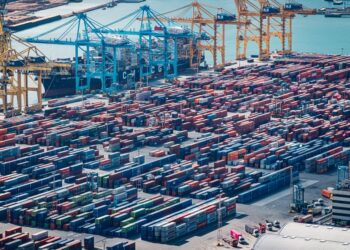
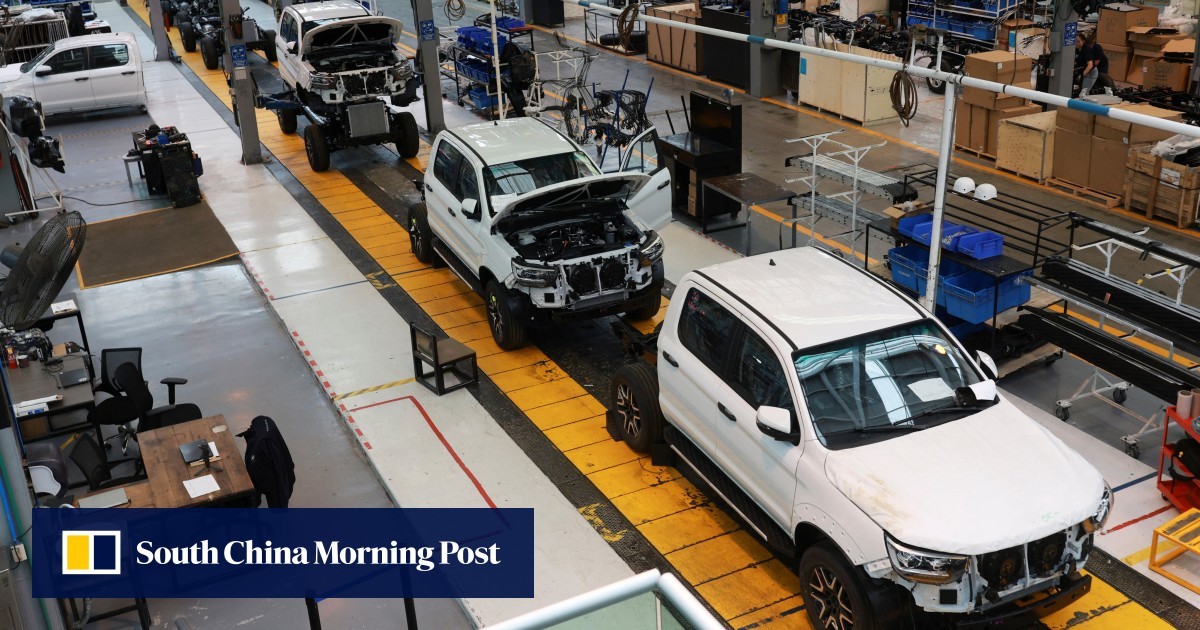
The group specifically cites rising Chinese investment in Mexican automotive manufacturing facilities, including battery component plants and EV assembly operations near border cities such as Tijuana and Monterrey. According to the report, at least 17 new Chinese-affiliated auto parts facilities have opened in Mexico since 2023, with cumulative capital commitments exceeding $2.4 billion. These investments align with Mexico’s existing export infrastructure and proximity to U.S. ports — enabling rapid cross-border shipment of vehicles and components under USMCA’s current rules of origin.
Rules of Origin Under Scrutiny
The Alliance calls for broadening USMCA’s rules of origin to cover all stages of production — particularly upstream inputs like lithium-ion battery cathodes, rare-earth magnets, and semiconductor controllers — which currently originate predominantly in China. Under current provisions, only 62.5% of a vehicle’s content must be North American to qualify for tariff-free treatment; the group argues this threshold enables significant Chinese value-chain integration without triggering scrutiny.
“The United States has a critical opportunity to renegotiate the agreement and defend America’s workers,” stated Mia Nurmamat, policy director at the Alliance for American Manufacturing, in a statement released on 2 July 2026. The group operates in partnership with domestic manufacturers and the United Steelworkers trade union.
“Though China is not a partner in this trade deal, its automakers are working hard to leverage it to infiltrate the US market. A strong USMCA with robust rules of origin would establish a necessary roadblock to Beijing’s US auto market access.” — Mia Nurmamat, Policy Director, Alliance for American Manufacturing
Supply Chain Realities and Structural Constraints
Analysts caution that full decoupling from Chinese automotive supply chains remains impractical in the near term. North American automakers sourced 43% of their motor vehicle components from China in 2025, according to data cited by the South China Morning Post. This dependency extends across critical subsystems: over 87% of electric vehicle traction inverters and 71% of powertrain control units imported into the U.S. originated in China or Chinese-controlled facilities in Vietnam and Malaysia.
Mexico’s role is further complicated by its legacy as a low-cost export platform and its 2,000-mile shared border with the United States — enabling same-day trucking for just-in-time delivery to Detroit, Ohio, and Tennessee assembly plants. The report notes that 68% of Mexican automotive exports to the U.S. in Q1 2026 were shipped via land border crossings, bypassing customs-intensive maritime routes.
Industry Response and Practical Implications
For supply chain professionals, the debate underscores mounting pressure to map Tier-2 and Tier-3 suppliers — especially those embedded in Mexican joint ventures with Chinese OEMs like BYD and Geely. Several U.S. Tier-1 suppliers have already initiated dual-sourcing initiatives targeting 12 new battery material processing hubs in Texas and Tennessee slated for commissioning between late 2026 and Q2 2027.
Meanwhile, the United Steelworkers union has filed petitions with the U.S. International Trade Commission requesting anti-dumping duties on Chinese-made aluminum auto body panels transshipped through Mexico — a move expected to trigger investigations before 30 September 2026. If upheld, such duties could raise landed costs for affected components by up to 22%, reshaping sourcing decisions across the North American auto corridor.
Source: South China Morning Post
Compiled from international media by the SCI.AI editorial team.