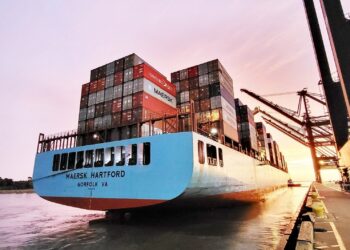
According to www.dcvelocity.com, analyst firm Gartner has identified eight pivotal supply chain technology trends for 2026 — all anchored in advances in artificial intelligence and shaped by three overarching themes: autonomy and agency, specialization and intelligence, and trust and governance.
Autonomy and Agency Drive Physical Intelligence
The first theme centers on systems that operate with increasing independence across digital and physical domains. Polyfunctional Robots represent a shift from single-task automation to adaptable units capable of performing multiple roles — a response to persistent labor shortages in warehousing and distribution centers. These robots leverage advances in AI, machine learning, and robotics engineering, though Gartner notes widespread adoption will evolve incrementally over time.
Complementing this is Physical AI, which embeds AI models directly into operational environments using IoT sensors, robotics, and automation systems. This enables real-time sensing, analysis, and execution — improving safety, efficiency, and adaptability in manufacturing plants, warehouses, and transportation hubs. Agentic AI takes autonomy further: these AI systems act as virtual workers that plan, execute, and adapt without human intervention to achieve complex goals. As deployment scales, organizations must implement guardrails to ensure explainability and accountability.
Extending agentic capability, Collaborative Multiagent Systems (MAS) coordinate specialized AI agents across workflows — for example, one agent optimizing dock scheduling while another manages inventory replenishment. Gartner emphasizes that MAS improves scalability and responsiveness in multistep processes but requires robust governance frameworks to mitigate emergent risks. According to Christian Titze, VP Analyst and Chief of Research in Gartner’s Supply Chain practice, “This year’s trends highlight the growing role of AI as the foundation for more autonomous, intelligent and adaptive supply chains.”
Specialization and Intelligence Enhance Decision Precision
The second theme reflects a move away from generic AI tools toward purpose-built intelligence. Intelligent Simulation integrates AI and machine learning into traditional simulation models, dramatically improving predictive accuracy for logistics routing, warehouse layout optimization, and transportation planning. This supports proactive — rather than reactive — supply chain management.
Equally critical is the rise of Domain-Specific Language Models, fine-tuned for supply chain contexts such as regulatory compliance documentation, supplier risk assessment, or procurement workflow automation. Unlike broad-based large language models, these deliver higher accuracy, reliability, and auditability — essential for high-stakes operational decisions. Gartner states these models are already enabling measurable improvements in knowledge management and decision support across tier-1 logistics providers.
Trust and Governance Anchor Scaling AI Adoption
As AI assumes greater responsibility in mission-critical functions, governance becomes non-negotiable. Product Provenance addresses mounting regulatory and consumer demand for transparency — particularly in industries subject to EU CSDDD and U.S. import controls. Technologies including AI-powered knowledge graphs and permissioned blockchain now enable end-to-end traceability across multi-tier global networks, from raw material sourcing to final delivery.
The eighth trend, Decision Governance, formalizes accountability for AI-driven actions. It includes frameworks for auditing algorithmic outputs, documenting decision logic, and assigning human oversight thresholds — ensuring compliance with standards like ISO 28000 and internal risk policies. Gartner underscores that this is not a technical add-on but a foundational requirement: “As organizations move toward hyperconnected, AI-driven environments, leaders must focus not only on deploying advanced technologies, but also on ensuring they work together to deliver measurable value and long-term resilience,” said Titze.
These eight trends collectively signal a structural shift: supply chains are evolving from managed networks into self-monitoring, self-correcting systems. The report was published on June 30, 2026, and reflects findings drawn from Gartner’s ongoing research across more than 40 countries. Adoption timelines vary — polyfunctional robots and intelligent simulation are already in pilot deployments at over 120 Fortune 500 companies, while domain-specific language models and decision governance frameworks are being implemented by 73% of Global 2000 supply chain teams as of Q2 2026.
Source: DC Velocity
Compiled from international media by the SCI.AI editorial team.