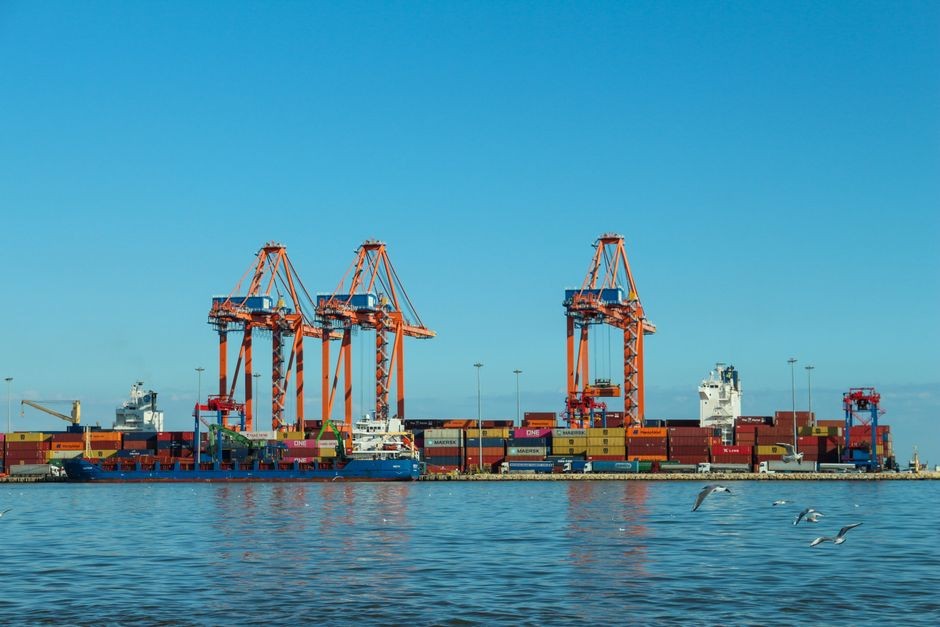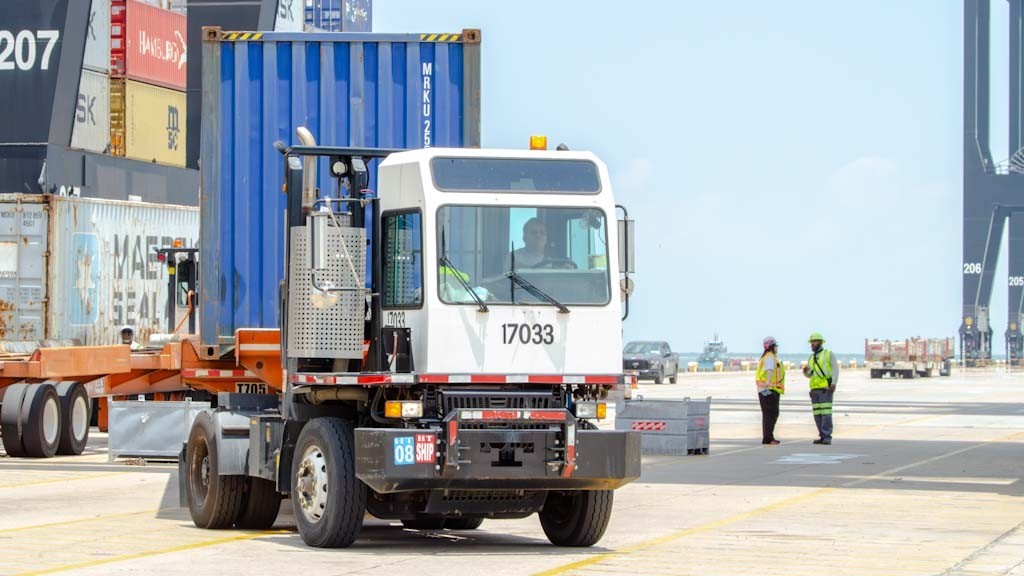
The average deal size in the travel, transportation and logistics sector is up 321% since 2023. (Photo: Jim Allen/FreightWaves)
Deal flow accelerates amid regulatory easing and specialization drive
Even with geopolitical headwinds, transportation and logistics deal flow is improving, mid-year report from consulting firm PwC. Buyers are shifting away from the traditional strategy of bolting scale onto their existing networks. Instead, they are now prioritizing the acquisition of scarce technology assets and capabilities that are difficult to develop independently. An easing regulatory environment is also helping spur deal activity.
“The next premium may not go to the biggest network. It may go to the operator with the hardest-to-replicate capability,” the Wednesday report said.
AI, automation, and niche infrastructure drive premium valuations
It noted specific buyer interest for providers that solve complex problems through AI and automation. Companies that can help increase shipment counts without adding humans and equipment are most desirable. Temperature-controlled, healthcare, reverse logistics, dedicated truckload and cross-border infrastructure are some areas seeing acute interest.
A more specialized focus has buyers paying higher acquisition multiples. The average deal size in the travel, transportation and logistics sector (for transactions greater than $50 million) is up 321% since 2023. (The $85 billion Union Pacific-Norfolk Southern merger announcement had an outsized impact on the growth rate.)
Deal volume surges across quarters and asset classes
Deal valued totaled $39 billion in the first two months of the second quarter, a notable increase from $34 billion in the first quarter and $29 billion in the fourth quarter.
Buyers are also looking for tough-to-find physical control points at the ports and the borders.
“As trade lanes shift and supply chains regionalize, investors are competing for scarce nodes that provide access, resilience and pricing leverage,” the report said.
Regulatory shifts unlock previously constrained transactions
The report said a more accommodating regulatory landscape is allowing dealmakers to contemplate transactions once thought to be out of bounds. It pointed to the pending rail merger and a reemergence in airline consolidation (Allegiant’s $1.6 billion acquisition of Sun Country Airlines) as evidence.
If the Union Pacific-Norfolk Southern deal closes, the report said it could spark further deal activity at the short-line railroads and across physical rail, intermodal and transloading infrastructure.
“The regulatory environment and longer-term market outlook are giving dealmakers confidence to pursue larger transactions that may have faced greater scrutiny in the past,” said Arun Raisinghani, principal of transportation and logistics deals at PwC U.S. “Buyers are moving before the approval environment changes.”
Amazon’s 3PL expansion introduces new due diligence risk
The report flagged Amazon’s further emergence as a third-party capacity provider as a risk. To justify purchase premiums, investors must now rigorously test whether a target company’s customer relationships, margins and service models can survive the e-commerce giant’s encroaching logistics ecosystem.
Upcoming industry events spotlight AI and freight innovation
Supply Chain AI Symposium: Past the hype. Join operators, founders, and enterprise leaders figuring out how to deploy AI in supply chain. July 15, 2026 • The Old Post • Chicago, IL
F3: Future of Freight Festival: Industry-defining keynotes, rapid-fire technology demos, and industry leaders networking in experiences across Chattanooga — plus the inaugural F3 Awards Dinner featuring the FreightTech and ShipChoice reveals. October 27, 2026 – October 28, 2026 • The Signal at Chattanooga Choo Choo • Chattanooga, TN
Source: FreightWaves
Compiled from international media by the SCI.AI editorial team.