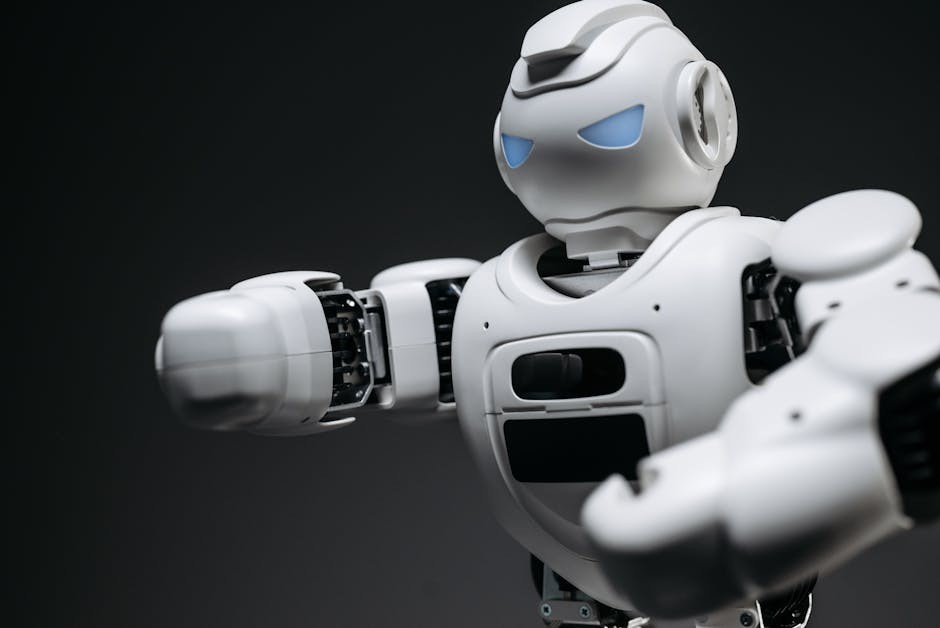
According to www.supplychaindive.com, warehouse robotics deployment is increasingly defined not by hardware alone but by intelligent software layers that orchestrate physical systems. The article, published May 26, 2026, emphasizes that software accounts for 50% of DHL Supply Chain’s total automation investment — a figure explicitly cited by Brian Gaunt, VP of digitalization at DHL Supply Chain.
Software as infrastructure, not add-on
Warehouse operators deploying autonomous mobile robots (AMRs) — such as Boston Dynamics’ Stretch or Knapp’s Pick-it-Easy — rely on software to unlock operational value. A pick-assist AMR, for example, requires real-time route optimization, dynamic task allocation, and human–robot coordination logic. Without integrated software, the robot remains a static asset rather than an adaptive node in the workflow. As Gaunt stated:
“When we think of automation, we look at both sides.” — Brian Gaunt, VP of digitalization at DHL Supply Chain
This reflects DHL’s documented expansion with Locus Robotics, under which the company scaled its agreement to deploy 5,000 autonomous mobile robots across global fulfillment centers.
AI enables contextual adaptation
Artificial intelligence transforms robotic hardware from rule-bound machines into responsive agents. In Amazon’s facilities, for instance, the Proteus robot carries totes while operating within a proprietary framework designed to let robots communicate with employees using human language. This capability — currently in development — moves beyond pre-programmed voice prompts to context-aware dialogue, enabling workers to issue natural-language requests like “Bring pallets to Zone B” without interface training. Such functionality depends on large language models fine-tuned on warehouse-specific semantics and integrated with real-time inventory and location data.
Industry-wide software investment trends
The shift toward software-centric automation aligns with broader market behavior. According to LogisticsIQ’s 2025 report, global spending on warehouse automation software grew 22% year-over-year to $4.2 billion, outpacing hardware growth (14%) for the third consecutive year. Meanwhile, Locus Robotics reported that 78% of its new customer contracts in Q1 2026 included bundled AI-driven analytics modules — up from 41% in Q1 2024. These figures confirm that software is no longer ancillary; it is the primary driver of ROI in modern warehouse robotics deployments.
Practitioner implications for supply chain teams
For supply chain professionals, this evolution demands new skill integration. Teams must now evaluate robotics vendors not only on payload capacity or battery life but on API maturity, interoperability with existing WMS/TMS platforms (e.g., Manhattan Associates, Blue Yonder), and model update frequency. At a major US-based grocery distributor, integrating AI-powered task orchestration reduced average order cycle time by 37% and cut labor variance during peak shifts by 29%. These outcomes were achieved not through additional robots, but via software upgrades to its existing fleet of 1,200 AMRs deployed across 14 distribution centers in the US and Canada.
Source: Supply Chain Dive
Compiled from international media by the SCI.AI editorial team.