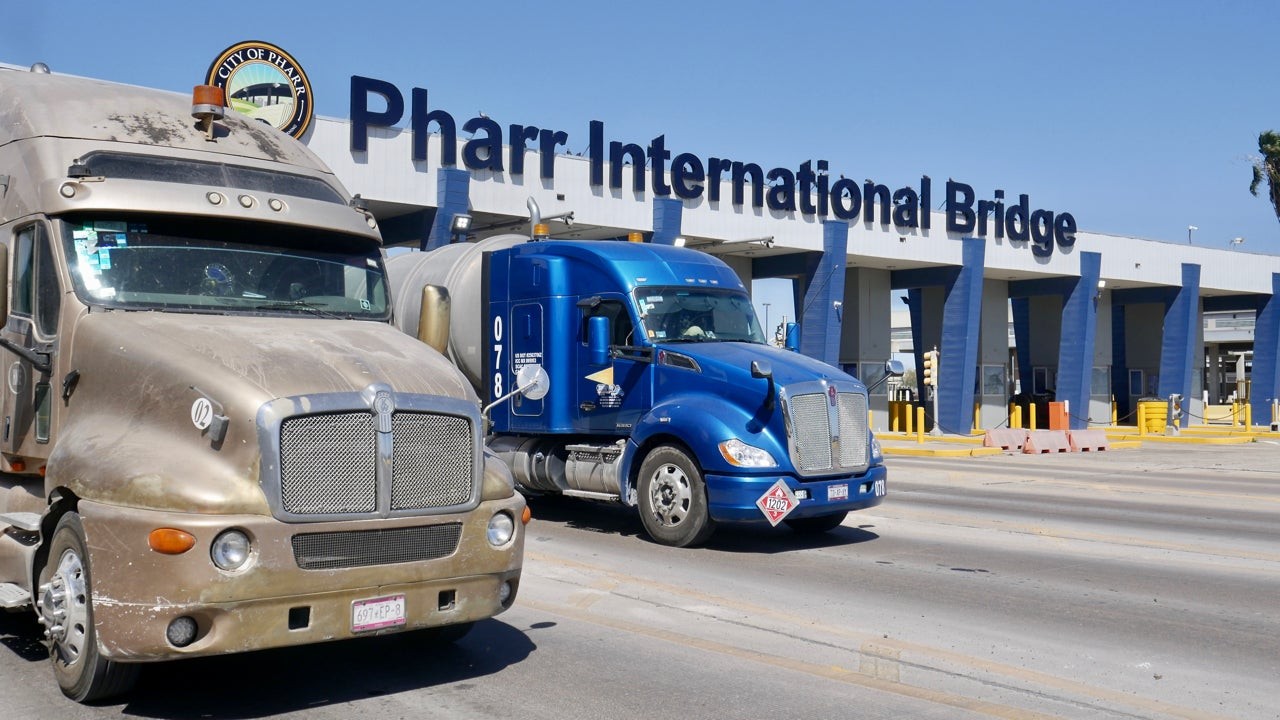
According to www.freightwaves.com, Robinson Fresh has opened a new $33 million logistics center in Pharr, Texas — a 142,600-square-foot facility located just 4.5 miles from the Pharr-Reynosa International Bridge.
Strategic response to surging Mexican produce imports
The hub is designed to accelerate cross-border movement of fresh produce while reducing border dwell times and safeguarding cold-chain integrity. According to the report, 98% of fresh produce imported from Mexico enters the U.S. through Texas, New Mexico, Arizona or California, with Texas accounting for 55% of total volumes. The facility serves as a dedicated node for high-volume seasonal imports including mangoes, bananas, avocados, tropical fruits and limes — commodities requiring rapid ripening, repacking, quality control and temperature-zone consolidation.
Infrastructure and operational capabilities
The Pharr logistics center features 69 dock doors, multiple temperature-controlled zones, and integrated services including cooling, ripening, quality inspection, repacking and cross-dock operations. It holds both Global Food Safety Initiative (GFSI) and USDA Organic certifications. Its location places it within proximity to four critical infrastructure assets: the Pharr-Reynosa and Anzalduas international bridges, McAllen International Airport, rail connections, and the ports of Brownsville (U.S.) and Matamoros (Mexico). Robinson Fresh President Jose Rossignoli stated:
“Cross-border supply chains demand speed, precision, and a tight focus on each customer’s needs. This South Texas facility brings those capabilities together in one place, helping customers reduce dwell time, control costs, and get products to market faster.” — Jose Rossignoli, President, Robinson Fresh
Integration within C.H. Robinson’s network
Robinson Fresh operates as a division of C.H. Robinson, the global third-party logistics provider. The new hub extends its end-to-end platform that unifies sourcing, transportation and supply-chain execution — serving major North American customers including Whole Foods, H-E-B, Walmart, and Sysco. The company leverages C.H. Robinson’s temperature-controlled carrier network, which includes more than 450,000 contract carriers across North America. Rossignoli emphasized the hub’s role in enabling “one transaction, one point of contact, one company” — a model increasingly adopted by retailers facing compressed replenishment cycles and rising freshness expectations.
Industry context and practitioner implications
This investment aligns with broader industry trends: U.S. fresh produce imports from Mexico grew 7.2% year-over-year in 2025 (U.S. Department of Agriculture data), reaching $12.4 billion in value. Other major players have responded similarly — Sysco opened a 120,000-square-foot cold-storage facility in Laredo, TX, in Q1 2025, while Walmart expanded refrigerated cross-dock capacity at its El Paso distribution center by 35% in late 2024. For supply chain professionals, the Pharr hub reduces reliance on ad hoc drayage and fragmented cold storage — cutting average border dwell time for refrigerated trailers from 18–24 hours to under 6 hours (per internal Robinson Fresh benchmarks cited in FreightWaves). It also enables real-time temperature monitoring, predictive analytics for ripeness timing, and dynamic repackaging aligned with regional retail SKU requirements — directly addressing labor shortages and quality variance challenges common in perishable import lanes.
Source: FreightWaves
Compiled from international media by the SCI.AI editorial team.