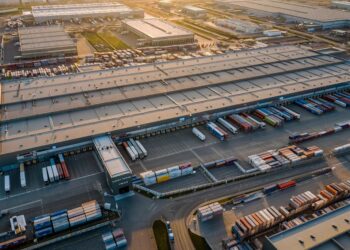
According to www.dcvelocity.com, port and terminal executives are calling for $6.7 billion in capital investment over the next five years to modernize cargo handling infrastructure and sustain global competitiveness. The figure comes from a survey of 25 senior port and terminal executives conducted by the National Association of Waterfront Employers (NAWE), whose member companies collectively handle more than 90% of the nation’s containerized trade.
Breakdown of Equipment Investment Needs
The $6.7 billion total is allocated across four key categories, according to the report: $2.74 billion for new ship-to-shore (STS) crane purchases; $2.4 billion for large yard cargo handling equipment (CHE) and additional STS cranes; $917 million for rail-mounted large yard CHE; and $790 million for repairs to existing STS cranes and CHE at marine terminals.
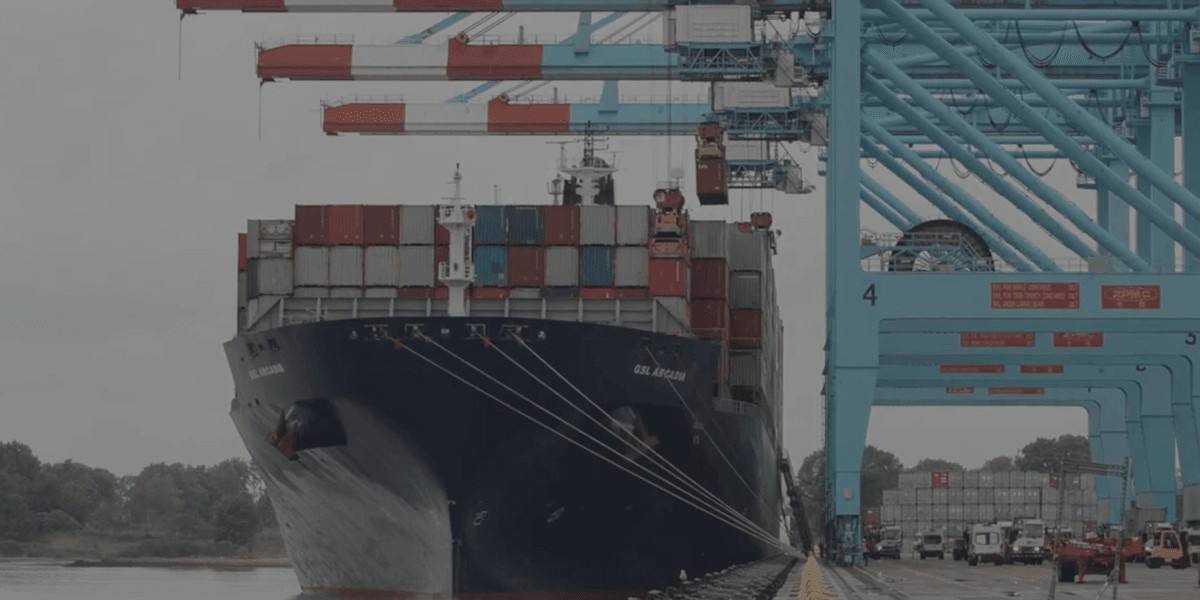
The survey also identified a pressing hardware gap: demand for more than 100 new or replacement STS cranes, driven by the need to accommodate increasingly larger container vessels and maintain throughput efficiency amid growing trade volumes. This scale of equipment renewal reflects structural shifts in vessel size and terminal operational standards — trends observed across major U.S. gateways including the Port of Los Angeles, Port of New York and New Jersey, and Savannah, where average vessel capacity has grown by over 30% since 2018, per American Association of Port Authorities (AAPA) data.
Tariff Clarity as Prerequisite for Investment
Despite the clear capital needs, NAWE stresses that ports cannot move forward without regulatory certainty. In a formal letter dated May 2026 to U.S. Trade Representative Ambassador Jamieson Greer, the association requested urgent clarification on the Trump Administration’s tariff policies affecting STS cranes and large CHE — particularly regarding the implementation of a one-year pause on tariffs for Chinese-manufactured STS cranes and large yard CHE. The letter raised specific questions about how the policy applies to equipment orders placed before the pause, deliveries scheduled after it expires, and imported spare parts.
NAWE President Carl Bentzel emphasized the stakes:
“Having clarity on tariff policy is essential for terminal operators making long-term investment decisions in our nation’s ports. Uncertainty risks delaying projects that are vital to maintaining the efficiency of the U.S. supply chain.”
Supply Chain Implications for Practitioners
For supply chain professionals, the bottleneck is not just financial but temporal and logistical. STS cranes have lead times averaging 24–36 months from order to commissioning, per industry benchmarks from Port Technology International. Delays in procurement decisions — now stalled pending USTR guidance — could push critical upgrades into 2028 or beyond, risking cascading impacts on vessel dwell times, chassis availability, and drayage scheduling. Meanwhile, federal programs offer partial offsets: the U.S. Department of Transportation recently named 37 port infrastructure projects to receive $774 million in funding, and the Environmental Protection Agency awarded $3 billion through its Clean Ports Program — yet neither covers direct cargo handling equipment procurement.
Source: DC Velocity
Compiled from international media by the SCI.AI editorial team.