Renewable Energy Achieves 100% Across Tesco’s Operations
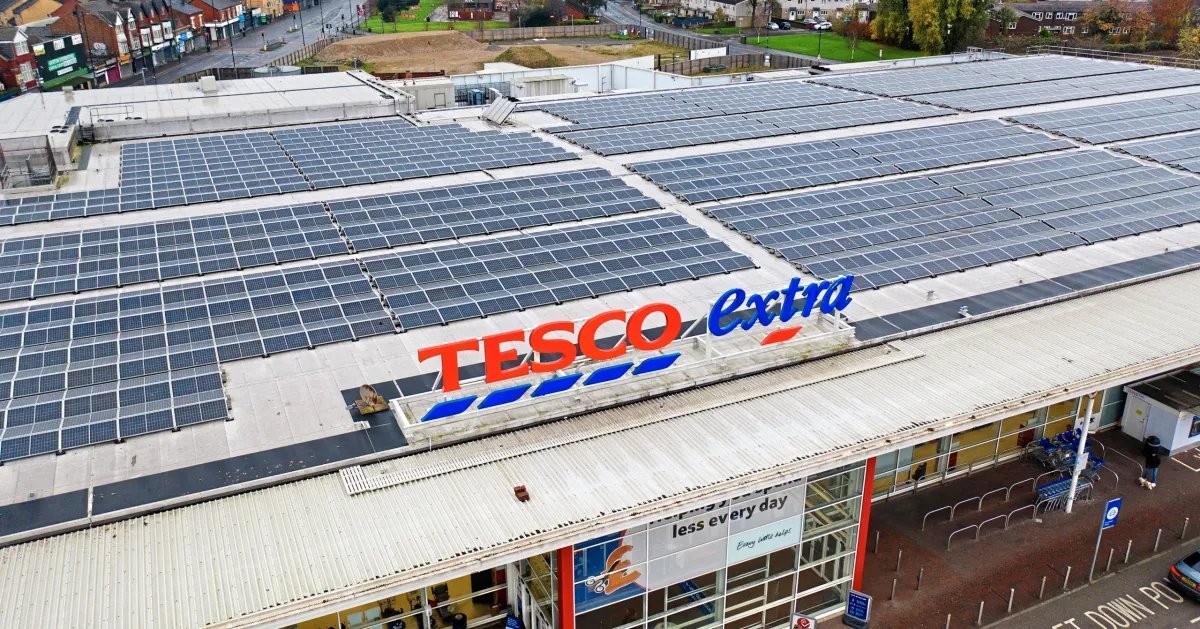
According to energydigital.com, Tesco has achieved 100% renewable electricity use across its entire UK estate by 2025/26, fulfilling a key milestone in its decarbonisation strategy. This was accomplished through a combination of Power Purchase Agreements (PPAs), renewable energy certificates, and on-site generation, including rooftop solar installations at 29 stores and the largest solar array on the Aylesford distribution centre.
Scope 1 and 2 Emissions Reduced by 68% by 2025
Tesco surpassed its December 2025 target, reducing Scope 1 and 2 emissions by 68% compared to the 2015/16 baseline, exceeding its original goal of a 60% reduction. The company plans to achieve net zero across its own operations by 2035, with full value chain net zero targeted by 2050.
Energy Efficiency and Technology Investments
Tesco has implemented energy-saving technologies including fridge doors that use approximately one-third less energy than traditional open-fronted units. The retailer has also deployed electric heat pumps to replace gas boilers and established a centralised Energy Control Centre to monitor energy performance across its property portfolio.
“As Chair of the Sustainability Committee, I have seen first-hand the determination across Tesco to embed sustainability into every part of the business,” says Stewart Gilliland, Chair of the Sustainability Committee and Non-Executive Director at Tesco. “The store demonstrates how practical solutions can help us decarbonise retail and inspire change across the industry.”
Supply Chain Decarbonisation: Addressing 99% Scope 3 Emissions
Scope 3 emissions account for nearly 99% of Tesco’s total carbon footprint, making supply chain decarbonisation the most critical challenge. The retailer is working through Sustainable Farming Groups to promote lower-carbon agricultural practices, precision farming, and regenerative techniques. These efforts aim to improve soil health, reduce deforestation, and enhance biodiversity across its supplier network.
Supplier Collaboration and Data Transparency
Tesco has introduced data-sharing programmes to improve emissions tracking and support suppliers in adopting science-based targets. The company is collaborating with key logistics and manufacturing partners on joint decarbonisation plans and conducts site visits and knowledge exchanges to scale best practices. In transport, Tesco continues to invest in electric delivery vans, Bio-CNG trucks, and expanded rail freight to reduce road miles and fuel consumption.
Healthier Diets and Community Engagement
Tesco’s ‘Planet Plan’ includes six core priorities: cutting store emissions, decarbonising transport, protecting nature, eliminating waste, improving products, and enabling sustainable consumption. The company aims to provide free fruit and vegetables to one million school children across the UK by July 2029 through its Fruit & Veg for Schools programme.
“As food systems come under increasing pressure, sustainability is key to our long-term resilience,” says Christine Heffernan, Group Chief Communications and Sustainability Officer at Tesco. “Our actions today help meet customer needs and strengthen supply chain stability for the future.”
Source: energydigital.com
Compiled from international media by the SCI.AI editorial team.