Strategic Infrastructure Expansion Drives National Supply Chain Stability
According to Logistics Middle East, Saudi Arabia’s national supply chain champion has launched a multi-phase infrastructure rollout to strengthen domestic logistics resilience. The initiative includes the development of five new logistics hubs across the kingdom, with four already operational by Q2 2024. These hubs are designed to manage over 12 million metric tons of cargo annually, supporting both import and export flows.
“Our goal is to create a resilient backbone that ensures uninterrupted delivery of essential goods, even during regional disruptions.” — Ahmed Al-Mutairi, Chief Supply Chain Officer, Saudi National Logistics Authority (SNLA)
Public-Private Investment Fuels Capacity Growth
The national champion, operating under the Saudi National Logistics Authority (SNLA), has secured $1.8 billion in public and private investment to support the expansion. Of this, $1.2 billion comes from state funding via the Public Investment Fund (PIF), while $600 million is allocated from strategic private partners, including SABIC and Aramco. The investment is expected to increase the kingdom’s inland freight capacity by 42% by 2026.
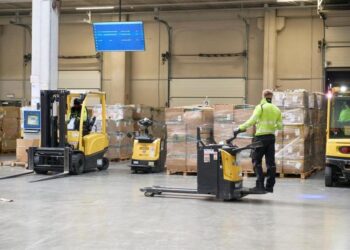
According to the report, the new hubs are equipped with automated storage systems, real-time tracking via IoT sensors, and integrated customs clearance platforms. These systems reduce average cargo processing time from 72 hours to under 18 hours at the border, a 75% improvement.
Regional and Global Integration Efforts
The SNLA has established direct rail and road links connecting the five hubs to major ports, including Jeddah Islamic Port and King Abdullah Port. These routes are designed to handle 30% of the kingdom’s containerized freight by 2027. Additionally, the SNLA has signed agreements with 17 international logistics providers, including Maersk, DHL, and Flexport, to integrate their digital platforms with the national system.
- Maersk: Direct API integration with SNLA systems by March 2025
- DHL: Launch of a dedicated Saudi regional hub in Riyadh by Q1 2025
- Flexport: Real-time shipment tracking via SNLA’s digital twin platform
Workforce and Technology Development
To support operations, the SNLA has launched a national training program in collaboration with King Saud University and the Saudi Technical University. The program aims to upskill 15,000 workers in logistics automation, digital supply chain management, and cybersecurity by 2026. By the end of 2024, over 3,200 trainees had completed certification in warehouse automation systems.
Furthermore, the SNLA has piloted AI-driven demand forecasting models in three major cities—Riyadh, Jeddah, and Dammam—reducing inventory overstock by 29% in pilot zones. The system uses machine learning trained on historical import/export data, weather patterns, and geopolitical event alerts.
Source: www.logisticsmiddleeast.com
Compiled from international media by the SCI.AI editorial team.