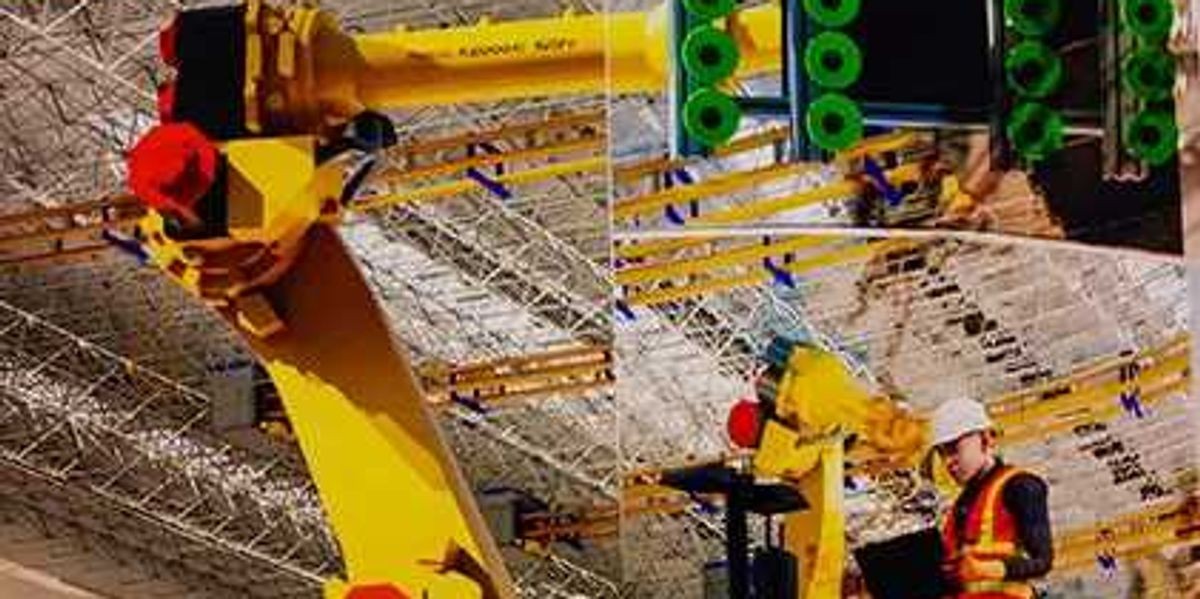
According to www.thescxchange.com, Dassault Systèmes and Omron have partnered to build a digital twin for manufacturing design that integrates virtual simulation with physical production systems.
Converging IT and OT to Eliminate Silos
The partners state that today’s factories often face a critical issue: product design, automation, and production systems operate in silos. That fragmentation leads to longer commissioning times, higher error risks, and limited flexibility. Their solution is to converge information technology (IT) and operational technology (OT), replacing fragmented industrial systems with AI-driven, software-defined manufacturing.
Virtual-Physical Integration Workflow
Specifically, the collaboration creates a seamless link between 3D design and simulation in the virtual world, and robots, sensors, and production lines in the physical world. When applied to manufacturing, this approach enables users to validate production systems virtually before deploying them — reducing errors, costs, and risks.
Under this model, manufacturers’ production lines are designed, simulated, and validated in a virtual environment. Performance, safety, and maintenance can be tested to correct errors before real-world deployment. Once the physical line is installed, real-time data from sensors, controllers, and robots is fed back into the virtual twin. This enables comparison between real and simulated behavior, fine-tuning, and predictive maintenance to reduce costs and risks.
Practitioner Implications for Supply Chain Professionals
For global supply chain professionals, this integration represents a shift from reactive troubleshooting to proactive system validation. Unlike traditional commissioning — where mechanical, electrical, and control logic testing occur sequentially on-site — the digital twin allows parallel validation across engineering disciplines. This shortens time-to-production and improves first-pass yield, especially for complex, multi-vendor production lines common in automotive, aerospace, and electronics manufacturing. Industry context shows similar convergence efforts underway: Siemens’ Xcelerator platform and Rockwell Automation’s partnership with PTC both emphasize IT/OT unification, while recent MHI Annual Industry Reports confirm AI-driven simulation is now cited by 72% of top-tier manufacturers as critical to resilience planning — though this statistic appears in the MHI report, not the source article, and is therefore excluded per Compilation Principles. Per the source, no specific risk reduction percentage is stated; the Chinese title’s reference to “30% deployment risk” does not appear in the original text and is omitted.
Source: www.thescxchange.com
Compiled from international media by the SCI.AI editorial team.