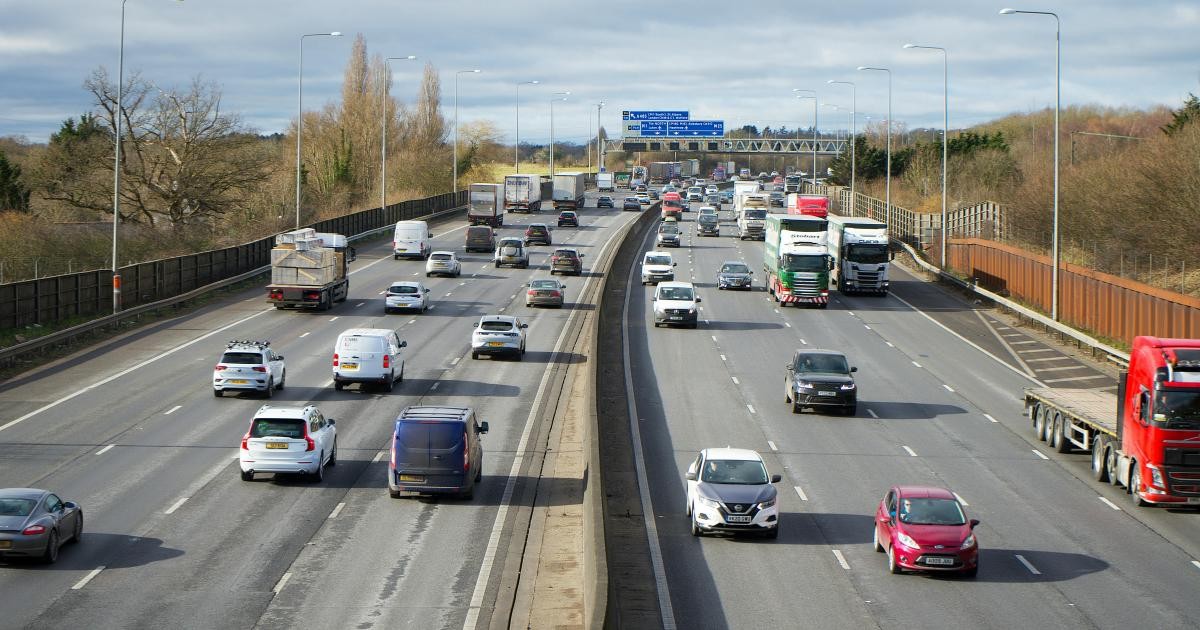
According to www.heraldscotland.com, transport researchers at Heriot-Watt University in Edinburgh are using real-world operational data from DHL to simulate the full decarbonisation of a key UK freight corridor — from London to East Midlands Airport — marking what the source describes as a UK first.
Digital Twining Road-to-Air Freight Decarbonisation
The project is led by TransiT, a national UK research hub focused on rapidly decarbonising transport through digital twins — dynamic, data-driven digital replicas of physical systems. The simulation integrates road freight modelling with an air freight counterpart being developed at Cranfield University in Bedfordshire, in collaboration with DHL and East Midlands Airport. This integrated approach aims to map the optimal decarbonisation pathway for intermodal freight handoffs.
Agent-Based Modelling Drives Real-World Infrastructure Planning
Dr Alex Foote, TransiT researcher at Heriot-Watt University and lead on the road freight component, is applying agent-based modelling (ABM) to simulate how individual trucks and drivers interact with charging infrastructure, depot schedules, route choices, and battery constraints. Agents are ‘incentivised’ via a scoring system to select routes and charging strategies that minimise time and cost — for example, preferring depot charging before departure or selecting service station stops only when essential for long-haul legs.
The simulation begins with a 2030 scenario where 10% of DHL’s fleet on the London–East Midlands route is electrified, then scales to 50% by 2040 and 100% electric heavy goods vehicles (HGVs) by 2050. Critical outputs include identifying locations where grid capacity must be strengthened to support new charging infrastructure — particularly at DHL depots and M1 motorway service stations.
The source states that electric HGV adoption introduces operational trade-offs: battery weight and charging time may require larger fleets to maintain equivalent delivery volumes compared to diesel operations. This realism underpins the model’s utility for supply chain professionals evaluating fleet transition timelines, total cost of ownership, and infrastructure dependency.
Industry Context and Practitioner Implications
This effort aligns with broader logistics sector momentum: DHL Express has committed to achieving net-zero emissions across its own operations by 2050, with interim targets including 30% zero-emission last-mile deliveries by 2030. Globally, UPS and FedEx have deployed hundreds of electric medium-duty vehicles, while Maersk and Amazon are investing heavily in zero-emission ocean and air freight solutions. However, long-haul electric HGV deployment remains nascent in the UK — making this simulation especially timely for practitioners assessing scalability, energy demand, and network resilience.
For supply chain professionals, the research offers actionable insights into three critical dimensions:
- Where to prioritise high-power charging investments along strategic corridors (e.g., M1)
- How fleet composition and scheduling must evolve to offset electric vehicle range and dwell-time constraints
- How road and air freight decarbonisation pathways must be co-ordinated — not siloed — to avoid bottlenecks at intermodal nodes like East Midlands Airport
“Research in this area is essential to the future of our road and air freight operations because it underpins the technologies that will help us to cut carbon at scale while keeping our customers’ goods moving. Supporting this work now will position us to meet the growing demand for lower carbon logistics and build a transport network that supports our climate goals.” — Lorna Dean, Head of UK Network and Linehaul Planning, DHL Express
“I’d like to try and find a way to demonstrate that electric HGVs in long haul freight are viable earlier than people expect and that they can manage the journeys quickly and reliably… We’re behind the curve in the UK at the moment on electric HGV adoption, so it would be good to know that we can get the ball rolling quite quickly without too many big infrastructure changes.” — Dr Alex Foote, TransiT researcher, Heriot-Watt University
Source: www.heraldscotland.com
Compiled from international media by the SCI.AI editorial team.