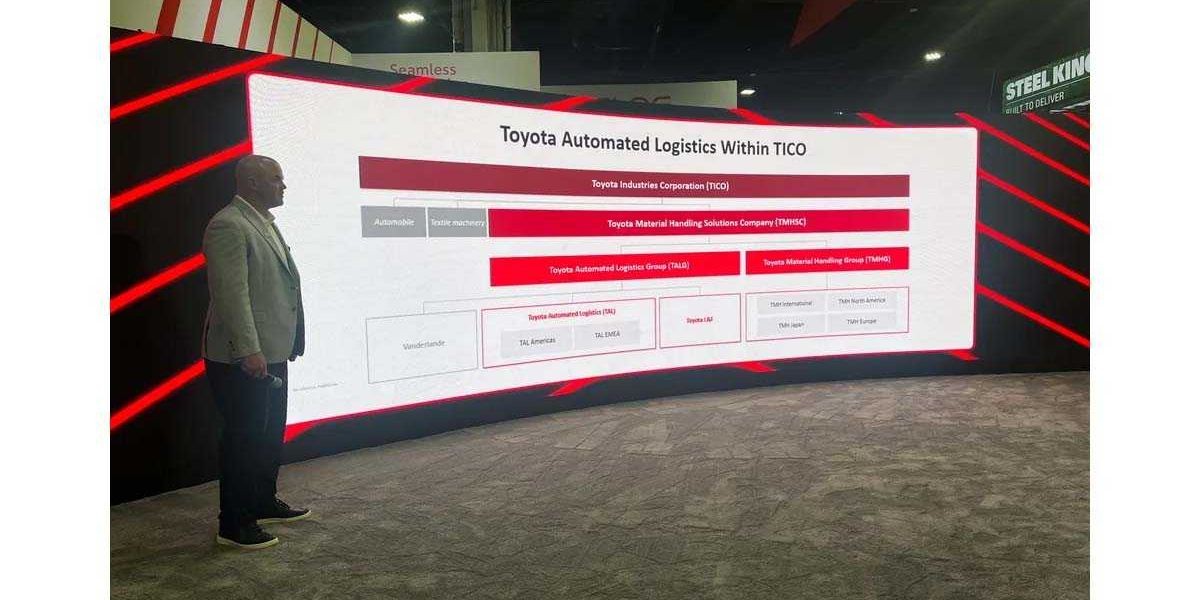
According to www.dcvelocity.com, Toyota Industries Corporation (TICO) has established Toyota Automated Logistics (TAL) as a single global brand and organization for warehouse automation, effective April 1, 2026. The new entity was created by integrating three acquired systems integrators: Bastian Solutions and Vanderlande in 2017, and viastore in 2024.
New Organizational Structure
TAL unifies Bastian Solutions’ warehousing operations, Vanderlande’s warehousing business, and viastore under one global banner — with two exceptions. Bastian Solutions retains its brand for automotive and aerospace customers in North America, and Vanderlande continues using its name for airport-related projects.
Strategic Integration Model
Aaron Jones, president and CEO of Toyota Automated Logistics Americas, emphasized during a press conference at MODEX 2026 that TAL remains committed to an open integration model rather than vertical manufacturing dominance. He acknowledged early market concerns about Toyota entering the space:
“The big concern was would Toyota dominate and take over as a manufacturing theme? But here now eight years later we continue to integrate some of the most dynamic systems, and many of our competitors and partners at this show play a very big role in the types of systems that we integrate.” — Aaron Jones, president and CEO of Toyota Automated Logistics Americas
TAL maintains active partnerships with technology providers including Exotec, OTTO Motors, Pio, and AutoStore. The group leverages these relationships to deliver customized, multi-vendor automation solutions — distinguishing itself from the Toyota Material Handling Group, which focuses on forklift manufacturing and remains organizationally separate.
Regional Continuity and Customer Focus
Despite its global branding, TAL preserves the regional expertise and local customer engagement cultivated by its legacy companies. As Jones stated, “We won’t forget what has allowed each of us to be successful in our markets.” This approach reflects industry-wide recognition that successful warehouse automation deployments depend heavily on domain-specific knowledge — especially in complex sectors like retail distribution, pharmaceuticals, and e-commerce fulfillment.
The shift aligns with broader trends observed across major logistics equipment manufacturers. For example, KION Group strengthened its software and integration capabilities through the 2022 acquisition of Swisslog, while Daifuku expanded globally via the 2021 purchase of Dematic. Similarly, Vanderlande — prior to its partial integration into TAL — had built deep expertise in parcel and retail automation across Europe and North America. Bastian Solutions, founded in 1952 and acquired by TICO in 2017, brought decades of North American systems integration experience, particularly in high-throughput distribution centers. Viastore, acquired in 2024, added strong European software capabilities and AI-driven control systems for AS/RS and shuttle-based storage.
For supply chain professionals, TAL’s formation signals both continuity and consolidation: legacy integration strengths are preserved, but with greater scale, unified go-to-market strategy, and expanded access to complementary technologies. Practically, this means end users can expect more coordinated proposal development, shared engineering resources across regions, and potentially streamlined vendor management — without sacrificing the tailored, multi-supplier architecture that defines modern warehouse automation projects.
Source: DC Velocity
Compiled from international media by the SCI.AI editorial team.