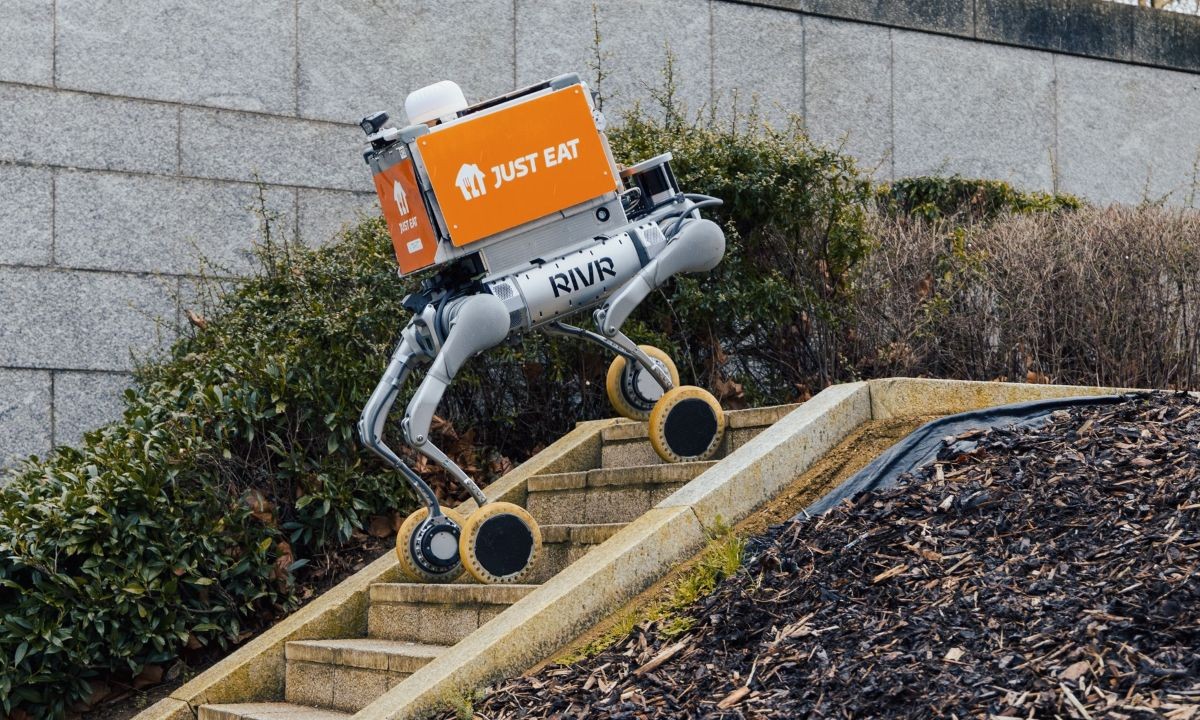
According to www.pymnts.com, Amazon has acquired RIVR — a Swiss-based robotics company specializing in physical artificial intelligence and wheeled-legged robots for autonomous doorstep delivery. The acquisition, confirmed by an Amazon spokesperson to CNBC and The Information, occurred in March 2026 and was announced publicly on March 19, 2026.
RIVR’s Evolution and Technical Profile
RIVR was incorporated in 2023 and operated previously under the name Swiss-Mile. It rebranded to RIVR in March 2025 as it prepared to launch field testing of its robots in partnership with major logistics carriers. According to the source, RIVR developed wheel-legged robots whose autonomy is driven by AI. In its first year, the company achieved early successes with pilot deployments focused on last-mile delivery in smart cities and security for critical infrastructure.
In August 2024, when still known as Swiss-Mile, the company raised $22 million in a seed round. Investors included the Amazon Industrial Innovation Fund and Bezos Expeditions. By May 2025, RIVR had launched operations in the United States through a partnership with alternative parcel delivery platform Veho, deploying its robots in Austin for eCommerce parcel delivery.
Strategic Rationale and Leadership Statements
Marko Bjelonic, CEO and Co-Founder of RIVR, announced the acquisition in a LinkedIn post on March 19, stating:
“This step will accelerate our vision of building General Physical AI through doorstep delivery, bringing robotics and AI closer to real-world deployment at scale.” — Marko Bjelonic, CEO and Co-Founder, RIVR
He added:
“I’m incredibly proud of what RIVR built, and even more excited about what we will accomplish next at Amazon.” — Marko Bjelonic, CEO and Co-Founder, RIVR
An Amazon spokesperson told CNBC the acquisition “reflects our commitment to a continued investment in research” and efforts to improve safety for the company’s delivery personnel, per the report.
Industry Context for Supply Chain Professionals
This move aligns with broader industry momentum toward automation in last-mile logistics. According to established public reports, competitors such as FedEx and UPS have tested sidewalk delivery robots (e.g., Nuro’s R2 and R3 vehicles) and autonomous ground vehicles in select U.S. markets since 2022. Walmart partnered with Gatik in 2023 for middle- and last-mile autonomous trucking, while Amazon itself has deployed over 750,000 robotic drive units across its fulfillment centers since 2012 — a figure widely cited in annual reports and SEC filings. RIVR’s wheel-legged design distinguishes it from purely wheeled AMRs, offering potential advantages on uneven urban terrain and stairs — a persistent challenge for conventional delivery bots. For supply chain professionals, this signals increasing vendor diversification beyond traditional warehouse automation into dynamic, unstructured outdoor environments. Integration readiness — including fleet management interfaces, regulatory compliance for sidewalk operation (e.g., local ordinances in Austin, CA), and interoperability with existing TMS and WMS platforms — will be critical in evaluating adoption pathways.
Source: www.pymnts.com
Compiled from international media by the SCI.AI editorial team.