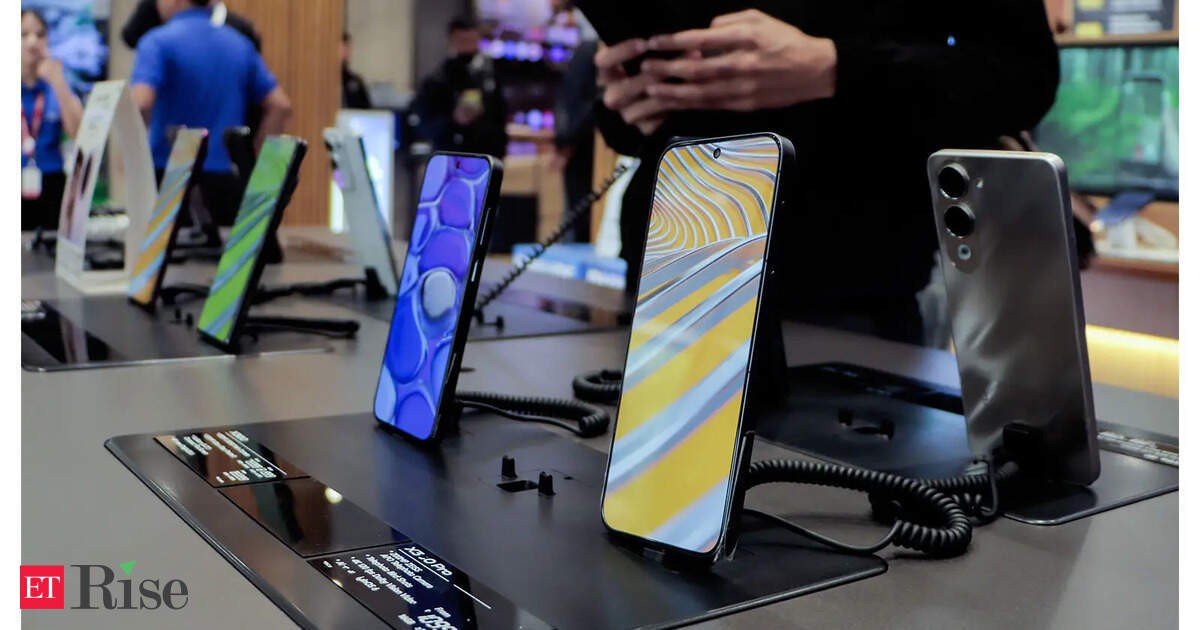
According to m.economictimes.com, India has replaced China as a key supplier of smartphones to the United States, meeting about 40 per cent of the demand previously fulfilled by China, per a recent report by McKinsey & Company.
Strategic Shift in US Import Sourcing
The report states that the United States has actively diversified its import sources and managed to replace about two-thirds of the goods it previously sourced from China — valued at more than USD 80 billion. India and ASEAN economies played a significant role in this realignment. As the source states:
“India, for example, increased smartphone exports to the United States to levels equal to roughly 40 per cent of what China had supplied”
Geographic and Operational Implications
This shift occurred despite India’s geographic distance from the US — approximately 13,000 kilometers — underscoring improvements in logistics coordination, export infrastructure, and manufacturing scalability. The rise in India’s smartphone shipments reflects broader growth in electronics manufacturing capacity, supported by initiatives such as India’s Production-Linked Incentive (PLI) Scheme for IT hardware, launched in 2020 and expanded to include mobile phones and components. According to public data from India’s Ministry of Commerce, smartphone manufacturing output rose from ~50 million units in FY2019–20 to over 300 million units in FY2023–24 — a trend consistent with the export surge described in the report.
Broader Regional Realignment
The report notes parallel developments across Asia: ASEAN economies replaced about two-thirds of US laptop imports previously sourced from China. This reflects a regional division of labor — where ASEAN imports more inputs from China and exports finished goods to the US. Meanwhile, Brazil expanded commodity exports to China, replacing goods China had earlier sourced from the US. Globally, trade remained resilient in 2025: both US imports and Chinese exports reached new highs, and overall global trade grew faster than the global economy.
What This Means for Supply Chain Professionals
For global supply chain professionals, this transition signals concrete progress in multi-sourcing strategies aimed at reducing geopolitical dependency. Unlike nearshoring or friend-shoring models that prioritize proximity, India’s emergence highlights the viability of ‘far-shoring’ when backed by policy consistency, tariff alignment (e.g., under the Indo-Pacific Economic Framework), and supplier development programs. Practitioners should assess lead time variability, port congestion patterns at Chennai and Mundra, air vs. ocean freight cost trade-offs for high-value electronics, and certification readiness for US market compliance (FCC, UL, ENERGY STAR). Notably, the report stresses that while India’s overall exports remained largely unchanged in 2025, smartphones were a key exception — suggesting targeted capability building rather than broad-based export expansion.
Source: m.economictimes.com
Compiled from international media by the SCI.AI editorial team.