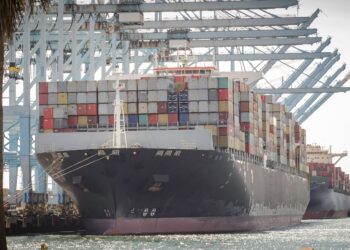
According to www.dubaieye1038.com, UAE Minister of Foreign Trade Dr. Thani bin Ahmed Al Zeyoudi chaired a high-level coordination meeting in Dubai on 8 April 2026 to strengthen regional trade flow stability and supply chain resilience. Hosted by the Ports, Customs and Free Zone Corporation (PCFC) at its Dubai headquarters, the session convened senior maritime and logistics executives, including PCFC Chairman Abdulla bin Damithan and Dubai Customs Director General Dr. Abdulla Busenad.
Strategic Coordination Across Maritime and Customs Sectors
The meeting emphasized institutionalized collaboration among public and private stakeholders to mitigate ongoing regional supply chain challenges. Dr. Al Zeyoudi underscored the UAE’s commitment to uninterrupted movement of essential goods through forward-looking solutions and international cooperation. He specifically cited efforts to expand alternative trade corridors and implement advanced customs systems, reinforcing the UAE’s role as a trusted global logistics hub.
“Continued coordination among stakeholders reflects the country’s strong focus on partnerships and international cooperation to ensure the uninterrupted movement of essential goods.” — Dr. Thani bin Ahmed Al Zeyoudi, Minister of Foreign Trade
Port Infrastructure and Route Diversification
Abdulla bin Damithan highlighted measurable progress since the prior coordination meeting, particularly in enhancing capacity and reliability across non-traditional gateways. Key developments include operational improvements at Fujairah and Khorfakkan ports, both of which serve as strategic alternatives to congested or geopolitically sensitive chokepoints. These upgrades support increased regional connectivity and more efficient cargo movement—especially for transit and re-export flows.
Customs Modernization and Multimodal Integration
Dr. Busenad detailed a suite of customs initiatives aimed at reducing friction and increasing predictability. These include:
- Streamlined transit cargo procedures
- Expanded use of green corridors for low-emission and priority shipments
- A pilot Advance Cargo Information system
- A new maritime feeder service linking the UAE region with India
- Extended re-export grace periods
- Expansion of secure land transport corridors
- Strengthened cross-border links with neighbouring countries
The meeting also reviewed gains in handling critical shipments and broader adoption of multimodal transport solutions, reflecting a systemic shift toward integrated, adaptive logistics infrastructure.
Context for Global Supply Chain Professionals
The UAE’s coordinated approach follows intensifying global supply chain volatility—including Red Sea disruptions since late 2023, which triggered rerouting via the Cape of Good Hope and added 10–14 days to Asia–Europe transit times. According to UNCTAD data, container shipping costs surged over 300% on key East-West routes during peak disruption periods in early 2024. In response, major carriers including Maersk and MSC have expanded Gulf-based transshipment capacity, while DP World reported a 17% year-on-year increase in throughput at Jebel Ali Port in Q1 2026. The UAE’s investments in Fujairah and Khorfakkan align with this trend: Fujairah handled 19.2 million tonnes of cargo in 2025, up 12% from 2024, per the UAE Ministry of Energy and Infrastructure. For practitioners, these developments signal growing viability of Gulf-centric routing—particularly for India–Europe and Africa–Asia lanes—as well as urgent need to reassess transit documentation protocols, customs pre-clearance timelines, and multimodal handoff SLAs.
Source: www.dubaieye1038.com
Compiled from international media by the SCI.AI editorial team.