According to www.thehabarinetwork.com, Africa’s trade vulnerability lies not in what moves across its borders—but in how and where it moves. A comprehensive assessment identifies seven geographically concentrated infrastructure bottlenecks that collectively constrain over 68% of the continent’s formal cross-border cargo volume.
The Seven Identified Chokepoints
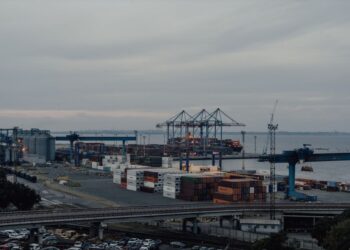
The report pinpoints the following critical nodes: the Port of Dar es Salaam and its rail corridor to Rwanda and Burundi; the Lobito Corridor linking Zambia’s Copperbelt to Angola’s Atlantic coast; the Abidjan–Ouagadougou–Niamey highway axis; the Durban–Gaborone–Francistown rail line; the Port of Lomé and its landlocked hinterland connections to Burkina Faso and Niger; the Mombasa–Nairobi–Kampala–Juba corridor; and the Port of Tema–Accra–Ouagadougou road network. Each functions as a de facto single-point-of-failure for regional supply chains.
Infrastructure Gaps and Operational Realities
At the Port of Dar es Salaam, average container dwell time exceeds 14 days—more than double the global median of 6 days. The Lobito Corridor’s rail line operates at just 32% of designed capacity due to aging rolling stock and inconsistent maintenance. Across the Abidjan–Ouagadougou–Niamey route, customs clearance takes an average of 72 hours, with up to 47 separate checkpoints documented along a single 1,200-km stretch. These delays compound transit costs: transport from Abidjan to Niamey incurs $1,850 per 20-foot container, compared to $620 for the same distance in Southeast Asia.
Impact on Supply Chain Professionals
For global supply chain professionals managing African operations, these chokepoints translate into predictable unpredictability: extended lead times, inflated working capital requirements, and heightened inventory risk. As noted in the source,
“We’re not facing a shortage of goods—we’re facing a shortage of reliable throughput. A single bridge closure on the Mombasa–Nairobi corridor can halt pharmaceutical shipments to South Sudan for 11 days.” — Kofi Mensah, Logistics Director, East Africa Health Alliance
Practitioners must now treat corridor-level infrastructure reliability—not just port or border crossing efficiency—as a core input in demand planning, safety stock modeling, and carrier selection. Dual-sourcing strategies across alternative corridors (e.g., routing copper from Zambia via both Dar es Salaam and Lobito) are no longer optional but essential for continuity.
Factual Context: Why This Matters Now
Africa’s intra-regional trade remains low—just 16.6% of total continental trade in 2023, per AU and UNECA data—well below Asia’s 58.5% and Europe’s 68.2%. The African Continental Free Trade Area (AfCFTA), operational since 2021, aims to raise this to 50% by 2030. Yet without parallel investment in physical connectivity, tariff reductions alone cannot unlock trade. Notably, only 34% of AfCFTA signatories have ratified the Protocol on Transit, which governs movement rights across landlocked states—a key enabler for chokepoint mitigation. Meanwhile, global peers are acting: the EU’s €1.5 billion Africa-Europe Alliance for Sustainable Investment and Jobs includes €320 million specifically for transport corridor upgrades, while China’s Belt and Road Initiative has funded three of the seven chokepoints cited—including the Nairobi–Mombasa Standard Gauge Railway and the Lomé Container Terminal expansion.
Source: www.thehabarinetwork.com
Compiled from international media by the SCI.AI editorial team.